Fela Kuti: The Pioneer of Afrobeat and Political Activism
Fela Kuti was more than a musician; he was a cultural revolutionary who blended complex rhythms with fierce political commentary. By fusing traditional African sounds with Western jazz and funk, he created Afrobeat, a genre that became the soundtrack for resistance and African identity in the 20th century.
Early Life and Musical Foundations
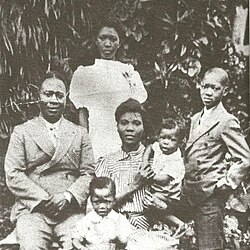
Born on October 15, 1938, in Abeokuta, Nigeria, Kuti grew up in an upper-middle-class environment steeped in activism. His mother, Funmilayo Ransome-Kuti, was a prominent anti-colonial feminist who led the Abeokuta Women's Riots in 1946, while his father, Israel Oludotun Ransome-Kuti, was an Anglican minister and the first president of the Nigeria Union of Teachers. This legacy of defiance and leadership deeply influenced Fela's later life.
Fela's family connections extended to the intellectual elite; he was a cousin of the Nobel Prize-winning writer Wole Soyinka. Both shared a common ancestor in Josiah Ransome-Kuti, an Anglican clergyman and musical pioneer.
In 1958, Fela moved to London to study music at the Trinity College of Music, focusing on the trumpet. During this period, he formed the band Koola Lobitos, experimenting with a fusion of jazz and highlife. After returning to Nigeria in 1963, he worked as a radio producer for the Nigerian Broadcasting Corporation and performed with Victor Olaiya and his All-Stars.
The Birth of Afrobeat and Political Awakening
Fela defined his signature style, Afrobeat, as a sophisticated blend of traditional Yoruba music, Apala, funk, jazz, highlife, salsa, and calypso. A pivotal moment in his evolution occurred in 1969 during a ten-month stay in Los Angeles. Through Sandra Smith, a partisan of the Black Panther Party, Fela was introduced to the Black Power movement. This experience fundamentally shifted his lyrical focus from love songs to political consciousness.
Upon returning to Nigeria, he renamed his band Africa '70 and established the Kalakuta Republic. This commune served as his home, recording studio, and a sanctuary for his associates. In a bold act of defiance, Fela declared the commune independent from the Nigerian state.
The Afrika Shrine and Cultural Identity
Fela established a nightclub, first called the Afro-Spot and later the Afrika Shrine, where he performed and conducted traditional Yoruba ceremonies. During this time, he embraced his ancestral faith and changed his name to Anikulapo ("He who carries death in his pouch"), symbolizing his desire to be the master of his own destiny. He also dropped the surname "Ransome," which he viewed as a slave name.
To ensure his message reached a pan-African audience, Fela began singing in Pidgin English, bypassing the linguistic barriers of Nigeria's diverse local languages.
Conflict with the State and the 'Zombie' Era
As Fela's popularity grew, so did his friction with the Nigerian government. In 1977, he released the album Zombie, which used the metaphor of a zombie to criticize the blind obedience of Nigerian soldiers. The government responded with a brutal raid on the Kalakuta Republic involving 1,000 soldiers.
The attack resulted in the destruction of Fela's studio and master tapes, and the fatal injury of his mother, Funmilayo Ransome-Kuti. In a defiant gesture, Fela delivered his mother's coffin to the official residence of General Olusegun Obasanjo. He later channeled this trauma into the songs "Coffin for Head of State" and "Unknown Soldier."
In 1978, Fela married 27 women in a single ceremony. While this served as a commemoration of the attack on his commune, it was also a strategic move to protect himself and the women from government allegations of kidnapping. He later transitioned to a rotation of 12 simultaneous wives.
Later Career and Political Struggles
By the late 1970s, internal disputes led to the departure of band leader Tony Allen and other musicians. Fela subsequently formed a new group, Egypt 80, named to emphasize that Egyptian civilization is fundamentally African. In 1979, he founded the Movement of the People (MOP), a political party preaching Africanism and Nkrumahism.
The 1980s saw Fela gain international recognition. He signed with French producer Martin Meissonnier and released albums like Black President (1981) and Original Sufferhead. He also toured Europe and the United States, performing at the 1986 "A Conspiracy of Hope" concert alongside artists like Bono and Carlos Santana.
Political persecution continued throughout the decade. In 1984, the government of Muhammadu Buhari jailed Fela on currency smuggling charges, which Amnesty International denounced as politically motivated. After 20 months in prison, he was released by General Ibrahim Babangida, at which point he divorced his remaining wives, citing the jealousy and competition that marriage brought into his life.
Fela's final major works, such as the 1989 anti-apartheid album Beasts of No Nation, continued to target global leaders like Ronald Reagan and Margaret Thatcher. His recording output slowed in the 1990s, and in January 1993, he was arrested on charges related to the murder of an electrician.
Key Facts
- Genre Creator: Developed Afrobeat, blending Yoruba music, jazz, funk, and highlife.
- Political Hub: Founded the Kalakuta Republic, a commune declared independent from Nigeria.
- Activism: Heavily influenced by the Black Power movement and the Black Panther Party.
- Language: Adopted Pidgin English to make his music accessible across Africa.
- Major Works: Released the critically acclaimed and controversial album Zombie in 1977.
- Political Party: Formed the Movement of the People (MOP) based on Africanism.
| Period/Band | Key Style/Focus | Notable Milestone |
|---|---|---|
| Koola Lobitos | Jazz and Highlife fusion | Early studies at Trinity College of Music |
| Africa '70 | Early Afrobeat / Social Issues | Release of Zombie (1977) |
| Egypt 80 | Pan-Africanism / Political Screeds | Beasts of No Nation (1989) |
Frequently Asked Questions
What is Afrobeat?
Afrobeat is a music genre created by Fela Kuti that combines traditional Yoruba music, Apala, funk, jazz, highlife, salsa, and calypso.
Why did Fela Kuti sing in Pidgin English?
He used Pidgin English so that people from various linguistic backgrounds across the African continent could understand and enjoy his music.
What was the Kalakuta Republic?
The Kalakuta Republic was a commune that served as Fela's home, recording studio, and a residence for his band members, which he declared independent from the Nigerian state.
What was the significance of the album Zombie?
The album Zombie used a metaphor to criticize the Nigerian military's blind obedience. Its success led to a violent government raid on the Kalakuta Republic in 1977.
Why did Fela change his name to Anikulapo?
He adopted the name Anikulapo, meaning "He who carries death in his pouch," to signify that he was the master of his own destiny.