West African Music: From Ancient Traditions to Global Afrobeat
The musical landscape of West Africa is a rich tapestry of sound, reflecting a complex history of regional diversity, spiritual devotion, and global exchange. From the rhythmic pulse of traditional drumming to the electric energy of modern dance floors, the region's music serves as both a cultural archive and a dynamic force in the global music industry.
Historically, West African music has been divided into two primary categories: Islamic music and indigenous secular music. The influence of Islam, which reached the region as early as the 9th century via camel trade routes from North Africa, introduced specific stringed instruments like the goje (a traditional fiddle). In contrast, secular traditions leaned more heavily on percussion, most notably the djembe drum.
Central to the preservation of these sounds are the Griots. Known as 'wandering musicians,' Griots are hereditary storytellers who use music to maintain oral traditions and preserve the histories of smaller ethnolinguistic groups.
Key Facts
- Griots act as oral historians, using musical storytelling to preserve cultural heritage.
- Highlife originated in Ghana and blends traditional African rhythms with European instruments.
- Afrobeat was pioneered by Fela Kuti in Nigeria, fusing jazz, funk, and traditional styles.
- Afrobeats (with an 's') refers to contemporary, often electronically produced popular music.
- The Kora is a 21-to-22 string harp-lute originating in The Gambia.
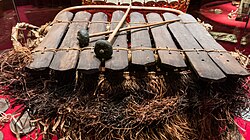
- The Balafon is a wooden xylophone capable of mimicking human speech tonalities.
The Evolution of Popular Genres
Highlife
Highlife is a jovial, upbeat style originating in Ghana. It is typically sung in regional languages such as Igbo, Yoruba, and Ewe, rather than English. The genre emerged from a fusion of traditional drum-focused music and European instruments—including accordions, brass, guitars, and harmonicas—brought by missionaries and merchants to the Gold Coast in the 19th century. Pioneers like E.T. Mensah and E.K. Nyame helped the genre gain widespread acclaim, particularly after World War Two as a means of raising communal spirits.
Calypso and the Transatlantic Influence
The transatlantic slave trade forcibly moved people, including the Yoruba and Ewe, to the Americas, carrying their musical traditions with them. This gave rise to kaiso music, which eventually evolved into Calypso. While Calypso and Highlife share similar themes of romance and desire, Highlife typically features more repetitive lyrics.
Afrobeat vs. Afrobeats
Originating in Nigeria in the early 20th century and peaking in the 1960s, Afrobeat is a sophisticated fusion of palm-wine music, Ghanaian highlife, jazz, funk, and fuji. It was defined and popularized by Fela Kuti (the 'Father of Afrobeat'), along with artists like Tony Allen and Ebo Taylor.
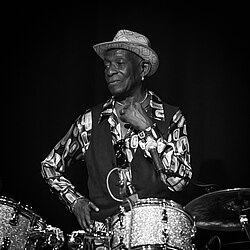
It is important to distinguish Afrobeat from Afrobeats. The latter is a modern umbrella term for contemporary West African pop music, characterized by electronic drum rhythms and popularized by global stars such as Burna Boy, Wizkid, Davido, and Tekno.
Traditional Instrumentation
Percussion and the Djembe
The djembe is one of the most recognizable West African drums. Its global popularity grew significantly in the 1950s through Fodéba Keïta and his dance company, Les Ballets Africains. Master drummers such as Mamady Keïta and Babatunde Olatunji are renowned for their proficiency with this instrument.
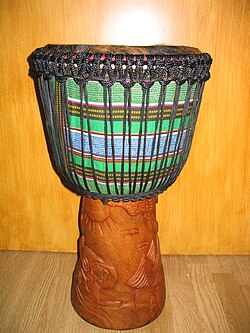
The Balafon
The balafon consists of wooden keys on a bamboo structure, struck with gum-rubber mallets. With 17 to 21 keys, it can produce tonalities similar to the human voice, allowing musicians to use the instrument for social or political commentary without using words.
Stringed Instruments
Stringed instruments have been present in West Africa since at least the 14th century. Key instruments include:
- Kora: A harp-lute from The Gambia, usually featuring 21 strings (or 22 in Guinea-Bissau and southern Senegal). Renowned players include Toumani Diabaté and Papa Susso.
- Xalam: A traditional lute.
- Goje: A fiddle used in both Islamic music and secular celebrations like weddings and political inaugurations.
Musical Structure and Theory
West African music often follows specific rhythmic and formal patterns. Danceable music is typically divided into 12-point sets (often used for formal occasions) and 16-point sets (used for casual settings). Non-danceable music, reserved for ritual or worship, often employs complex cross-sets with triplets or tuplets.
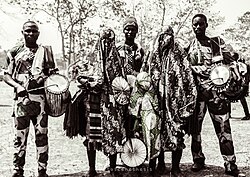
Songs generally consist of a solo part, which is flexible and less accented, and a chorus, which acts as a refrain and is more heavily accented. In drum ensembles, the ostinato drummers maintain a circular background rhythm, while the master drummer projects rhythmic manipulations and interpolations.
Societal Shifts and Global Impact
Colonization introduced European instruments like the violin and flamenco guitar, which merged with local styles to create new genres. For example, the Kora was modernized with guitar-like tuning pegs. Furthermore, the role of women in music has evolved. While instrument playing was once largely restricted to men, women like Sona Jobarteh and Tata Dindin Jobarteh have broken these barriers, taking on roles as performers and Griots to ensure cultural preservation.
| Category | Key Examples/Instruments | Primary Characteristics |
|---|---|---|
| Traditional Genres | Islamic, Secular | Use of goje (Islamic) vs. djembe (Secular) |
| Popular Genres | Highlife, Afrobeat, Afrobeats | Fusion of African, Western, and Latin sounds |
| Percussion | Djembe, Balafon | Rhythmic complexity; vocal-like tonalities (balafon) |
| Strings | Kora, Xalam, Goje | Harp-lutes and fiddles; used in royal and social rites |
| Cultural Roles | Griots | Oral historians and musical storytellers |
Frequently Asked Questions
What is the difference between Afrobeat and Afrobeats?
Afrobeat is a specific genre created by Fela Kuti in the 1960s, blending jazz, funk, and highlife. Afrobeats is a modern, broader term for contemporary West African pop music that relies heavily on electronic production.
Who are the Griots?
Griots are traditional West African musicians and storytellers who serve as the keepers of oral history, preserving the culture and genealogy of their communities through music.
What is a Kora?
The Kora is a stringed harp-lute originating from The Gambia. It typically has 21 strings, though some regional variations in Senegal and Guinea-Bissau use 22.
How did Highlife music start?
Highlife originated in Ghana as a fusion of traditional African drumming and European instruments (like brass and guitars) brought by missionaries and merchants in the 19th century.
Can the balafon be used to communicate?
Yes. Because the balafon produces tonalities similar to the human voice, it can be used for social or political commentary, effectively replacing lyrics with musical tones.