A federation, also known as a federal state, is a political entity formed by a union of partially self-governing provinces, states, or regions under a single federal government. This system, known as federalism, is designed to balance the need for a strong central authority with the desire for regional autonomy.
In a true federation, the division of power between the central government and the constituent states is constitutionally entrenched. This means that neither the central body nor the regional governments can unilaterally change the distribution of power; any such modification requires a formal constitutional amendment.
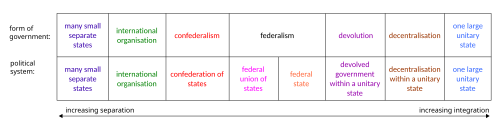
The spectrum of regional integration or separation: The spectrum of regional integration or separation
How Federal Power Works
At its core, sovereign power in a federation is formally divided. This ensures that each constituent region retains a degree of control over its own internal affairs, preventing the central government from exercising absolute control over every local detail.
However, the central authority typically holds overriding powers to maintain national stability. These may include the constitutional authority to:
Suspend a constituent state's government in cases of civil unrest or gross mismanagement.
Adopt national legislation that overrides regional powers to ensure "peace and good government."
Implement obligations resulting from international treaties.
To understand federalism, it is helpful to compare it to other forms of state organization. While federations divide power, a unitary state concentrates most or all power in a central government. For example, France and Japan have operated as unitary states for centuries. In contrast, the Republic of Austria transitioned from a unitary system under the Austrian Empire to a federated system of Länder (states).
A confederation differs from a federation in that it is typically a permanent union of fully sovereign states acting together for common goals, such as defense or trade. The European Union is currently the closest modern example of a confederation. Interestingly, some nations use the term "confederation" historically or officially, even if they are now federations. Switzerland is officially called the Swiss Confederation, though its cantons lost their sovereign status in 1848. Similarly, Canada used the term during its establishment in 1867, but its provinces are not sovereign.
Finally, an empire is often a multi-ethnic state established through coercion. While empires may have self-governing regions, that autonomy exists only at the will of the central government. However, some empires, like the German Empire (1871–1918), were organized as federations of partly autonomous kingdoms.
Global Examples of Federalism
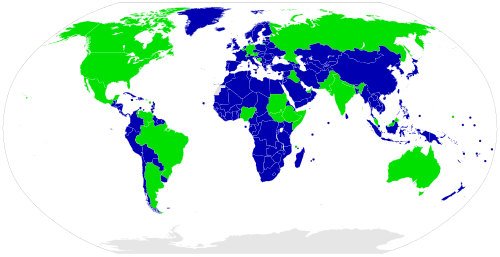
Federations are common in countries with vast territories or diverse ethnic populations. Approximately 3.2 billion people—about 40% of the world's population—live in a federation. While many are large (such as Russia, the United States, Canada, India, Brazil, Pakistan, and Australia), some are quite small, such as Saint Kitts and Nevis or the Federated States of Micronesia.
Federal states: Federal states
Major Global Federations
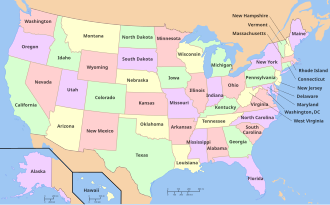
United States: The oldest surviving federation, with a constitution effective since March 4, 1789. A map of the United States of America showing its fifty constituent states and the District of Columbia: A map of the United States of America showing its fifty constituent states and the District of Columbia
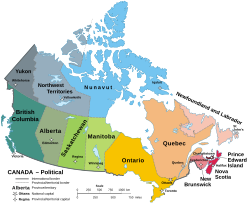
Canada: A parliamentary federation of ten provinces and three territories. A map of Canada showing its ten provinces and three territories: A map of Canada showing its ten provinces and three territories
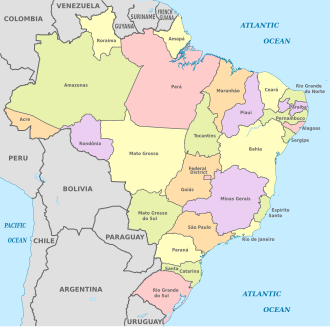
Brazil: A presidential republic consisting of twenty-six states and a Federal District. A map of the Federative Republic of Brazil, showing its twenty-six constituent states and the Federal District: A map of the Federative Republic of Brazil, showing its twenty-six constituent states and the Federal District
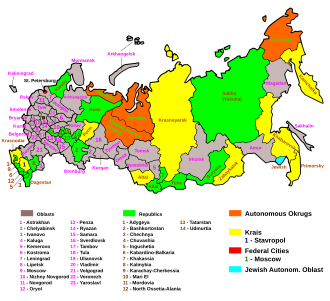
Russia: A large federation comprising various federal subjects. A map of the Russian Federation, showing its eighty-three federal subjects before the annexation of Crimea in 2014: A map of the Russian Federation, showing its eighty-three federal subjects before the annexation of Crimea in 2014
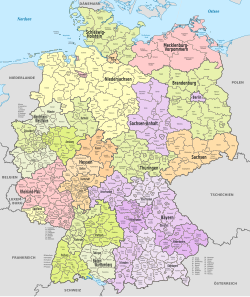
Germany: A federation of sixteen Länder, including three city-states. A map of the Federal Republic of Germany showing its sixteen constituent states (Länder) including three city-states: A map of the Federal Republic of Germany showing its sixteen constituent states (Länder) including three city-states
India: A parliamentary federation of 28 states and 8 union territories.
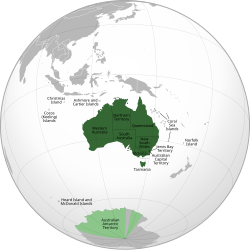
Australia: A commonwealth of six states and ten territories. A map of the Commonwealth of Australia showing its six states and ten territories: A map of the Commonwealth of Australia showing its six states and ten territories
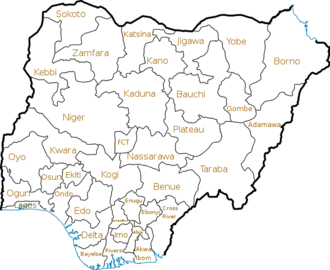
Nigeria: A federation of 36 states and a federal capital territory. A map of the Federal Republic of Nigeria, showing its 36 states and the Federal Capital Territory: A map of the Federal Republic of Nigeria, showing its 36 states and the Federal Capital Territory
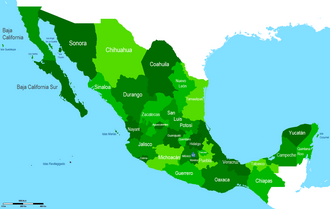
Mexico: A republic of thirty-one states and Mexico City. A map of the United Mexican States, showing its thirty-one constituent states and Mexico City: A map of the United Mexican States, showing its thirty-one constituent states and Mexico City
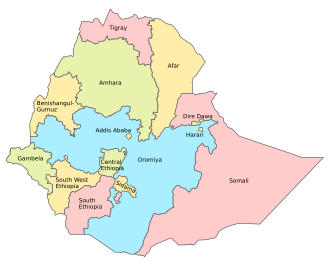
Ethiopia: A federation of regions and chartered cities. A map of the Federal Democratic Republic of Ethiopia, showing its regions: A map of the Federal Democratic Republic of Ethiopia, showing its regions
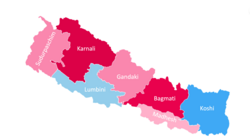
Nepal: The newest federation, with a constitution effective since September 20, 2015. A map of the Federal Democratic Republic of Nepal showing its seven constituent provinces: A map of the Federal Democratic Republic of Nepal showing its seven constituent provinces
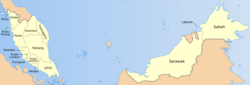
Malaysia: A federation of thirteen states and three federal territories. A map of Malaysia showing its thirteen states and three federal territories: A map of Malaysia showing its thirteen states and three federal territories
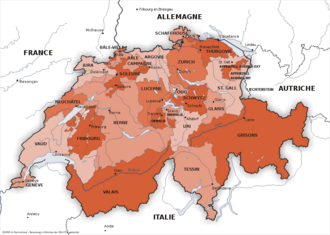
Switzerland: A unique system of 26 cantons. The Swiss Confederation and its 26 cantons: The Swiss Confederation and its 26 cantons
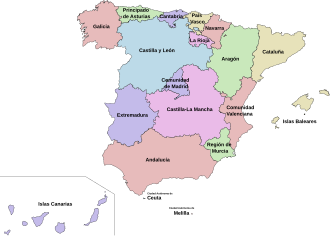
Some states are not formally federations but operate as de facto federations. Spain is a primary example; while legally a unitary state, it grants significant self-government to its autonomous communities. In regions like the Basque Country and Navarre, the local government has full control over taxation and spending.
The Autonomous communities of Spain: The Autonomous communities of Spain
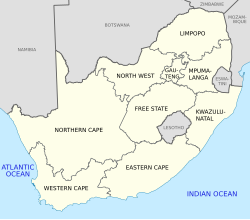
Other examples of regional structures include the provinces of South Africa
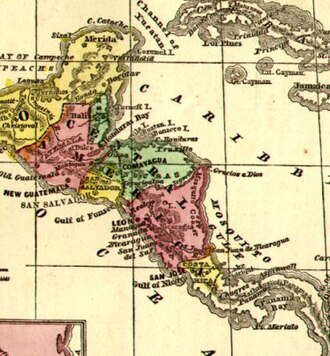
Provinces of South Africa: Provinces of South Africa and the short-lived United Provinces of Central America The United Provinces of Central America was a short-lived federal republic.: The United Provinces of Central America was a short-lived federal republic.
Key Facts
Global Reach: Roughly 3.2 billion people (40% of the global population) live under federal systems.
Oldest vs. Newest: The United States is the oldest surviving federation (1789), while Nepal is the newest (2015).
Constitutional Protection: The division of power in a federation cannot be changed unilaterally by either the center or the regions.
Conflict Resolution: Federations are often used to manage ethnic conflicts, as seen in Bosnia and Herzegovina, Iraq (since 2005), and Somalia (since 2012).
Summary of Selected Federations
Overview of Diverse Federal Systems
Country
Type
Structure
Primary Subdivisions
United States
Federal Republic
Presidential
50 States, 1 District, 16 Territories
Germany
Federal Republic
Parliamentary
16 States (Länder)
Canada
Monarchy
Parliamentary
10 Provinces, 3 Territories
Australia
Monarchy
Parliamentary
6 States, 13 Territories
Brazil
Federal Republic
Presidential
26 States, 1 Federal District
India
Federal Republic
Parliamentary
28 States, 8 Union Territories
Switzerland
Federal Republic
Directorial
26 Cantons
Frequently Asked Questions
What is the main difference between a federation and a unitary state?
In a federation, power is constitutionally divided between a central government and regional governments, and this division cannot be changed unilaterally. In a unitary state, the central government holds supreme authority and can create or abolish regional administrative units at will.
Is the European Union a federation?
No, the European Union is more accurately described as a confederation. It is a union of sovereign states that collaborate for common action, rather than a single state with a constitutionally divided sovereign power.
Why do some countries choose a federal system?
Federations are often adopted to manage large geographic areas or to accommodate multi-ethnic populations. In some cases, such as Iraq and Somalia, federalism has been instituted specifically to handle and resolve ethnic conflicts within the state.
Can a federal government override a state's laws?
Yes, theoretically. Central authorities often have the constitutional power to adopt national legislation that overrides regional powers to ensure "peace and good government" or to fulfill international treaty obligations.
Is Spain a federation?
Legally, Spain is not a federation, but it is often considered a de facto federation because it grants its autonomous communities a level of self-government that exceeds that of many formal federations.