Federalism: The Balance of Power Between Central and Regional Governments
Federalism is a sophisticated mode of government that balances authority between a general level of government—the central or federal government—and a regional level consisting of sub-unit governments, such as states, provinces, cantons, or territories. Unlike systems where power is concentrated in one place, federalism explicitly divides governing powers between these two levels to ensure a distribution of authority.
The intellectual foundations of modern federalism are often attributed to Johannes Althusius (1563–1638) and Montesquieu (1689–1755). In his 1748 treatise, The Spirit of Law, Montesquieu identified federalist structures in corporate societies, city confederations, and the polis (ancient Greek city-states) that brought villages together. In the modern era, the Old Swiss Confederacy adopted federalism as early as the mid-14th century.
Key Facts
- Core Definition: A system dividing power between a central government and regional sub-units.
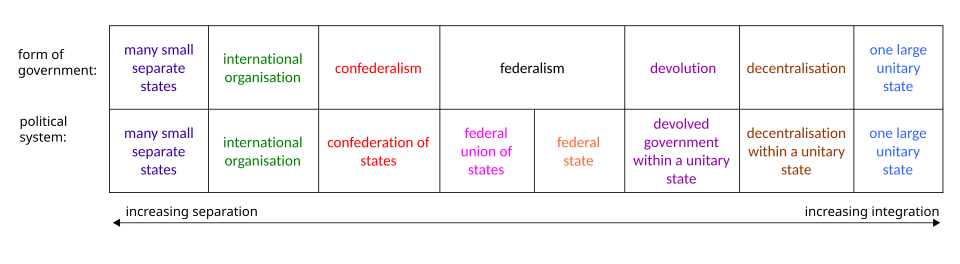
- Distinction: Differs from confederalism (where the center is subordinate to regions) and unitary states (where regions are subordinate to the center).
- Etymology: Derived from the Latin foedus, meaning treaty, pact, or covenant.
- Common Powers: Central governments typically hold exclusive control over national defense and foreign policy.
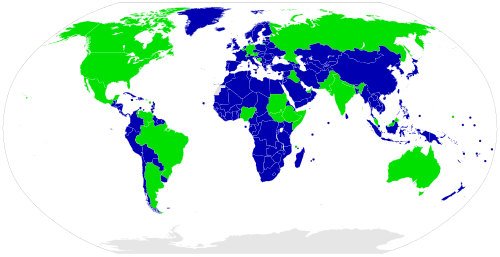
- Global Examples: Practiced in various forms in the United States, Germany, Canada, India, Australia, Brazil, and Mexico.
Federalism vs. Confederalism and Unitary States
To understand federalism, it is essential to distinguish it from other structural forms of government. While the terms "federalism" and "confederalism" were once used interchangeably as synonyms for a league of sovereign states based on a treaty, they now represent distinct concepts.
- Confederalism: The central government is created as a subordinate entity to the regional states. An example is the original Thirteen Colonies under the Articles of Confederation.
- Unitary State: The regional level is subordinate to the central government. Even when power is devolved (transferred) to regions, as seen in the United Kingdom, the central authority remains supreme.
- Federalism: A hybrid approach. James Madison described the US Constitution as a composition of both national and federal elements, creating a system where neither the center nor the regions are entirely subordinate.
Historical Evolution
Federalist structures date back to ancient tribal alliances and city-state leagues. Historian Joseph Baratta notes that early examples include the Israelite tribal confederacy (c. 1200–1000 BCE) and various Hellenic leagues between the seventh and second century BCE, such as the Delian, Peloponnesian, Aetolic, and Archaic Leagues. The Achaean League in Hellenistic Greece marked a shift where city-states surrendered portions of their sovereignty to band together for survival.
Throughout history, other notable unions include the United Provinces of the Netherlands (1579–1795), the German Confederation (1815–66), and the evolution of the United States from a Confederation (1781–89) to a Federal Republic (1789–present).
Political Theory and Adoption
Modern political theory categorizes the process of federalization into two primary types:
- Integrative (Aggregative) Federalization: This occurs when a confederation transforms into a federation, when non-federated populations are incorporated into an existing federation, or when a new federation is created to integrate populations.
- Devolutive (Dis-aggregative) Federalization: This occurs when a previously unitary state transforms into a federation.
The adoption of these systems is often driven by the need to manage diverse populations or resolve regional tensions. For instance, in Canada, federalism is often viewed as a mechanism to counter sovereignty movements, specifically Quebec separatism.
Constitutional Structure and Division of Powers
The division of powers is the hallmark of any federation. To be recognized as a single sovereign state under UN definitions, the central government must typically control foreign policy and national defense.
Allocation of Authority
Different nations handle the "residual powers" (powers not explicitly mentioned in the constitution) differently:
- United States and Germany: Powers not specifically granted to the federal government are reserved for the states.
- Canada and India: Powers not explicitly granted to provincial or state governments are retained by the federal government.
- Australia: The Commonwealth (federal government) handles specific matters too complex for states, while states retain all other responsibilities.
Administrative Levels
While most federations operate on two levels (central and regional), some are more complex. Brazil is a tripartite federation, meaning its 1988 Constitution recognizes the Union, the States, and the Municipalities as autonomous political entities. Mexico also grants municipalities full autonomy via the federal constitution, though they lack elected legislative assemblies.

Legislative Design: Bicameralism
Federal systems often employ a bicameral legislature (two houses) to balance population-based representation with regional representation.
- Lower House: Usually directly elected, with seats apportioned based on population.
- Upper House: Designed to represent the sub-units. Members may be directly elected, indirectly elected by state legislatures (as in the US prior to 1913), or be actual delegates of state governments (as in the German Bundesrat or the Council of the European Union).
Summary of Government Systems
| System Type | Central Government Power | Regional Government Power | Example |
|---|---|---|---|
| Unitary | Supreme | Subordinate/Devolved | United Kingdom |
| Federal | Shared/Divided | Shared/Autonomous | United States, Germany |
| Confederal | Subordinate | Supreme/Sovereign | Articles of Confederation (US) |
Frequently Asked Questions
What is the difference between federalism and confederalism?
In federalism, power is shared and divided between the center and regions via a constitution. In confederalism, the central government is subordinate to the regional states, which retain their primary sovereignty.
What are residual powers?
Residual powers are the authority over matters that are not specifically assigned to either the federal or regional government in a constitution. Depending on the country, these powers are granted either to the states (e.g., USA) or the central government (e.g., Canada).
What is fiscal federalism?
Fiscal federalism refers to the financial relations and relative financial positions between the different levels of government within a federal system.
What does it mean to defederalize?
To defederalize is to remove a responsibility from the federal government and transfer it to the state or provincial level.
Why do federal systems use bicameral legislatures?
Bicameralism allows a government to balance two different interests: the lower house represents the people based on population, while the upper house ensures that regional governments have a voice regardless of their size.