Feathered Dinosaurs: The Evolutionary Journey from Scales to Flight
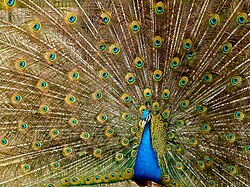
For decades, the popular image of a dinosaur was that of a massive, scaly reptile. However, modern paleontology has painted a far more complex and colorful picture. A feathered dinosaur is any species of dinosaur possessing feathers, a category that includes all modern birds. Recent evidence reveals that many non-avian dinosaur species also possessed feathers or feather-like structures, fundamentally changing our understanding of prehistoric life.
While we often associate feathers with flight, scientists suggest they originally served as thermal insulation. This is similar to the function of down feathers in infant birds today, which only later evolved into the sophisticated structures required for aerial locomotion.
Key Facts
- Bird Ancestry: Birds descended directly from a group of theropod dinosaurs.
- Original Purpose: Feathers likely evolved for warmth (insulation) before they were used for flight.
- Diverse Forms: Feather types range from simple slender filaments to complex asymmetrical vanes.
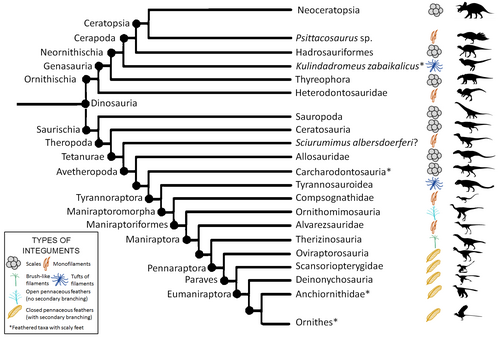
- Broad Distribution: Evidence of feathers exists across various groups, including maniraptorans and some basal tyrannosauroids.
The Evolution of Scientific Thought
From "Terrible Lizards" to Bird Ancestors
When dinosaur research began in the early 1800s, these creatures were viewed as close relatives of modern lizards. In 1842, paleontologist Richard Owen coined the term "dinosaur," derived from the Greek for "terrible lizard." This perspective remained dominant until the late 1960s, a period known as the dinosaur renaissance.
By the mid-1990s, a wealth of evidence emerged showing that dinosaurs were more closely related to birds than to any living reptile. This shift in understanding highlighted the theropod dinosaurs as the direct ancestors of the avian lineage.
Early Fossil Discoveries
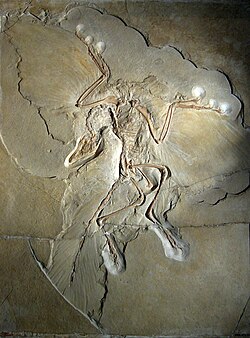
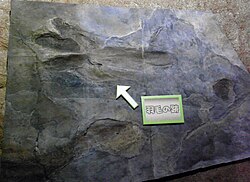
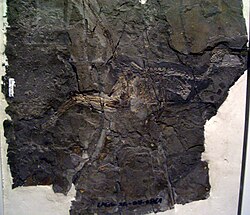
The journey toward identifying feathered dinosaurs began with Archaeopteryx, though early findings—such as an isolated feather—were initially controversial. One of the most intriguing early clues comes from the Portland Formation in the northeastern United States, dating back 195–199 million years.
A trace fossil known as Fulicopus lyellii contains impressions that some researchers interpret as feathers from the belly of a squatting dilophosaurid. If this interpretation is correct, it represents the oldest known evidence of feathers, predating other discoveries by nearly 30 million years.
Current Knowledge and Diversity
Non-Avian Species with Feathers
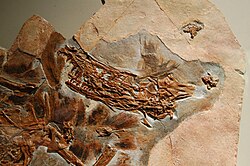
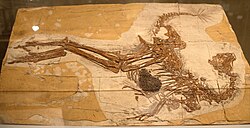
Numerous non-avian species have provided definitive evidence of plumage. Sinosauropteryx was the first non-avialan dinosaur found with feathers, while Sinornithosaurus millenii provided the first evidence of feathers within the dromaeosaurid family.
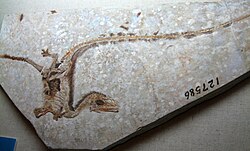
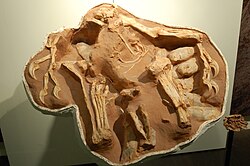
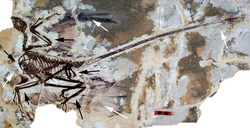
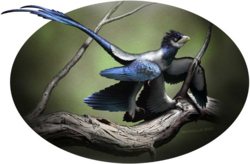
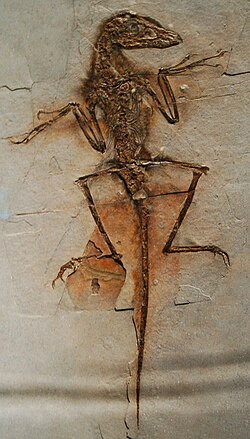
Other notable examples include Microraptor gui, which shows impressions of feathered wings, and Caudipteryx, which preserved both feather impressions and stomach contents. Even the nesting habits of Citipati osmolskae suggest a biological link to the brooding behaviors seen in birds.
The Spectrum of Feather Types
Feathers did not appear overnight in their modern form. They evolved through a series of primitive types, moving from simple filaments to complex structures. These include:
- Monofilamentous integument: Simple, hair-like strands (slender or broad).
- Filamentous feathers: Structures that may be basally joining or radially/bilaterally branched.
- Vaned feathers: Symmetrical or asymmetrical close-vaned feathers, the latter being essential for flight.
- Specialized forms: Ribbon-like feathers or rachis-dominant structures.
Summary of Feathered Dinosaur Evidence
| Species/Group | Key Evidence | Significance |
|---|---|---|
| Archaeopteryx | Feather impressions | Early transition between dinosaurs and birds |
| Sinosauropteryx | Definitive non-avialan feathers | First non-avian dinosaur confirmed with feathers |
| Microraptor gui | Feathered wings | Evidence of complex wing structures in non-birds |
| Sinornithosaurus | Plumage impressions | First evidence of feathers in dromaeosaurids |
| Citipati osmolskae | Nesting specimen | Links dinosaur behavior to avian brooding |
Frequently Asked Questions
Did all dinosaurs have feathers?
It is not certain. While many theropods and some other groups show evidence of feathers, some dinosaurs were found with scales. However, a lack of feather impressions in a fossil does not necessarily mean the animal lacked feathers, as preservation conditions vary.
Why did dinosaurs have feathers if they couldn't fly?
The prevailing theory is that feathers originally evolved for thermal insulation to keep the animal warm. Other possibilities include use for mating displays or brooding eggs.
What is the difference between a non-avian and avian dinosaur?
Avian dinosaurs are the lineage that led to modern birds. Non-avian dinosaurs are all other dinosaur species that went extinct, many of which still possessed bird-like traits such as feathers.
How do scientists know the color of dinosaur feathers?
Researchers analyze preserved melanosomes—microscopic organelles that contained pigment—to infer the original colors of the plumage.
Which is the oldest evidence of feathers?
The trace fossil Fulicopus lyellii from the Portland Formation is argued to be the oldest, dating to 195–199 million years ago, though this interpretation remains a subject of scientific debate.