Faubourg Marigny: A Historic Gem of New Orleans
The Faubourg Marigny (pronounced FOH-burg MAYR-in-ee), often simply called the Marigny, is one of the most vibrant and architecturally distinct neighborhoods in New Orleans, Louisiana. Known for its colorful streets and deep musical roots, this district serves as a bridge between the historic French Quarter and the eclectic Bywater neighborhood.
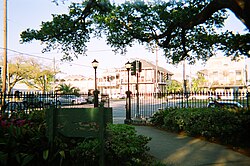
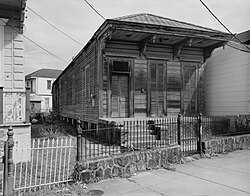
The neighborhood is defined by a unique blend of colonial French, Spanish, and Caribbean influences, creating a visual landscape of Creole cottages and shotgun houses—narrow, one-room-wide dwellings typical of the region. From the jazz-filled air of Frenchmen Street to the serene greenery of Washington Square, the Marigny remains a cornerstone of New Orleans culture.
Key Facts
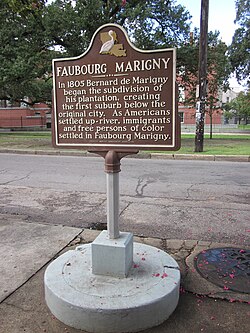
- Founder: Established in 1805 by Creole landowner Bernard de Marigny.
- Geography: A low-lying area with an elevation of approximately 1 foot (0.3 m).
- Architecture: Famous for its blend of French, Spanish, and Caribbean styles.
- Cultural Hub: Home to Frenchmen Street, a premier destination for live music.
- Historic Status: The New Marigny Historic District was added to the National Register of Historic Places in 1994.
Geography and Boundaries
Located at 29°57′53″N 90°03′19″W, the Faubourg Marigny covers a total area of 0.33 square miles. The vast majority of this is land (0.31 sq mi), with a small portion consisting of water (0.02 sq mi). The neighborhood is situated in a low-lying basin, which has historically influenced its development and recovery from natural disasters.
The City Planning Commission defines the neighborhood's boundaries as follows:
- North: North Rampart Street and St. Claude Avenue.
- East: The railroad tracks along Homer Plessy Way (formerly Press Street).
- South: The Mississippi River.
- West: Esplanade Avenue.
The area is bordered by the French Quarter to the west, the Seventh Ward and St. Roch to the north, and the Bywater neighborhood to the east.
A Journey Through History
19th Century Origins
The neighborhood began as a plantation owned by Bernard de Marigny. In 1806, he subdivided the land into modest, affordable lots, creating the Faubourg Marigny. The development expanded further in 1810 due to high demand. Growth was further accelerated in 1831 with the introduction of the Pontchartrain Railroad, known as "Smoky Mary," which ran along Elysian Fields Avenue.
Elysian Fields Avenue, named after the Champs-Élysées in Paris, was designed as the neighborhood's main artery and was the first street in New Orleans to connect the riverfront directly to Lake Pontchartrain.
The New Marigny and Social Evolution
The area further from the river, extending toward I-10, is known as New Marigny. In the early 19th century, this section was often where white Creole gentlemen established homes for their partners of color and their children, a social tradition known as plaçage.
By the mid-19th century, the Faubourg Franklin (laid out in 1834) and areas across St. Claude Avenue became primary settlements for German immigrants and Louisiana Creoles of color.
20th Century Decline and Renaissance
The mid-20th century saw a period of significant decline. The area surrounding Washington Square became notorious for crime, earning the nickname "Little Angola." However, the neighborhood began a strong recovery in the late 20th century. The 1984 World's Fair pushed many French Quarter residents into the Marigny, contributing to a residential revival.
Today, the neighborhood is a global destination for music lovers. Frenchmen Street has evolved into one of the city's premier hubs for live music venues and dining, while the New Orleans Center for Creative Arts maintains a riverfront facility in the area.
Culture, Architecture, and Community
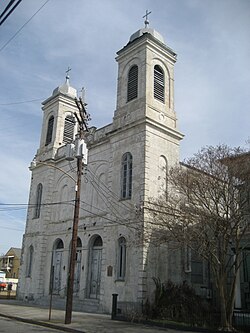
The Marigny is a living museum of New Orleans' multicultural past. Its architecture is a hybrid of European and Caribbean styles, making it one of the city's most visually colorful districts. It also serves as a center for traditional, homegrown Mardi Gras celebrations.
The neighborhood has long been a sanctuary for musical geniuses. Jazz legend Jelly Roll Morton grew up here, often sneaking away from his grandmother's home to play piano in Storyville. Other musical giants who called the Marigny home include Sidney Bechet, Manny Perez, Danny Barker, and Paul Barbarin.
Modern landmarks include the St. Roch Market—one of the last surviving public market buildings in the city—and the independent Circle Market on St. Bernard Avenue.
Resilience After Hurricane Katrina
During Hurricane Katrina in 2005, the Marigny fared better than many other parts of the city. Because the river-side section was at a higher elevation, it escaped the catastrophic flooding that devastated other wards. While the lower-lying New Marigny did flood, many 19th-century raised houses protected the interiors from significant damage.
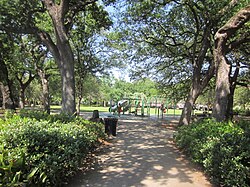
In the immediate aftermath, Washington Square served as a vital community hub, hosting a free kitchen and goods-exchange camp. Despite initial delays in reopening due to ZIP code-based restrictions, the neighborhood rebounded quickly.
Neighborhood Summary
| Category | Details |
|---|---|
| Total Area | 0.3378 sq mi (0.875 km) |
| Population (2010) | 2,128 |
| Elevation | 1 ft (0.30 m) |
| Primary Architecture | Creole Cottages, Shotgun Houses |
| Key Landmark | Frenchmen Street |
Frequently Asked Questions
Who founded the Faubourg Marigny?
The neighborhood was founded by Bernard de Marigny, a Creole real estate developer and politician, who subdivided his family's plantation starting in 1805.
What is the "New Marigny"?
New Marigny refers to the area located further from the river, extending toward the I-10 overpass. It is a recognized historic district added to the National Register of Historic Places in 1994.
Why is Frenchmen Street significant?
Frenchmen Street is renowned as one of New Orleans' premier locations for live music and dining, attracting music devotees from around the world.
How did the neighborhood survive Hurricane Katrina?
The river-side portion of the neighborhood was at a high enough elevation to avoid the great flood. Additionally, many traditional raised houses in the lower-lying areas prevented significant interior water damage.
Which famous musicians lived in the Marigny?
The neighborhood was home to several jazz legends, including Jelly Roll Morton, Sidney Bechet, Manny Perez, Danny Barker, and Paul Barbarin.