Faroe Islands Education System: From Primary School to Higher Research
The education system of the Faroe Islands is a comprehensive structure designed to transition students from basic literacy and numeracy to specialized professional and academic expertise. From the compulsory years of the Fólkaskúli (the national primary and lower secondary school) to advanced research at the university level, the system balances general academic growth with strong vocational training tailored to the islands' unique maritime and industrial needs.
Key Facts
- Compulsory Education: Nine years of schooling, typically from ages 7 to 16.
- Primary Infrastructure: Provided by 51 Fólkaskúli and 3 Free Schools.
- Higher Education Hub: The University of the Faroe Islands is the primary public research institution.
- Vocational Focus: Strong emphasis on maritime studies, fisheries, and public health.
- International Study: A significant number of Faroese students pursue degrees in Denmark.
Primary and Lower Secondary Education
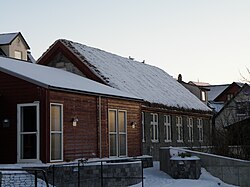
Compulsory education begins when a child reaches the age of seven. This initial phase of primary education lasts at least seven years and is delivered through a network of 51 Fólkaskúli and 3 Free Schools, some of which offer optional preschool programs. As of 2014, primary education served 5,205 students.
Following the first seven years, students enter lower secondary education (8th and 9th grades). While the first two years of this stage are compulsory, students may choose to take a 10th year of Fólkaskúli. This optional year is often a prerequisite for entering upper high school; in 2014, two-thirds of 9th-grade pupils opted for this additional year. Lower secondary education is free of charge and served 1,932 students in 2014.
Pathways After Lower Secondary
Completion of the Fólkaskúli final examination opens several doors for students, including:
- Studentaskúlin: A three-year academic secondary school.
- Higher Preparatory Examination (HF): A two-year academic track.
- Føroya Handilsskúli (Business College): Offering a one-year FHS Yrkisnám or a three-year Búskaparbreytin (Economy secondary school) program.
- Fiskivinnuskúlin: Specialized secondary education for the fisheries sector.
Upper Secondary Education
Upper secondary education is provided by eight schools offering five distinct course types. The Studentaskúli is the primary academic route, with institutions located in Tórshavn, Kambsdalur (Eysturoy), and Suðuroy. For adults, the HF is a two-year academic course available in Tórshavn and Kambsdalur.
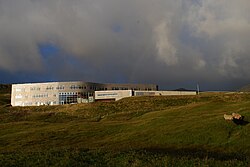
Vocational upper secondary options include the Business College (FHS) in Tórshavn and Kambsdalur, which offers both one-year and three-year curricula. The Technical College (Tekniski skúlin), located in Tórshavn and Klaksvík, combines technical field courses with apprenticeships. Finally, the Fisheries College (Fiskivinnuskúlin) in Vestmanna specializes in food science and the fishing industry.
Vocational and Specialized Training
Maritime Education
Given the islands' geography, maritime training is critical. Two main institutions lead this sector: Vinnuháskúlin in Tórshavn and Sjónám in Klaksvík.
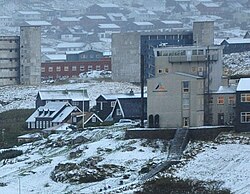
Vinnuháskúlin provides three-year programs for shipmasters and marine engineers, as well as shorter captaincy courses. Historically, these programs have seen exclusively male graduates, as noted in 2010 and June 2015. Sjónám offers a 1.5-year shipmaster education for those qualifying to be First Officers or Captains on ships up to 3,000 gross tonnage. Applicants must have significant sea experience (36 months total, with 18 months on vessels over 200 gross tonnage) and passing grades in core subjects including math, physics, and languages.
Sjónám also provides a six-month ship assistant (skipsatstøðingur) course for students at least 17.5 years old, which serves as a stepping stone toward the shipmaster qualification.
Public Health and Other Schools
The Public Faroese Health School (Heilsuskúli Føroya) in Suðuroy trains healthcare assistants (15 months) and assistant nurses (an additional 22 months). This field is predominantly female, with women making up nearly 90% of graduates in 2012.
Other educational offerings include:
- Faroe Music School: Operates 14 institutions. It offers general lessons and a specialized three-year program in Tórshavn for those aged 14 to 25.
- Evening School (Kvøldskúli): Provides community courses in languages, handicrafts, and swimming, with funding split between municipalities and the Ministry of Culture and Education.
- Specialized Schools: The School of Home Economics and the Folk High School offer half-year courses in subjects ranging from hygiene and diet to humanities and arts.
Higher Education and Research
The University of the Faroe Islands (Fróðskaparsetur Føroya), founded in 1965, is the central hub for academic degrees. It consists of the Faculty of Humanities, Social Sciences and Education, and the Faculty of Natural and Health Sciences, granting B.Sc., M.Sc., and Ph.D. degrees.
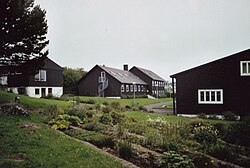
While the university is the primary local option, many students study abroad, particularly in Denmark. In August 2015, there were 1,345 Faroese students in Denmark compared to 904 in the Faroe Islands. Financial support for these students is managed by Studni, the Faroese Student Grant Fund.
Professional and Academic Research
Higher education in commerce is also available through the Business School in Kambsdalur and Tórshavn, where students can earn 60 ECTS credits over three years, equivalent to the first part of an HD education. Advanced degrees like an MBA must be pursued through Danish institutions, such as Aarhus University.
Research is overseen by the Faroese Research Council (Granskingarráðið), which distributes funds allocated by the Parliament. Between 2002 and 2012, the Research Foundation received over 70 million DKK to support work conducted by the university and various government laboratories, hospitals, and museums.
| Level | Key Institutions | Duration/Requirement | Primary Goal |
|---|---|---|---|
| Primary/Lower Secondary | Fólkaskúli | 9-10 Years | Compulsory Basic Education |
| Upper Secondary | Studentaskúli, HF, Business/Technical Colleges | 2-3 Years | University Prep or Vocational Entry |
| Vocational | Vinnuháskúlin, Sjónám, Heilsuskúli Føroya | 6 Months to 3 Years | Professional Certification (Maritime/Health) |
| Higher Education | University of the Faroe Islands | B.Sc. to Ph.D. | Academic Degrees and Research |
Frequently Asked Questions
At what age do children start school in the Faroe Islands?
Children begin their primary education at the start of the school year in the calendar year they reach the age of seven.
Is the 10th grade of Fólkaskúli mandatory?
No, the 10th grade is optional, although it is often required for students who wish to progress to upper high school.
What are the requirements to become a shipmaster at Sjónám?
Applicants must have completed nine years of Fólkaskúlin with passing grades in core subjects and possess at least 36 months of sea experience, including 18 months on a vessel of at least 200 gross tonnage.
Where do Faroese students typically go for higher education?
Many students attend the University of the Faroe Islands, but a significant number study in Denmark, supported by grants and loans from Studni.
How is research funded in the Faroe Islands?
Research is funded by the Parliament through the Faroese Research Foundation, with the Faroese Research Council deciding the recipients of these funds.