Fantastic Art: A Journey Through Imagination and the Uncanny
Fantastic art is a broad and fluid genre that transcends specific schools, geographical borders, or historical eras. Unlike abstract art, it is primarily representational and naturalistic, focusing on subject matter that is non-realistic, mystical, mythical, or rooted in folklore. While it often overlaps with the modern concept of "fantasy art," the broader category of fantastic art encompasses a vast array of styles, from the intricate details of the Northern Renaissance to the bold lines of contemporary manga and graphic novels.
At its core, this genre explores the boundaries of the human mind, delving into the dream state, the grotesque (the distorted or absurd), and the uncanny (the strangely familiar yet unsettling). It often shares a circular, symbiotic relationship with fantasy literature, where art illustrates the written word and literature inspires new visual interpretations.
Key Facts
- Definition: Art portraying non-realistic, mystical, or folkloric subjects using a representational style.
- Scope: Includes visionary art, grotesque art, and "Dark" or "Goth" art.
- Mediums: Traditionally dominated by painting and illustration, with photography becoming prominent after the 1970s.
- Distinction: While religious art depicts the supernatural, it is generally not classified as fantastic art.
- Influences: Ranges from classical mythology and the Northern Renaissance to modern mythos like J.R.R. Tolkien's Middle Earth.
The Evolution of the Fantastic
Fantasy has been an integral part of artistic expression since its inception. It played a pivotal role in several major movements, including Mannerism (a style characterized by artificiality and elongated forms), magic realism, Romanticism, Symbolism, and Surrealism. In French, the genre is known as le fantastique.
Psychology and the Hallucinatory
The subject matter of fantastic art often mirrors the imagery of hallucinations. This connection is evident in the life of artist Richard Dadd, who spent much of his time in mental institutions. Similarly, Salvador Dalí famously blurred the line between sanity and creativity, stating, "the only difference between me and a madman is that I am not mad." In more recent years, some artists have explicitly drawn from their experiences with hallucinogenic drugs to fuel their visions.
Historical Movements and Genres
Several historical styles fall under the umbrella of fantastic art. These include the Weltlandschaften (world landscapes) of the Northern Renaissance, the Victorian-era Symbolists, and the Pre-Raphaelites. The Golden Age of Illustration also contributed significantly to the genre's development.
Notable Artists and Regional Movements
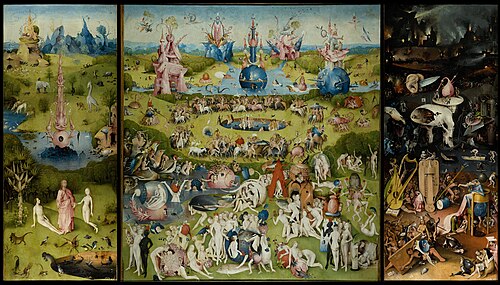
The application of fantastic elements varies among artists. Some, like Nicholas Roerich, dedicated their entire careers to the genre. Others, such as Hieronymus Bosch—often cited as the first "fantastic" artist in the Western tradition—blended these elements with more traditional works. For Francisco de Goya, the fantastic was a smaller, though potent, part of his overall output, while René Magritte utilized fantastic elements within the framework of Surrealism.
The 20th Century and Pulp Culture
The rise of "pulp" magazines in the early 20th century created a massive demand for science fiction and fantasy artwork to drive sales and illustrate stories. This era fostered a dedicated movement of SF and space artists, particularly around the time of the Great Depression.
American Regional Variations
In the 1930s, a group of artists in Wisconsin—including Marshall Glasier, Dudley Huppler, John Wilde, Karl Priebe, and Gertrude Abercrombie—developed a unique brand of fantastic art. Inspired by European Surrealism, their work utilized irony, mystery, and macabre humor to challenge the prevailing trend of American Regionalism.
Later, in postwar Chicago, the Chicago Imagism movement produced grotesque and fantastic paintings. Because they did not align with the New York abstract art fashions of the time, artists like Roger Brown, Gladys Nilsson, Jim Nutt, Ed Paschke, and Karl Wirsum remained relatively under-recognized for a period.
Modern Influences
Since 1970, Western fantasy art has been heavily shaped by iconic intellectual properties. The illustrations for Conan the Barbarian and The Lord of the Rings, along with the French magazine Heavy Metal and the role-playing game Advanced Dungeons & Dragons, have defined the modern aesthetic of the genre.
Summary of Fantastic Art Characteristics
| Feature | Description | Examples/Influences |
|---|---|---|
| Style | Representational and Naturalistic | Manga, Graphic Novels, Fine Art |
| Themes | Mystical, Mythical, Dream-like | Folklore, Hallucinations, The Uncanny |
| Key Eras | Renaissance to Modern Day | Northern Renaissance, Golden Age of Illustration |
| Mediums | Painting, Illustration, Photography | Pulp Magazines, Heavy Metal Magazine |
Frequently Asked Questions
What is the difference between fantastic art and fantasy art?
Fantastic art is a broad, historical genre encompassing various styles and movements (like Surrealism or Mannerism). Fantasy art is a more specific term usually applied to 20th-century art and later that is directly inspired by or illustrates fantasy literature.
Is religious art considered fantastic art?
Generally, no. Although religious art often depicts supernatural or miraculous events in a naturalistic way, it is typically categorized separately from the fantastic art genre.
How did pulp magazines influence the genre?
Pulp magazines created a commercial demand for imaginative cover art and illustrations to promote science fiction and fantasy stories, leading to a surge of professional artists specializing in these visions during the early 20th century.
Which artists are considered pioneers of fantastic art?
Hieronymus Bosch is often regarded as the first fantastic artist in the Western tradition. Other influential figures include Francisco de Goya, René Magritte, and the group of Surrealist-inspired artists from Wisconsin.
When did photography enter the realm of fantastic art?
While painting and illustration were the traditional mediums, fantastic art increasingly incorporated photography starting in the 1970s.