European Travel Commission: A History of Promoting Destination Europe
The European Travel Commission (ETC) serves as the primary catalyst for promoting Europe as a premier global tourist destination. Founded in the aftermath of World War II, the organization has evolved from a regional commission focused on economic reconstruction into a sophisticated global player driving sustainable tourism and digital marketing strategies across the continent.
Key Facts
- Founded: 1948 in Stalheim, Norway.
- Original Purpose: To promote freedom of travel and strengthen peace through technical, non-political cooperation.
- Core Mission: Promoting "Destination Europe" and advocating for the freedom to travel as a fundamental human right.
- Strategic Shift: Transitioned from geographic segmentation to a thematic, experience-based approach via the Horizon 2022 strategy.
- Sustainability Focus: Committed to the Glasgow Declaration on Climate Action in Tourism and the implementation of a dedicated Climate Action Plan.
The Early Years: 1948–1952
The ETC was established during an excursion of the 1948 Congress of the International Union of Official Travel Organizations (IUOTO). It functioned as IUOTO's regional commission for Europe, operating under the principle of promoting freedom of travel to foster mutual understanding between nations.
During the early Cold War, the ETC maintained strong ties with the Western camp. Its 17 founding member countries were all recipients of Marshall Plan aid. In July 1948, the ETC partnered with the Organization for European Economic Co-operation (OEEC) to provide tourism expertise, leading to the creation of an OEEC Tourism Committee in February 1949 to support Europe's economic reconstruction.
Expanding Influence in the US and Beyond (1950s–1960s)
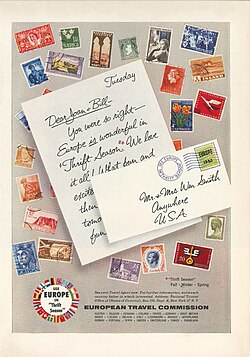
Under the oversight of the OEEC, the ETC launched flagship joint publicity campaigns in the United States starting in 1949. These campaigns marketed Europe as a single destination and encouraged travel during the off-season. The ETC's New York Committee collaborated with marketing firms and private partners in energy, travel, and transportation to produce radio broadcasts, television ads, and short films.
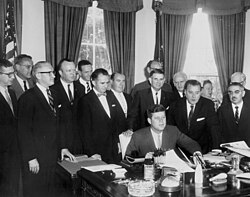
In May 1954, an ETC delegation met with President Dwight D. Eisenhower, who supported American travel to help rebuild European economies. However, by 1961, the Kennedy administration established the United States Travel Service to encourage foreign visits to the US to address balance-of-payments deficits.
The ETC remained a staunch defender of travel rights. In response to President Lyndon B. Johnson's 1968 request for Americans to reduce non-essential travel, the ETC published a Declaration on the Freedom to Travel, asserting that travel is a fundamental human right free from discrimination.
Navigating the Cold War and Eastern Europe
While the ETC primarily aligned with the West, it expanded its membership in 1951 to include Finland, Spain, and Yugoslavia. Yugoslavia's inclusion was particularly significant following the 1948 Tito–Stalin split, allowing the socialist nation to attract more Western tourists.
Although the Soviet Union and Poland expressed interest in joining after 1955, the ETC eventually determined that their full membership could be detrimental. As a compromise, IUOTO created a Regional Commission for European Travel for both Eastern and Western national tourism boards, while the "European Travel Commission" name continued to be used by the separate organization managing US publicity campaigns.
Global Expansion and Institutional Growth (1970s–1980s)
The 1970s marked a period of professionalization, with the establishment of a presidency and a permanent secretariat. Membership grew to include Malta (1971) and Cyprus (1973). The ETC also expanded its mission to include the preservation of cultural heritage through a partnership with Europa Nostra.
To reach new markets, the ETC created Operation Groups in Canada, Australia, Argentina, and Japan, later turning its attention to Southeast Asia in the 1980s. This era also saw the beginning of a close relationship with the European Economic Community (EEC), which provided research grants and recognized the ETC as the best entity for coordinating overseas promotion.
The Modern Era: Post-Cold War to Present
The fall of the Berlin Wall and the 1993 formation of the European Union (EU) led to a surge in membership, starting with Hungary in 1990. By 2009, the Treaty of Lisbon officially recognized tourism as a policy domain where the EU could intervene.
The ETC embraced digital transformation, launching its first website in 1996 and later developing VisitEurope.com as the primary platform for Destination Europe. Between 2015 and 2023, the ETC also led the European Tourism Manifesto, an alliance of over 50 stakeholders focusing on sustainability and competitiveness.
Current Strategic Initiatives
Today, the ETC operates under the Horizon 2022 strategy, which replaces traditional geographic marketing with a thematic approach. Instead of promoting specific countries, it promotes Europe as a collection of experiences and interests.
The organization also focuses on three pillars of advocacy: sustainability, visa facilitation, and connectivity. This includes a strategic partnership with the European Commission and the implementation of the 2018 EU-China Tourism Year.
Sustainability and Innovation
The ETC has launched a Climate Action Plan to halve its own operational emissions and help member National Tourism Organisations (NTOs) reach Net Zero, aligning with the 2022 Glasgow Declaration on Climate Action in Tourism. Additionally, since 2021, the ETC and Eurail have hosted the Rail Tourism Awards to promote train travel as a sustainable alternative to other transport.
| Period | Key Focus | Major Milestone |
|---|---|---|
| 1948–1952 | Founding & Reconstruction | Established in Norway; partnered with OEEC. |
| 1950s–1960s | US Market Penetration | Joint publicity campaigns; Declaration on the Freedom to Travel (1968). |
| 1970s–1980s | Global Reach | Expansion into Asia and Americas; collaboration with EEC. |
| 1990s–2000s | EU Integration | Expansion to Eastern Europe; launch of VisitEurope.com. |
| 2010s–Present | Sustainability & Experience | Horizon 2022 strategy; Climate Action Plan; Rail Tourism Awards. |
Frequently Asked Questions
What is the primary goal of the European Travel Commission?
The primary goal of the ETC is to promote Europe as a world-leading tourist destination (Destination Europe) while advocating for the freedom of travel and the recognition of tourism as a vital economic sector.
How has the ETC's marketing strategy changed recently?
Through the Horizon 2022 strategy, the ETC moved from geographic segmentation (promoting specific countries) to a cross-market thematic approach that promotes the continent based on shared experiences and interests.
What is the ETC's role in climate action?
The ETC has implemented a Climate Action Plan to reduce its own emissions by half and supports its member National Tourism Organisations in committing to Net Zero, as part of the Glasgow Declaration on Climate Action in Tourism.
How did the ETC handle the Cold War divide?
While primarily aligned with the Western camp and Marshall Plan recipients, the ETC admitted Yugoslavia in 1951. For other socialist nations, it worked through a broader IUOTO Regional Commission for European Travel to maintain a technical, non-political approach to tourism.
What are the Rail Tourism Awards?
Launched in 2021 in partnership with Eurail, these awards recognize marketing campaigns that successfully promote train travel as a sustainable model for tourism across Europe.