European Bronze Age: Metallurgy, Cultures, and Trade Networks
The European Bronze Age represents a pivotal era of human development, spanning from the 4th millennium BC to the 1st millennium BC. This period is defined by the transition from stone and copper tools to the use of bronze—an alloy primarily composed of copper and tin. This technological leap didn't just change the tools people used; it reshaped social hierarchies, expanded trade networks across continents, and fostered the rise of complex civilizations.
The era began in the Aegean around 3200 BC and the North Caucasus with the Maykop culture around 3500 BC. It succeeded the Neolithic and Copper Age (Chalcolithic) and eventually gave way to the Iron Age around 800 BC in Central Europe.
Key Facts
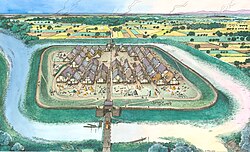
- Timeline: Roughly 4th millennium BC to 1st millennium BC.
- Metallurgical Shift: Transitioned from arsenical bronze to tin bronze.
- Tin Hub: Southwest Britain was a primary source of tin for the Mediterranean and Europe.
- Social Change: Increased social stratification, evidenced by rich gold burials.
- Burial Evolution: Shifted from inhumation (burial of the body) in tumuli (barrows) to cremation in the Urnfield culture.
The Evolution of Bronze Metallurgy
Before the widespread use of tin, early smiths produced arsenical bronze, which dominated much of Europe through the 3rd millennium BC. While tin bronze foil appeared as early as 4650 BC in Pločnik, Serbia, and other sites in Bulgaria, this early independent development vanished around the end of the 5th millennium BC following the collapse of large cultural complexes in Thrace and north-eastern Bulgaria.
Tin bronze was later reintroduced using cassiterite tin. Great Britain became a pioneer in this field, becoming the first region in Europe to fully switch all metalwork to tin-bronze between 2200 and 2100 BC. This adoption eventually spread to Scandinavia and Central Europe by 1800 BC, and reached the Aegean and Egypt by 1500–1300 BC.
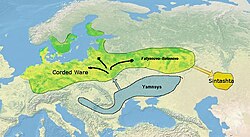
Regional Cultures and Civilizations
The Aegean and Southeast Europe
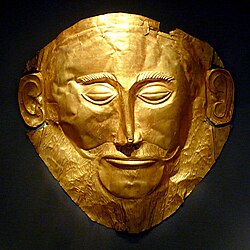
The Aegean was home to some of the most sophisticated societies of the era, including the Minoan civilization on Crete and the Mycenaean culture in mainland Greece. These societies are noted for their palatial structures and exquisite gold craftsmanship.
In Southeast Europe, a diverse array of cultures emerged, such as the Vučedol and Wietenberg cultures. The region later saw the rise of the Urnfield culture, known for its distinct burial practices.
Central and Northern Europe
Central Europe was dominated by the Únětice culture (2300–1600 BC), where gold grave gifts suggest a growing divide between social classes. This was followed by the Tumulus culture, characterized by burial mounds, and finally the Urnfield culture (1300–750 BC), which favored cremation.
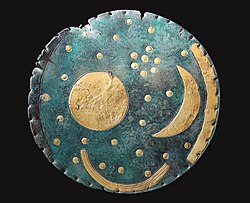
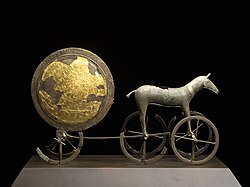
Northern Europe experienced the Nordic Bronze Age, producing iconic artifacts like the Trundholm sun chariot, reflecting a complex spiritual relationship with the sun.
The British Isles and Western Europe
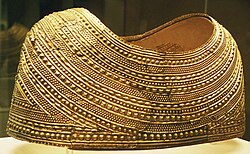
The Bronze Age in Britain (c. 2200–700 BC) was heavily influenced by the migration of the Beaker people. These immigrants brought new metalworking techniques and established strong trade links. Isotope research on remains near Stonehenge suggests some migrants originated from modern-day Switzerland.

Ireland's Bronze Age began around 2000 BC, utilizing rich copper ores from Kerry and Cork to produce flat axes and daggers.
Italy and Iberia
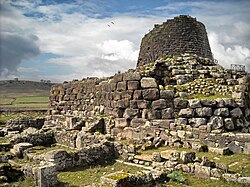
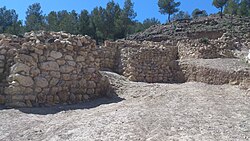
In Italy, the Nuragic culture of Sardinia is famous for its unique stone towers, known as nuraghi. In Iberia, the culture of the motillas developed advanced groundwater supply systems to survive extreme aridification during the 4.2-kiloyear climatic event.
Trade and Global Connectivity
The demand for tin—a rare metal—created the first truly international trade networks. Evidence shows that tin from southwest Britain was exported to the Mediterranean, driving the "bronzization" of the East Mediterranean between 1500 and 1300 BC. This is supported by shipwreck analysis and the writings of Herodotus, who mentioned the "tin islands" (Cassiterides) in the northwest.
Furthermore, gold from Cornwall has been traced to the Nebra Sky Disk in Germany, and copper from Extremadura in Spain reached as far north as Scandinavia, proving that Bronze Age Europe was deeply interconnected.
Summary of Major Bronze Age Cultures
| Region | Key Cultures | Defining Characteristics |
|---|---|---|
| Aegean | Minoan, Mycenaean | Palatial civilizations, gold masks, maritime trade. |
| Central Europe | Únětice, Tumulus, Urnfield | Social stratification, shift from barrows to cremation. |
| British Isles | Beaker, Wessex | Major tin production, Stonehenge associations. |
| Sardinia | Nuragic | Construction of nuraghi (stone towers). |
| Iberia | Argaric, Motillas | Groundwater management, copper mining hubs. |
Frequently Asked Questions
What is the difference between arsenical bronze and tin bronze?
Arsenical bronze is an alloy of copper and arsenic, which was the dominant form of bronze in early Europe. Tin bronze is an alloy of copper and tin, which is generally more durable and became the standard as trade networks for tin expanded.
Why was Britain so important during the Bronze Age?
Britain, specifically Cornwall and Devon, possessed some of the earliest and richest tin deposits in Europe. This made the region a critical supplier for the rest of the continent and the Mediterranean.
What was the Urnfield culture?
The Urnfield culture was a Late Bronze Age culture (1300–750 BC) prevalent in Central Europe, named for its characteristic practice of cremating the dead and placing the ashes in ceramic urns.
How did the climate affect early settlements in Iberia?
During the 4.2-kiloyear climatic event, extreme dryness led the Motillas culture to build specialized groundwater supply plants to ensure survival in an arid environment.
Who were the Beaker people?
The Beaker people were a group of migrants who moved across Europe and into the British Isles, bringing with them distinct pottery styles and early metalworking skills in copper and gold.