Eucalyptus: The Versatile Giants of the Myrtaceae Family
The Eucalyptus genus, belonging to the Myrtaceae family, comprises a diverse group of flowering plants primarily native to Australia. Known for their rapid growth, aromatic leaves, and striking appearance, these trees have transitioned from regional staples to global commodities used in everything from musical instruments to industrial pulpwood.
Key Facts
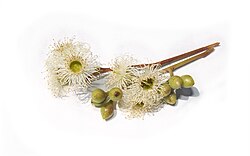
- Scientific Classification: Part of the order Myrtales and family Myrtaceae.
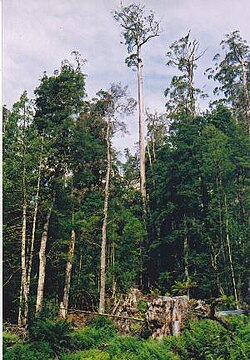
- Extreme Height: Some species, such as Eucalyptus regnans, can exceed 80 metres (260 ft).
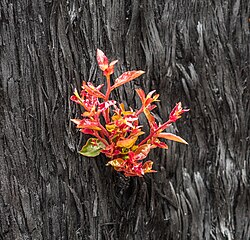
- Fire Adaptation: Capable of regenerating via epicormic buds located beneath the bark.
- Global Reach: Cultivated across North America, South America, Africa, Europe, and Asia.
- Economic Value: Major source of eucalyptus oil, pulpwood, and specialized timber.
Growth Habits and Physical Characteristics
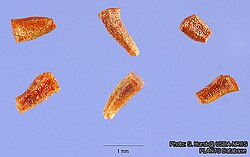
Eucalyptus species exhibit a wide range of sizes and growth forms, categorized by their maximum height. Small species reach up to 10 m (33 ft), medium-sized trees range from 10–30 m (33–98 ft), tall trees reach 30–60 m (98–197 ft), and very tall species exceed 60 m (200 ft).
Beyond height, the genus displays various habits. Some grow as traditional forest trees with massive crowns, while others take the form of "mallee" (low branching) or "marlock" forms. Their bark is equally diverse, ranging from the smooth, shedding bark of the Tasmanian blue gum to the rough "box" bark of E. quadrangulata and the vibrant, multi-colored bark of species native to Southeast Asia.
Flowers and Foliage
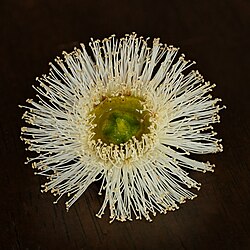
The reproductive structures of the Eucalyptus are distinct. The flowers are characterized by an operculum (a cap-like structure that falls off to reveal the stamens). For example, Eucalyptus leucoxylon var. 'Rosea' clearly demonstrates these buds and flowers.
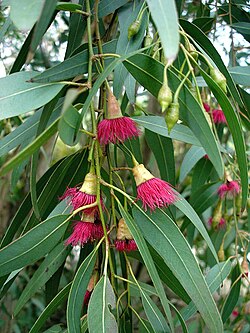
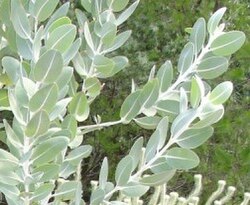
Individual flowers can vary in size; some reach approximately 4.5 cm (1.8 in) in diameter with stamens roughly 1 cm (0.39 in) long. The foliage is often glaucous (covered with a waxy, bluish-grey coating), as seen in E. tetragona.
Ecological Adaptations and Fire Resilience
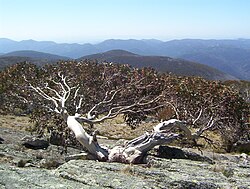
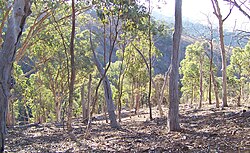
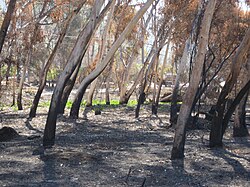
Eucalyptus trees have evolved sophisticated mechanisms to survive and thrive in fire-prone environments. One of the most remarkable features is epicormic growth—the ability to sprout new shoots directly from dormant buds protected beneath the thick bark of the trunk after a fire has stripped the canopy.
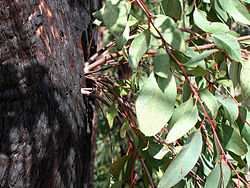
This resilience allows forests to enter a state of rapid regeneration following devastating bushfire seasons. However, this relationship with fire is complex; while the trees survive, they can also act as a fire hazard due to the volatile oils in their leaves.
Global Distribution and Human Use
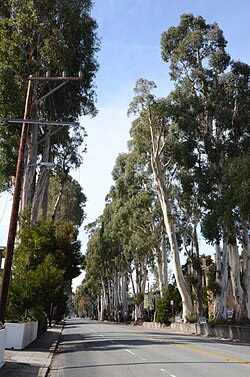
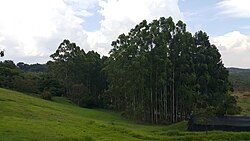
While native to Australia, Eucalyptus has been introduced worldwide for various economic reasons. In North America, they are found in California, where some rows planted in the 1870s are now listed on the National Register of Historic Places. In South America, they are fundamental to the agricultural landscapes of Brazil, Argentina, and Uruguay.
The genus is utilized in several industries:
- Industrial: Production of pulpwood for paper and eucalyptus oil for medicinal and aromatic use.
- Artisanal: Used in the construction of didgeridoos and high-end musical instruments, including guitars.
- Mining: Some species have the unique ability to absorb gold from the soil, which can be found in their leaves.
Environmental Impact and Challenges
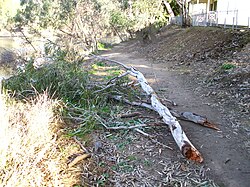
The introduction of Eucalyptus to non-native regions has led to ecological challenges. In South Africa, they are considered an invasive species, often described as "thirsty" trees that can deplete local water resources. Additionally, some species are prone to "sudden limb drop," where heavy branches fall without warning, posing a risk to people and infrastructure.
Environmental stressors, such as high winds and extreme heat, can also physically deform the trees, as seen in the leaning Eucalyptus of San Diego County following the 2007 wildfires.
Summary of Eucalyptus Characteristics
| Feature | Description/Range | Example/Note |
|---|---|---|
| Height Categories | Small (<10m) to Very Tall (>60m) | E. regnans (Very Tall) |
| Key Adaptation | Epicormic Buds | Regrowth after bushfires |
| Floral Feature | Operculum | Cap that protects the flower bud |
| Primary Uses | Oil, Pulpwood, Timber | Used in guitars and didgeridoos |
| Global Status | Native to Australia; Invasive in some areas | Water depletion in South Africa |
Frequently Asked Questions
What is an operculum in Eucalyptus?
The operculum is a woody cap that covers the flower bud. It protects the internal reproductive organs and falls off as the flower opens to reveal the stamens.
How do Eucalyptus trees survive intense fires?
They utilize epicormic buds, which are dormant buds located deep beneath the bark. When the main canopy is destroyed by fire, these buds are triggered to sprout new foliage directly from the trunk.
Are Eucalyptus trees invasive?
Yes, in certain regions outside their native range, such as South Africa, they are classified as invasive species because they can outcompete native flora and consume excessive amounts of groundwater.
What are the primary commercial products derived from Eucalyptus?
The most common products include eucalyptus oil (extracted from leaves), pulpwood for the paper industry, and specialized timber for musical instruments and construction.
Why are some Eucalyptus trees called "widow makers"?
This term refers to the tendency of some species to drop large, heavy limbs unexpectedly, especially during periods of high summer heat, which can be dangerous to those walking beneath them.