Etching: The Art and Science of Intaglio Printmaking
Etching is a sophisticated artistic and industrial process that uses a strong acid, known as a mordant, to carve designs into a metal surface. Unlike engraving, where lines are physically cut into the metal, etching relies on a chemical reaction to create intaglio (incised) grooves. While it remains a cornerstone of fine art printmaking, the principles of etching are equally vital in modern technology, powering the creation of everything from circuit boards to microfabricated components.
At its core, etching is a dance between protection and exposure. By covering a metal plate in an acid-resistant substance, the artist can "draw" with a needle, allowing the acid to do the heavy lifting of carving the image. This versatility has made it a favorite of old masters and contemporary artists alike.
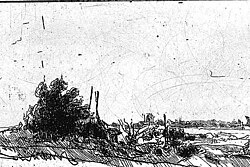
Key Facts
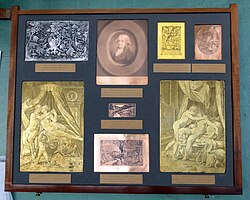
- Core Process: Uses acid (mordant) to bite into unprotected metal to create an incised design.
- Common Materials: Traditionally uses copper, zinc, or steel plates.
- Historical Origin: Used for decorative beads in the Indus Valley (3rd millennium BCE) and later adapted for printmaking by Daniel Hopfer.
- Key Innovation: Jacques Callot introduced the échoppe and advanced "stopping-out" techniques for tonal depth.
- Modern Use: Essential for photochemical milling and the production of electronic circuit boards.
The Traditional Etching Process
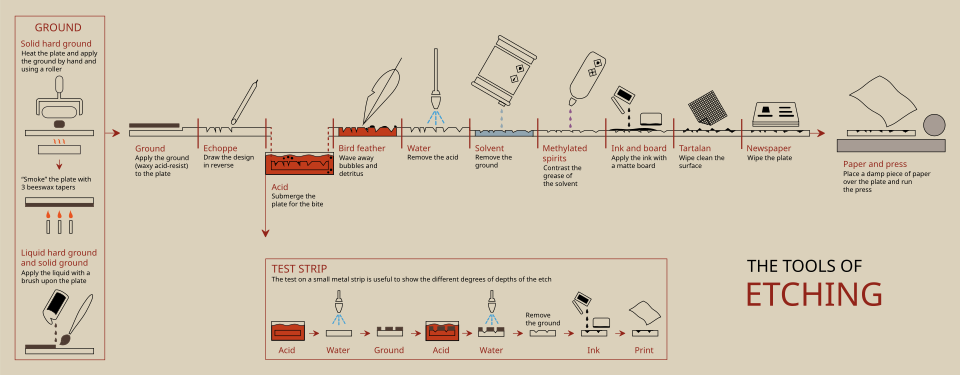
The classic method of etching involves several precise steps to ensure the final print is clean and detailed. It begins with a metal plate, typically made of copper, zinc, or steel, which is coated in a waxy, acid-resistant hard ground.
Creating the Design
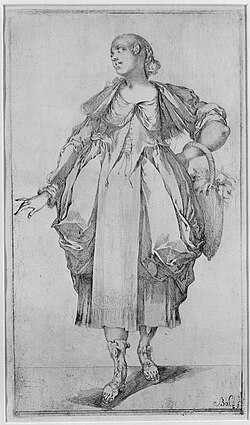
The artist uses a pointed etching needle to scratch through the wax, exposing the bare metal underneath. For lines that vary in thickness, artists may use an échoppe—a tool with a slanted oval section that allows for "swelling" lines, creating a more organic, fluid appearance similar to a fountain pen.
The "Biting" Phase
Once the design is drawn, the plate is submerged in a bath of acid (the mordant). The acid undergoes a redox reaction, "biting" into the exposed metal. The depth and width of the lines depend on the strength of the acid and the length of time the plate remains submerged. After the desired depth is achieved, the remaining wax ground is cleaned off.
Printing the Image
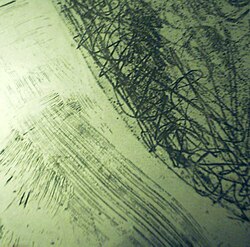
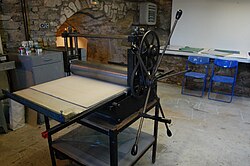
To create the final print, the plate is covered in non-corrosive ink, and the surface is wiped clean so that ink remains only in the etched grooves. A sheet of moistened paper is placed over the plate and run through a high-pressure cylinder press. The paper absorbs the ink from the grooves, resulting in a finished print. A single plate can typically produce several hundred impressions before wearing down.
A History of Etching
Ancient Origins
Long before it was a printmaking medium, etching was used for decoration. In the 3rd millennium BCE, the Indus Valley civilization developed alkaline etching to create white designs on carnelian beads. These beads served as markers of ancient trade between the Indus Valley, Mesopotamia, and Ancient Egypt.
![The etched carnelian beads in this necklace from the Royal Cemetery of Ur dating to the First Dynasty of Ur (2600-2500 BCE) were probably imported from the Indus Valley.[8]](/images/b0/ed/b0ed031bb2617d29e32568631efd618c618b1dba4fdd2830200c72f689255f62.jpg)
The Transition to Printmaking
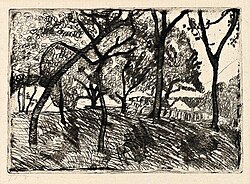
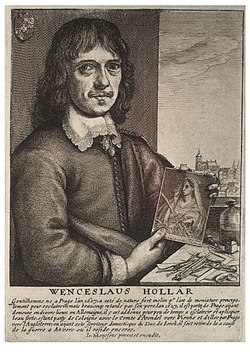
In Europe, goldsmiths and armorers used etching to decorate weapons and cups during the Middle Ages. Daniel Hopfer (c. 1470–1536) of Augsburg, Germany, is credited with applying these armor-decorating techniques to printmaking using iron plates.
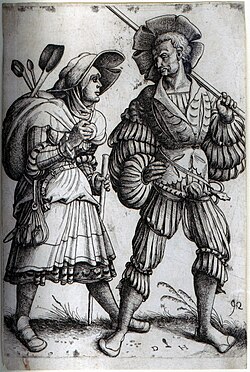
While Albrecht Dürer produced some of the oldest dated etchings in 1515, the medium reached new heights in the 17th century with masters like Rembrandt. Later, Jacques Callot revolutionized the craft by introducing stopping-out—the process of covering certain areas with ground after an initial acid bath to preserve lighter tones and create atmospheric perspective.
Variants and Modern Evolutions
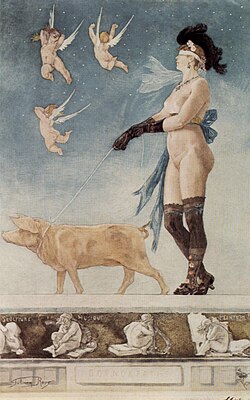
Relief and Carborundum Etching
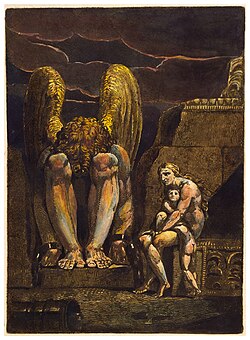
William Blake invented relief etching around 1788. Unlike traditional intaglio, relief etching exposes the background to acid, leaving the design raised (like a stamp). In the mid-20th century, American WPA artists developed carborundum etching, using silicon carbide grit to create a roughened surface that allows for a wider tonal range and embossed effects.
Nontoxic and Industrial Methods
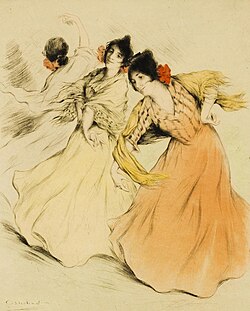
Due to the health risks of traditional acids, late 20th-century artists developed nontoxic alternatives. These include using acrylic polymers instead of wax and ferric chloride instead of nitric acid. Anodic etching (or Electroetch) uses a direct electrical current to move metal from an anode to a cathode, providing a safer, more controllable way to create plates without corrosive gases.
Etching Summary Table
| Technique | Primary Mechanism | Key Characteristic | Notable Figure/Era |
|---|---|---|---|
| Traditional Etching | Acid (Mordant) | Intaglio (incised lines) | Rembrandt, Daniel Hopfer |
| Relief Etching | Acid (Mordant) | Raised design (relief) | William Blake |
| Carborundum | Silicon Carbide Grit | High relief/embossed | Mid-20th Century WPA |
| Anodic Etching | Electrical Current | Nontoxic/Industrial | Modern (Electroetch) |
Frequently Asked Questions
What is the difference between etching and engraving?
Engraving involves physically carving lines into metal using a burin. Etching uses a chemical process where acid "bites" the lines into the metal, allowing the artist to draw more freely with a needle through a waxy ground.
What is "stopping-out" in etching?
Stopping-out is the technique of covering specific areas of the plate with an acid-resistant ground after it has already been etched. This prevents further acid penetration in those areas, allowing the artist to create a variety of tones from light to dark.
Is etching still used today?
Yes, etching is widely practiced by fine artists. Additionally, it is a critical industrial process used in microfabrication and the production of printed circuit boards (PCBs).
What does the phrase "come up and see my etchings" mean?
This is a romantic euphemism used to entice someone to a private residence under the guise of looking at art, but with ulterior motives. It originated from 19th-century literature and was popularized in 20th-century cartoons and novels.