Episcopal See: Definition and Ecclesiastical Significance
In the context of Christian church governance, an episcopal see refers to the area of a bishop's ecclesiastical jurisdiction. While the term is often used interchangeably with "diocese," it carries a deep symbolic meaning rooted in the physical seat of authority from which a bishop governs.
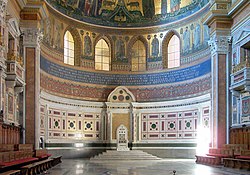
The word "see" is derived from the Latin sedes, meaning "seat." Historically, the seat or chair of a bishop served as the primary symbol of their authority. This symbolic chair is known as the cathedra. Consequently, the specific church that houses this chair is called a cathedral (from the Latin ecclesia cathedralis, or "church of the cathedra"). In some traditions, particularly the Eastern Orthodox Church, the term "throne" is used to describe both the physical chair and the broader area of jurisdiction.
Beyond the geographical region, the term "see" can also refer specifically to the town or city where the bishop's residence or the cathedral is located.
Key Facts
- Etymology: Derived from the Latin sedes (seat).
- Cathedra: The official chair of a bishop, symbolizing their authority.
- Cathedral: The church building that contains the bishop's cathedra.
- Synonymy: In practical terms, a see is often synonymous with a diocese.
- Scope: Can refer to a geographical region, a specific city, or the seat of power itself.
The Episcopal See Across Different Traditions
The Catholic Church
Within Catholicism, every diocese is viewed as a see. While these sees maintain their own local administration, they hold an allegiance to the See of Rome. The structure is further diversified by the twenty-three Particular Eastern Catholic Churches, which maintain a level of autonomy while remaining subdivided into smaller sees, such as dioceses and archdioceses.
The episcopal see of the Pope, who serves as the Bishop of Rome, is uniquely referred to as the Holy See or the Apostolic See, a designation that reflects the claim of papal supremacy.
The Eastern Orthodox Church
The Eastern Orthodox Church operates on the principle that all bishops are sacramentally equal and hold equal authority over their respective sees. While some bishops may be assigned additional administrative duties over larger regions—a concept seen in the Pentarchy—these powers are limited. Unlike the Catholic tradition, the Eastern Orthodox Church rejects the concept of papal supremacy or the idea that any single bishop holds supreme authority over the entire Church.
The United Methodist Church
In the United Methodist Church, the structure is organized around Annual Conferences. Each conference is presided over by a resident bishop who leads a named Episcopal Area, also referred to as a see city. This city is typically the most centrally located or largest city within the Annual Conference.
Annual Conferences serve as the fundamental regional bodies of the United Methodist Global Connection, handling the election, approval, and ordination of clergy. The governance of these sees follows a specific electoral process:
- Bishops are elected for life during Jurisdictional Conferences, which occur every four years.
- These conferences consist of equal numbers of lay and clergy delegates.
- Once elected, bishops are assigned to lead an Episcopal area for four-year terms.
- In some cases, two smaller Annual Conferences may agree to share a single bishop.
Comparison of Episcopal Sees by Tradition
| Tradition | Primary Term for Jurisdiction | View on Supreme Authority | Key Structural Unit |
|---|---|---|---|
| Catholic Church | Diocese / See | Papal Supremacy (Holy See) | Diocese / Archdiocese |
| Eastern Orthodox | See / Throne | Sacramental Equality | Individual See |
| United Methodist | Episcopal Area / See City | Regional/Jurisdictional | Annual Conference |
Frequently Asked Questions
What is the difference between a see and a diocese?
While often used as synonyms, a "see" technically refers to the seat of the bishop's authority (the cathedra) and the city where it is located, whereas a "diocese" refers to the entire geographical area under that bishop's jurisdiction.
What is a cathedra?
A cathedra is the official chair or throne of a bishop. It serves as the earliest and most significant symbol of the bishop's ecclesiastical authority within their see.
What is the Holy See?
The Holy See is the episcopal see of the Pope, the Bishop of Rome. It represents the central government of the Catholic Church and claims papal supremacy.
How are bishops assigned to sees in the United Methodist Church?
United Methodist bishops are elected for life at Jurisdictional Conferences every four years. They are then assigned to lead an Episcopal area (see) for four-year terms, which may encompass one or more Annual Conferences.
Do Eastern Orthodox bishops have different levels of authority?
Sacramentally, all Eastern Orthodox bishops are considered equal. While some may have additional administrative responsibilities over wider regions, they do not possess supreme authority over other bishops or the Church as a whole.