Entrepôts: The Evolution of Global Transshipment Hubs
In the complex world of global commerce, the movement of goods is rarely a straight line. For centuries, the efficiency of trade has relied on the entrepôt—a specialized transshipment port, city, or trading post where merchandise is imported, stored, and traded before being exported once again. Derived from the Latin roots inter (between) and positum (position), the term literally means "that which is placed between." These hubs act as critical intermediaries in the flow of international goods.
Historically, entrepôts were strategically positioned at crossroads, along rivers, canals, or major maritime trade routes. During the age of sail, they served as the heartbeat of global exchange, providing a necessary buffer in an era of unpredictable transport.
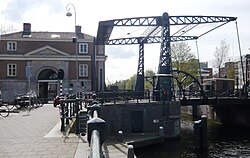
The Economic Necessity of Stockpiling
Before the Industrial Revolution, the movement of commodities was irregular and unpredictable. Whether moving goods between continents or across different regions of a single country, there was no reliable way to ensure a steady distribution or balance supply and demand. This volatility often led to extreme price instability.
As noted by economists T. P. van der Kooy and P. W. Klein, the only solution to this instability was the use of central storehouses. By stockpiling great reserves of commodities, entrepôts functioned as reservoirs that "ironed out" the unevenness of supply, ensuring a more regular flow of goods and stabilizing prices for consumers and merchants alike.
The Role of Entrepôts in the Early Modern Period
During the early modern period, entrepôts became indispensable as mercantile shipping flourished between Europe and colonial empires in Asia and the Americas. These hubs offered several strategic advantages:
- Risk Mitigation: Many traders were unwilling or unable to travel the entire length of a perilous global route. They could sell their goods at an entrepôt, allowing another trader to handle the remaining leg of the journey.
- Profit Optimization: This relay system allowed specialized traders to maximize profits based on their specific capabilities and regional knowledge.
- Political Power: Because they controlled the flow of essential goods, the primary entrepôts of the era often wielded immense economic and political influence, leading to intense competition between rival trade cities.
Modern Logistics and the Shift in Trade
The rise of modern technology has fundamentally altered the need for traditional entrepôts. The introduction of railways, container ships, air freight, and advanced telecommunications has created a streamlined global network. Today, goods move in regular, controlled streams, enabling just-in-time manufacturing—a system where materials are produced or delivered only as they are needed, eliminating the need for massive stockpiles.
While these advancements have made many traditional entrepôts obsolete, the term persists. In a modern context, it often refers to duty-free ports or locations with a high volume of re-export trade. Some historic hubs, such as Antwerp, Belgium, have successfully evolved to remain major centers of transshipment in the 21st century. Others, like Buffalo, New York, declined as newer technologies rendered their primary routes—such as the Erie Canal—obsolete.
Key Facts
- Definition: A transshipment hub where goods are imported and stored specifically for re-export.
- Etymology: From Latin inter (between) and positum (position).
- Primary Function: Historically used to stabilize prices and balance supply and demand through stockpiling.
- Modern Status: Largely replaced by just-in-time logistics, though still used for duty-free and re-export trade.
- Strategic Location: Typically found on maritime routes, canals, or river crossroads.
Global Examples of Entrepôts
| Region | Key Examples |
|---|---|
| Africa | Alexandria, Cape Town |
| Americas | Baltimore, Colón, New Orleans, São Paulo, Valparaíso |
| Asia | Singapore, Hong Kong, Dubai, Shanghai, Tokyo, Busan, Manila, Port Klang, Kaohsiung, Tianjin, Surabaya, Vizhinjam |
| Europe | Amsterdam, Istanbul, Liverpool, Marseille, Antwerp |
| Oceania | Port of Port Hedland |
Frequently Asked Questions
What is the difference between a standard port and an entrepôt?
While a standard port primarily handles imports for local consumption or exports from local production, an entrepôt focuses on transshipment—importing goods specifically to store or trade them before exporting them to another destination.
Why are entrepôts less common today?
Modern logistics, including containerization and air freight, allow for a reliable and steady stream of goods. This has enabled just-in-time manufacturing, which removes the need for the massive central stockpiles that once made entrepôts essential.
How did entrepôts affect the price of goods?
By acting as central reservoirs, entrepôts helped stabilize prices. They prevented extreme price spikes during shortages by releasing stockpiled reserves into the market, ensuring a more consistent supply.
Are there still active entrepôts in the world?
Yes. While the traditional model has changed, many cities like Singapore and Hong Kong continue to function as massive transshipment hubs, and the term is still used for ports that facilitate high volumes of re-export or duty-free trade.