20th Century Press Archives: A Global Repository of Economic and Political History
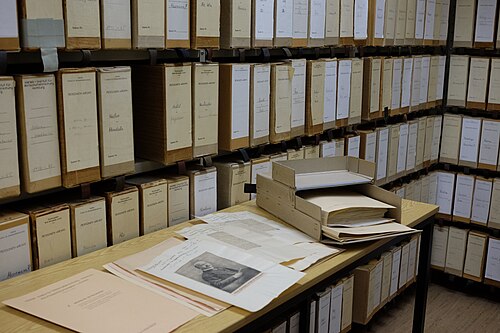
The 20th Century Press Archives (German: Pressearchiv 20. Jahrhundert) represent one of the most comprehensive collections of historical media documentation in existence. Containing approximately 19 million newspaper clippings, this vast repository organizes global events, corporate histories, and biographical data into a structured system of folders. Today, it serves as a critical resource for researchers studying the intersection of global politics and economics.
Key Facts
- Total Volume: Approximately 19 million newspaper clippings.
- Origins: Founded via the Hamburg Kolonialinstitut (1908) and the Kiel Institute for the World Economy (1914).
- Current Custodian: The German National Library of Economics (ZBW), part of the Leibniz Association.
- Scope: Covers persons, companies, commodities (wares), and global topics.
- Digital Access: Available via the "Pressemappe 20. Jahrhundert" web application.
- Open Data: Metadata is provided under a CC0 license and integrated with Wikidata.
Institutional History and Evolution
The archive is the result of a merger between two distinct German institutions. The first began as the Hamburg Kolonialinstitut in 1908. Originally a center for colonial information, it evolved into a global political and economic archive to support Hamburg's merchant class. Following the collapse of the German colonial empire after World War I, it was renamed the Hamburgisches Welt-Wirtschafts-Archiv (HWWA) in 1919.
The second pillar was the Kiel Economic Archive, established shortly before World War I. Closely tied to the Kiel Institute for the World Economy (IfW), it focused on the practical application of global economic research. By 1966, the IfW library was designated as a central library for economics by the German Research Foundation (DFG).
Both institutions have a complex history; during the First and Second World Wars, they were involved in the wartime planning of the German empire and the Nazi state. From 1936, the HWWA produced "Confidential Reports from the Foreign Press," which provided Nazi officials with unfiltered economic intelligence from international media.
The path to unification began in 1996, leading to the adoption of a common classification system and the "EconPress" database in 2001. Active collection of new articles ceased at the end of 2005. In 2007, the HWWA was fully integrated into the ZBW, forming the current structure under the Leibniz Association.
Collection Structure and Extent
The archives are meticulously categorized into four primary sections to ensure comprehensive coverage of the 20th century:
- Topics Archive (Sacharchiv): Covers global subject matter across countries and subcontinents. It includes up to 1,200 individual topics and special folders for major events like the Boer War or the Suez Canal.
- Wares Archive (Warenarchiv): Documents raw materials and finished products, utilizing a hierarchy of 980 upper terms and 3,400 sub-terms.
- Companies Archive (Firmenarchiv): Contains reports and clippings for between 36,000 and 70,000 domestic and foreign companies, as well as various international organizations.
- Persons Archive (Personenarchiv): Features dossiers on approximately 16,000 influential figures from politics, science, culture, and business.
The sources monitored for these archives exceed 1,400 publications, with some materials dating back to 1826. While the persons archive remained largely on paper, other sections were migrated to roll film or microfiche starting in the 1960s to save space.
The Kiel Contribution
The Kiel holdings, while less documented than the Hamburg collection, provided essential research for the IfW. This included a personnel archive and a corporate archive that was once considered one of the most complete collections for 20th-century business history. Tragically, a 1942 bomb strike destroyed the "war archive" of 1914–1918, which contained one million clippings.
Digitization and Modern Accessibility
Between 2004 and 2007, a project funded by the German Research Foundation focused on digitizing materials from the archive's inception up to 1949. This period was chosen due to capacity limits and intellectual property rights—specifically the rule that works are often restricted until 70 years after the author's death.
Digitizing these records presented significant technical challenges. Because of the use of Fraktur (a traditional blackletter typeface), varying fonts, and poor clipping quality, Optical Character Recognition (OCR) could not be used. Instead, staff manually recorded metadata and used "Slider" software to slice roll films into individual documents.
Integration with Wikidata
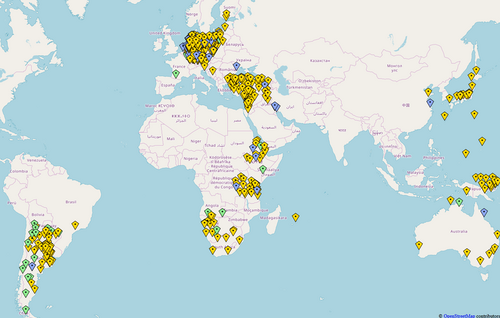
In 2019, the ZBW released the archive's metadata under a CC0 license, enabling a partnership with Wikimedia Deutschland. This "data donation" allowed every folder in the archive to be linked to a Wikidata item by the end of 2022. Furthermore, 2024 updates to European intellectual property laws have allowed the release of 3.8 million digitized pages for online viewing within the European Union.
| Archive Section | Primary Focus | Approximate Scale/Detail |
|---|---|---|
| Topics (Sacharchiv) | Global political/economic issues | Up to 1,200 individual topics |
| Wares (Warenarchiv) | Raw materials and products | ~4,380 total terms (upper/sub) |
| Companies (Firmenarchiv) | Corporate reports and clippings | 36,000 to 70,000 companies |
| Persons (Personenarchiv) | Biographical dossiers | ~16,000 individuals |
Frequently Asked Questions
What is the 20th Century Press Archive?
It is a massive collection of approximately 19 million newspaper clippings organized by person, company, commodity, and topic, managed by the German National Library of Economics (ZBW).
How can I access the archives online?
Parts of the holdings are accessible through the "Pressemappe 20. Jahrhundert" web application, which provides digitized images and metadata.
Why is the digitization limited primarily to materials before 1949?
This limitation was implemented due to technical capacity and intellectual property restrictions, as many articles remain under copyright for 70 years after the author's death.
What is the relationship between the archive and Wikidata?
The ZBW donated the archive's metadata to Wikimedia Deutschland under a CC0 license, meaning almost every folder in the archive is now linked to a corresponding Wikidata item for easier discovery.
Were the archives used for political purposes?
Yes, during the Nazi era, both the HWWA and the Kiel Institute for the World Economy provided intelligence and reports to the Nazi state to support its foreign and wartime planning.