Ensign: The History and Role of the Junior Commissioned Officer
The term ensign originates from the Late Middle English and Old French enseigne, meaning a mark, symbol, or flag. In military contexts, an ensign is typically a junior commissioned officer, most commonly found within the navy or infantry. The rank's identity is deeply rooted in the tradition of the flag-bearer, though its application varies significantly across different nations and eras.
Historically, the junior officer in an infantry regiment was tasked with carrying the regimental colours—the symbolic flags of the unit. This duty gave the rank its name. Over time, many armies replaced the title of ensign with second lieutenant, though the original meaning persists in various naval and ceremonial traditions.
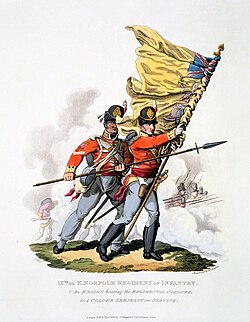
Key Facts
- Origin: Derived from the Latin insignia, referring to the officer's duty to carry the unit's flag.
- Modern Usage: Primarily used as the lowest commissioned officer rank in the U.S. Navy and Coast Guard.
- Army Equivalency: Generally equivalent to a second lieutenant in land forces.
- Global Variation: While usually a junior rank, the Arab rank of liwa' (often translated as ensign) is equivalent to a major general.
- Insignia: In the U.S., ensigns wear a single gold bar, earning them the nickname "butterbars."
Global Perspectives on the Rank
European and Commonwealth Traditions
In the United Kingdom, the rank of ensign was the lowest commissioned officer in infantry regiments until 1871. While replaced by the second lieutenant, the title is still used by Foot Guards regiments during ceremonies like Trooping the Colour. In the cavalry, the equivalent flag-bearing rank was known as a cornet.
Other European languages have similar etymologies based on flags: the French enseigne, Polish chorąży, and German Fähnrich (from Fahnenträger, or flag-bearer). However, in Germany and the Netherlands, these are often officer-cadet ranks rather than full commissioned officers. In Sweden, the fänrik remains the lowest commissioned rank.
French-Speaking Nations
During the Ancien régime in France, the enseigne was the regimental banner and later the officer who carried it. While the army transitioned to the rank of sous-lieutenant in the late 18th century, the navy retained enseigne de vaisseau. Today, many French-speaking navies, including those of Canada and Madagascar, use first and second-class ensign ranks.
New Zealand's Unique Adaptation
The Royal New Zealand Navy (RNZN) created the ensign grade to align its structure with the New Zealand Army (second lieutenant) and the Royal New Zealand Air Force (pilot officer). This decision was influenced by New Zealand's cooperation with the United States Armed Forces, ensuring a balanced rank system across services.
The Ensign in the United States
In the U.S. Army, the rank was established in 1789 but abolished in 1815. Since 1862, however, it has served as the junior commissioned officer rank for several maritime and health services.
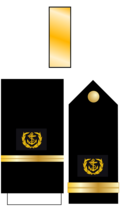
Naval and Coast Guard Roles
In the U.S. Navy and Coast Guard, ensigns are the entry-level commissioned officers. Their training varies by their specific career track:
- Unrestricted Line Officers: These officers enter warfare communities. Surface Warfare Officers (SWO) attend a 22-week school, Submarine Officers undergo extensive nuclear power training, and Naval Aviators complete 12 to 18 months of flight training.
- Restricted Line Officers: These specialists focus on intelligence, cryptography, meteorology, or public affairs.
- Staff Corps: These include professional specialists in the Medical, Dental, Nurse, and Supply Corps.
- Limited Duty Officers (LDO): Technical experts who rose from the enlisted ranks (must have been an E-7 Chief Petty Officer).
Other U.S. Uniformed Services
The rank of ensign is also used in the U.S. Public Health Service Commissioned Corps, where it is often associated with the Commissioned Officer Student Training and Extern Program (COSTEP). In the NOAA Corps, all officers are commissioned as ensigns and must be either mariners or aviators. The U.S. Maritime Service (USMS) also utilizes the rank for those commissioning into the Naval Reserve.
Rank Comparison Summary
| Country/Service | Rank Title | Equivalent/Role | Context |
|---|---|---|---|
| USA (Navy/Coast Guard) | Ensign (ENS) | Second Lieutenant | Junior Commissioned Officer |
| UK (Historical/Guards) | Ensign | Second Lieutenant | Regimental Colour Bearer |
| France (Navy) | Enseigne de vaisseau | Sub-Lieutenant | Naval Officer |
| Arab Nations | Liwa' | Major General | Unit Commander |
| Sweden | Fänrik | Ensign | Lowest Commissioned Rank |
Frequently Asked Questions
Why is the rank called "Ensign"?
The name comes from the officer's traditional duty of carrying the "ensign" or regimental colours (the flag) of their infantry unit into battle.
What is the difference between an Ensign and a Second Lieutenant?
In most modern military structures, they are equivalent ranks (NATO rank code OF-1). "Ensign" is typically used in naval services, while "Second Lieutenant" is used in army and air force services.
What are "butterbars"?
"Butterbars" is a nickname for junior officers in the U.S. military (including ensigns and second lieutenants) because their collar insignia consists of a single gold bar that resembles a stick of butter.
Is an ensign always a junior officer?
No. While it is a junior rank in Western traditions, in Arab military structures, the rank of liwa' (translated as ensign) is a senior rank equivalent to a major general.
What are the duties of a U.S. Navy Ensign?
Ensigns typically serve as division officers, leading groups of petty officers and enlisted personnel in specific ship or squadron departments, such as engineering, navigation, or communications, while receiving on-the-job leadership training.