Enid, Oklahoma: A Comprehensive Look at Demographics, Culture, and History
Located as the county seat of Garfield County, Enid, Oklahoma, is a city defined by its steady growth and a complex tapestry of cultural and ethnic influences. From its early days as a territorial settlement to its current status as a regional hub, Enid has evolved through waves of migration and social change, shaping a community with a unique identity in the American Heartland.
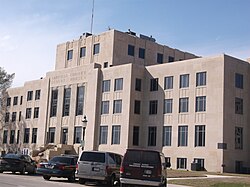
Key Facts
- 2020 Population: 51,308 residents.
- Median Age: 35.2 years.
- Political Lean: Predominantly Republican, ranked among the top 10 most conservative U.S. cities in 2021.
- Diverse Heritage: Significant populations of Marshallese and Hispanic residents.
- Urbanization: 96.2% of the population resides in urban areas.
Population Trends and Demographics
Enid has experienced significant population shifts since the turn of the 20th century. After a massive surge between 1900 and 1910, the city grew steadily for decades, peaking in the 1980s before stabilizing. According to the 2020 census, the city's population density stands at 693.9 people per square mile.
The city's household structure is diverse, with 44.7% being married-couple households and 30.8% consisting of individuals living alone. Homeownership is relatively high, with 60.1% of occupied housing units being owner-occupied.
| Census Year | Population | Percentage Change |
|---|---|---|
| 1900 | 3,444 | — |
| 1950 | 36,071 | 28.5% |
| 2000 | 47,045 | 3.8% |
| 2020 | 51,308 | 3.9% |
Racial and Ethnic Composition
Enid's ethnic makeup has shifted toward greater diversity over the last forty years. While the Non-Hispanic White population was 92.5% in 1980, it was 64.5% by 2020. Conversely, the Hispanic or Latino population has seen substantial growth, rising from 1.4% in 1980 to 16.3% in 2020.
The most reported ancestries in 2020 include English (18.2%), German (15.1%), Mexican (13.6%), and Irish (11.1%), followed by Marshallese (5.6%).
Political and Religious Landscape
Politically, Enid is a Republican stronghold, a trend rooted in the influence of early settlers from Kansas. This conservative leaning was highlighted in 2021 when the city was named one of the top 10 most conservative cities in America, with over 60% of voters registering as Republicans.
The city's religious life is equally vibrant. Approximately 61.9% of residents affiliate with a religious congregation, with Protestants making up the largest group at 39.2%, followed by other Christian denominations (12.2%) and Catholics (9.4%).
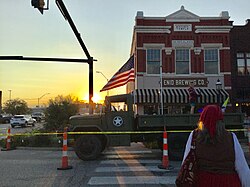
Faith has long been a cornerstone of the community. From the first Protestant sermon delivered on the courthouse lawn in 1893 to the establishment of various Lutheran, Catholic, and historically Black churches, Enid's spiritual landscape is broad. The city has also hosted a Jewish community, with early merchants leaving a lasting mark on the city's commerce and governance, including the election of Mayor Joseph Meibergen in 1897.
The Marshallese Community
Enid is home to one of the largest Marshallese populations in the United States. This migration was driven by several factors, including the Compact of Free Association (a treaty allowing Marshallese citizens to live and work in the U.S.) and the fallout from nuclear testing at Bikini Atoll, which displaced many from their homeland.
The community has faced significant challenges, particularly regarding health. Many elderly Marshallese suffer from ailments linked to nuclear radiation and a forced shift from traditional diets to U.S. processed foods. Despite these hurdles, the community is integrated into the local school system, with dedicated English language learner (ELL) programs and cultural clubs at the high school and middle school levels.
African American History and Civil Rights
African Americans have been part of Enid since the 1893 Land Run, establishing strong community roots in the Southern Heights and East Park neighborhoods. Early leaders included attorney Devotion Banks and Dr. Ollie Penny.
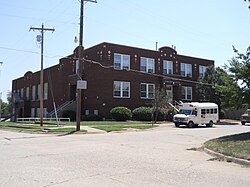
The path to equality in Enid was marked by both struggle and progress. The Booker T. Washington school served as a vital educational hub for Black residents until its closure in 1960. Integration of public schools began in 1955 but was not fully realized until 1969. The community also fought against segregation in local businesses, organizing sit-ins in 1958 and 1963 to challenge discriminatory practices at restaurants and drug stores.
The city's history also includes dark periods of racial violence, including a 1921 campaign by the Klan that drove many Black residents out of the "Two Street" district. In more recent history, the city has worked toward reconciliation, naming the municipal building after Dr. Martin Luther King, Jr. and honoring figures like opera singer Leona Mitchell and athlete Lydell Carr.
Frequently Asked Questions
What is the current population of Enid, Oklahoma?
As of the 2020 census, Enid has a population of 51,308 residents.
Why is there a significant Marshallese population in Enid?
The population grew due to the Compact of Free Association, employment opportunities at food plants and retail, and displacement caused by U.S. nuclear testing at Bikini Atoll.
What are the primary religious affiliations in Enid?
The majority of religious residents are Protestant (39.2%), followed by other Christian denominations (12.2%) and Catholics (9.4%).
When did Enid's public schools become fully integrated?
While integration began in 1955, the public school system was not fully integrated until 1969.
What is the political leaning of Enid?
Enid is predominantly Republican and was recognized as one of the top 10 most conservative cities in the U.S. in 2021.