KOCO-TV History: From Enid Roots to Oklahoma City Powerhouse
The story of KOCO-TV is a fascinating journey of geographic migration and corporate evolution. What began as a local service for Enid, Oklahoma, eventually transformed into a major broadcast presence in the Oklahoma City market. Through decades of ownership changes and technical hurdles, the station established itself as a cornerstone of regional news and entertainment.
Early Beginnings in Enid
The station's origins date back to April 1952, when the Federal Communications Commission (FCC) allocated Channel 5 to Enid. Following a competitive application process between the Enid Radiophone Company and businessman George Streets, a merger was formed to expedite the station's launch. The station officially adopted the call letters KGEO-TV, standing for "Greater Enid, Oklahoma."
KGEO-TV faced early challenges, including high winds that delayed the construction of its 750-foot tower. Despite these setbacks, the station began test broadcasts on July 6, 1954, and launched regular programming on July 18. As an ABC affiliate, it was the seventh station to sign on in Oklahoma and the only full-power VHF (Very High Frequency) station operating in northern Oklahoma at the time.
The original studios were uniquely housed in a former appliance store on East Randolph Avenue and North 2nd Street. However, the first few years were financially difficult; between 1954 and 1956, revenues dropped by nearly half, leading to significant staff reductions.
The Strategic Move to Oklahoma City
Recognizing the growth potential of the larger metropolitan area, ownership sought to relocate the transmitter. In 1955, an application was filed for a new 1,386-foot tower near Crescent. Despite opposition from the Department of Defense regarding aviation safety, the FCC approved the move in 1956.
The transition was not without disaster. On October 1, 1956, the tower collapsed during antenna relocation preparations, causing approximately $140,000 in damages (roughly $1.23 million in 2025). A replacement antenna from RCA was secured, and full-power service resumed on November 16, 1956.
In October 1957, the station was sold to the Caster-Robison Television Corporation for $950,000. On March 1, 1958, the station was renamed KOCO-TV to reflect its new secondary city of service: Oklahoma City. While still licensed to Enid, the station built permanent studios in Oklahoma City near Northwest 63rd Street and Portland Avenue.
By 1963, the FCC officially reallocated Channel 5 to Oklahoma City, provided the station maintained an auxiliary studio in Enid. In March 1964, KOCO-TV moved to its current tower location on East Britton Road, a 1,563-foot structure dedicated with appearances by ABC News anchor Howard K. Smith.
Programming and Local Impact
KOCO-TV became known for its diverse local programming. Notable shows included Oklahoma Bandstand, a teen dance show hosted by Bob Markley, and a children's program featuring "HoHo the Clown," which aired from 1959 until 1988. The station also produced documentaries that gained national exposure on ABC.
In news, the station introduced the Hickox–Halburnt Report and later made history in 1973 when Ben Tipton became the first African-American on-air personality and news anchor in the Oklahoma City market. Tipton also created The Black Review, a vital public affairs program that ran until 1993.
Corporate Evolution: Combined, Gannett, and Hearst
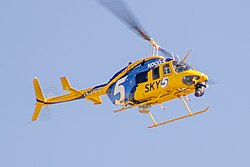
The late 1960s and 70s saw a series of high-stakes ownership shifts. In 1970, the Phoenix-based Combined Communications Corporation acquired the station for $6.5 million. Under this ownership, the station rebranded as 5 Alive in 1978 and became the first in the local market to utilize a newsgathering helicopter.
In 1979, the Gannett Company acquired Combined Communications in a record-breaking $370 million deal. Gannett invested heavily in the station, building a new 32,500-square-foot studio facility in May 1980. During the Gannett era, KOCO-TV earned a Peabody Award for its investigative report Oklahoma Shame, which exposed abuses in juvenile detention facilities.
The final major transition occurred in the mid-1990s. Following a merger between Gannett and Multimedia, Inc., the FCC required the sale of KOCO-TV. In 1997, the station became part of Hearst-Argyle Television (now Hearst Television). This marked Hearst's return to the Oklahoma City market for the first time since 1938.
Key Facts
- Original Call Letters: KGEO-TV ("Greater Enid, Oklahoma").
- Launch Date: July 18, 1954.
- Network Affiliation: ABC.
- Major Awards: Peabody Award for Oklahoma Shame and joint Peabody for 1995 Oklahoma City bombing coverage.
- Current Owner: Hearst Television.
- Historic First: First Oklahoma City station to use a news helicopter.
| Era/Year | Owner/Entity | Key Change/Event |
|---|---|---|
| 1954 | Streets Electronics | Launched as KGEO-TV in Enid |
| 1958 | Cimarron Television | Renamed KOCO-TV; expanded to Oklahoma City |
| 1970 | Combined Communications | Rebranded as "5 Alive" in 1978 |
| 1979 | Gannett Company | Built new Britton Road studio facility |
| 1997 | Hearst-Argyle Television | Merged into Hearst Television (2009) |
Frequently Asked Questions
Why did the station change its name from KGEO to KOCO?
The name change occurred on March 1, 1958, to reflect the station's expansion and its new secondary city of service, Oklahoma City.
What was the significance of the "Oklahoma Shame" report?
This multi-part investigative report examined abuses within juvenile detention facilities run by the Oklahoma Department of Human Services, leading to the resignation of agency director Lloyd Rader and earning the station a Peabody Award.
Who was the first Black news anchor in the Oklahoma City market?
Ben Tipton joined KOCO in 1973 as the first African-American on-air personality and news anchor in the market, later hosting The Black Review.
How did the station handle the 1998 severe storms?
During live coverage of tornadoes in June 1998, winds of nearly 105 mph damaged the Britton Road studio and dented the Doppler radar radome, forcing the station to broadcast via direct cable feeds.
What is KOCO-TV's current network affiliation?
KOCO-TV has been an ABC affiliate since its inception in 1954.