England vs Hungary 1953: The Match of the Century
On 25 November 1953, a clash took place at Wembley Stadium that would forever alter the landscape of English football. Known as the Match of the Century, this exhibition game pitted England, the self-proclaimed originators of the sport, against Hungary, the reigning Olympic champions who arrived on a 24-game unbeaten streak. The result—a stunning 6–3 victory for Hungary—shattered English complacency and forced a total rethink of how the game was coached and played in Britain.
Key Facts
- Date: 25 November 1953
- Venue: Wembley Stadium, London
- Final Score: Hungary 6, England 3
- Attendance: 105,000
- Key Hungarian Figures: Ferenc Puskás, Nándor Hidegkuti, and coach Gusztáv Sebes
- Key English Figures: Billy Wright, Stanley Matthews, and manager Walter Winterbottom
- Historical Impact: Led to the abandonment of the rigid WM formation in England and the adoption of continental tactical practices.
The Climate of Complacency
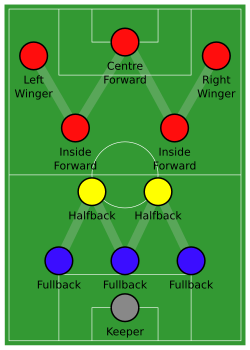
Entering the match, the English Football Association (FA) operated under the assumption that English players were technically and physically superior to all others. This belief led to a stagnation in tactics, with England persisting in the WM formation—a rigid system where players occupied fixed positions. The national team was managed by Walter Winterbottom, who lacked professional managerial experience, and the squad was chosen by an FA selection committee rather than the manager himself, often resulting in a lack of consistency.
Warning signs had appeared just a month prior when England narrowly drew 4–4 against a European XI, a result that contemporary press described as a "gift" from the referee. Meanwhile, Hungary had been meticulously engineered for excellence by Deputy Sports Minister Gusztáv Sebes. The Hungarian side utilized a precursor to Total Football (a fluid system where players swap positions) and focused on rigorous fitness regimes. Because many players played for the state-sponsored Army team, Honvéd, they possessed a level of chemistry and understanding that the English squad could not match.
Tactical Warfare at Wembley
The match began with an immediate shock as Nándor Hidegkuti scored in the first minute. The primary cause of England's struggle was the innovative use of Hidegkuti as a deep-lying centre-forward. In the WM formation, the English centre-half, Harry Johnston, was tasked with marking the opposition's number 9. However, Hidegkuti dropped deep into midfield, leaving Johnston conflicted: if he followed Hidegkuti, he left a hole in the defense; if he stayed, Hidegkuti was free to orchestrate the attack.
Hungary's technical brilliance was on full display. Ferenc Puskás famously used a "drag-back" move to bypass captain Billy Wright before scoring. While England managed to find the net through Jackie Sewell, Stan Mortensen, and later Alf Ramsey, they were overwhelmed by Hungary's fluidity. Hungary recorded 35 shots on goal compared to England's five, with their final goal resulting from a sophisticated ten-pass sequence.
| Detail | England | Hungary |
|---|---|---|
| Final Score | 3 | 6 |
| Goal Scorers | Sewell, Mortensen, Ramsey | Hidegkuti (3), Puskás (2), Bozsik |
| Formation | WM Formation | 3–2–3–2 |
| Shots on Goal | 5 | 35 |
| Manager | Walter Winterbottom | Gusztáv Sebes |
The Aftermath and Legacy
The defeat was a psychological blow to the English game. The humiliation was compounded in 1954 when England traveled to Budapest and suffered an even heavier 7–1 defeat, which remains England's heaviest footballing loss. Six England players from the 1953 match were never selected for the national team again.
However, the long-term influence was positive. Visionaries like Matt Busby of Manchester United began embracing European competition. Don Revie adopted the withdrawn centre-forward role at Manchester City (the "Revie plan"), and Bill Nicholson used Hungarian principles to lead Tottenham Hotspur to the first English double of the 20th century. Even the 1966 World Cup-winning side reflected these lessons, as Alf Ramsey utilized a club nucleus from West Ham to ensure better team cohesion.
Frequently Asked Questions
Why was the 1953 match called the "Match of the Century"?
It was billed as such because it pitted the originators of football (England) against the most dominant team in the world at the time (Hungary), serving as a definitive test of footballing philosophy.
What is the WM formation?
The WM formation was a rigid tactical system used by England where players were assigned specific, fixed roles. It was easily dismantled by Hungary's fluid movement and positional swapping.
Who was the "Galloping Major"?
This was the nickname for Ferenc Puskás, a legendary Hungarian striker who served in the Hungarian army.
How did Nándor Hidegkuti confuse the English defense?
Hidegkuti played as a deep-lying centre-forward. By dropping back into midfield, he drew the English centre-half out of position, creating gaps that other Hungarian attackers could exploit.
What happened to England in the return fixture in 1954?
England attempted to avenge their loss in Budapest on 23 May 1954, but they were defeated 7–1, marking the heaviest defeat in the history of the England national team.