1952 Olympic Football: The Rise of the Magical Magyars
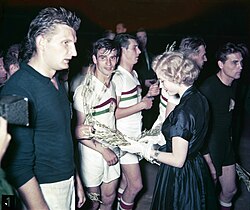
The football tournament at the 1952 Summer Olympics in Finland was more than just a competition for gold; it was a watershed moment in sporting history. It marked the international arrival of the Hungarian national team, famously known as the Magical Magyars. Their dominant performance in Helsinki signaled a shift in the global football landscape, blending power and technical precision in a way that captivated Western Europe.
Ferenc Puskás, the legendary Hungarian forward, later reflected that it was during these Olympic Games that their style of football first began to "flow with real power." This dominance was so striking that Stanley Rous of the English Football Association invited the Hungarians to play a friendly at Wembley the following year, forever changing the perception of the game in England.
Key Facts
- Champions: Hungary (their 1st Olympic title).
- Host Country: Finland (matches held across 5 cities).
- Total Teams: 25 nations from 5 confederations.
- Top Scorer: Branko Zebec (Yugoslavia) with 7 goals.
- Goal Average: 5.19 goals per match (135 total goals in 26 matches).
- Final Match: Hungary defeated Yugoslavia 2–0 to secure gold.
Tournament Structure and Progression
Preliminary and First Rounds
The tournament began with a preliminary round where several nations fought for a spot in the main draw. Notable results included Italy's 8–0 rout of the United States and Brazil's 5–1 victory over the Netherlands. In a surprising upset, Luxembourg defeated Great Britain 5–3 after extra time.
As the first round commenced, Scandinavian teams entered the fray. The host nation, Finland, suffered a narrow 3–4 loss to Austria. One of the most dramatic encounters of the round occurred between Yugoslavia and the Soviet Union. Yugoslavia held a commanding 5–1 lead with only 30 minutes remaining, but a hat-trick from Soviet captain Vsevolod Bobrov forced a 5–5 draw. Yugoslavia eventually triumphed 3–1 in the replay.
The Road to the Final
The quarterfinals saw Hungary demolish Turkey 7–1, while West Germany pulled off a surprise 4–2 victory over Brazil after extra time. Yugoslavia comfortably beat Denmark 5–3, and Sweden ensured a Scandinavian presence in the semifinals by defeating Austria 3–1.
In the semifinals, Hungary's superiority became undeniable as they crushed Sweden 6–0. Yugoslavia secured their place in the final by defeating West Germany 3–1. Sweden eventually claimed the bronze medal by beating West Germany 2–0 in the third-place play-off.
The Gold Medal Match
The final was a clash between the two most formidable teams of the tournament. Hungary secured the gold medal with a 2–0 victory over Yugoslavia, with goals scored by Ferenc Puskás and Zoltán Czibor.
Tournament Summary
| Category | Details |
|---|---|
| Host Cities | Helsinki, Kotka, Lahti, Tampere, Turku |
| Total Matches | 26 |
| Gold Medalist | Hungary |
| Silver Medalist | Yugoslavia |
| Bronze Medalist | Sweden |
| Highest Scoring Match | Yugoslavia 10–1 India |
Political Tension: Soviet Union vs. Yugoslavia
Beyond the pitch, the match between the Soviet Union and Yugoslavia was charged with political volatility. Following a 1948 split between Soviet leader Joseph Stalin and Yugoslav leader Josip Broz Tito, Yugoslavia had been excluded from the Communist Information Bureau. The match became a proxy for this ideological conflict, with both leaders sending telegrams to their respective teams.
The Soviet defeat in the replay had severe consequences at home. Because the Soviet press had been expected to report a victory, the loss was not mentioned until after Stalin's death the following year. Furthermore, CDKA Moscow—the club that provided the bulk of the national squad—was disbanded by Stalin, and coach Boris Arkadiev was stripped of his Merited Master of Sports title.
Frequently Asked Questions
Who won the gold medal in the 1952 Olympic football tournament?
Hungary won the gold medal, marking their first Olympic title in football after defeating Yugoslavia 2–0 in the final.
Who was the top goalscorer of the tournament?
Branko Zebec of Yugoslavia was the tournament's top scorer, netting a total of 7 goals.
What was the significance of the "Magical Magyars"?
The Magical Magyars was the nickname for the Hungarian national team, whose innovative and powerful style of play during the 1952 Olympics revolutionized the sport and attracted the attention of the English Football Association.
Why was the Soviet Union vs. Yugoslavia match so controversial?
The match took place during a deep political rift between Joseph Stalin and Josip Broz Tito. The Soviet Union's unexpected loss led to the disbanding of the CDKA Moscow club and the stripping of titles from the national coach.
Which venues were used during the 1952 Games?
Matches were played in six venues across five Finnish cities: the Olympic Stadium, Töölön Pallokenttä (Helsinki), Kotkan urheilukeskus (Kotka), Lahden kisapuisto (Lahti), Ratina Stadion (Tampere), and Kupittaan jalkapallo-stadion (Turku).