Encyclopædia Britannica: The Evolution of a Knowledge Giant
For over two and a half centuries, the Encyclopædia Britannica has served as a cornerstone of global knowledge. Originally published in 1768, this English-language general-knowledge resource has evolved from a massive collection of printed volumes into a streamlined digital platform. Its journey reflects the broader history of information technology, moving from copperplate engravings to the instant accessibility of the internet.
The publication began in the United Kingdom and later shifted its primary operations to the United States in 1901. Over its long history, it has transitioned through various ownerships and media formats, including multivolume print sets, CD-ROMs, and finally, an exclusive online presence at Britannica.com since 2016.
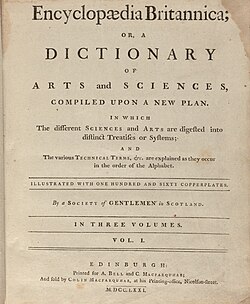
Key Facts
- Founded: 1768 in the United Kingdom.
- Last Print Edition: The 15th edition (2010), consisting of 32 volumes and 32,640 pages.
- Digital Transition: Became exclusively online in 2016.
- Contributors: 4,411 named contributors as of 2008.
- Language: British English.
- Dewey Decimal Classification: 031.
The History of the Printed Word
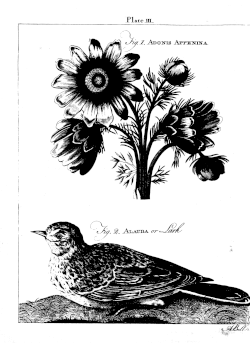
The early era of the Britannica (1st through 6th editions, 1768–1824) was defined by its founders, Colin Macfarquhar and Andrew Bell, and later by Archibald Constable. During this period, the work was characterized by high-quality craftsmanship, including initial engravings by Andrew Bell.
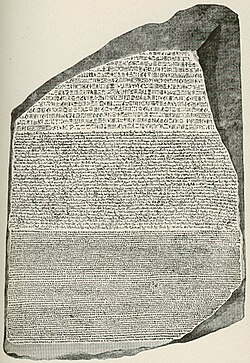
By the 19th century, the Britannica became a venue for groundbreaking original research. A notable example is Thomas Young's work on Egypt, which provided the critical translation of the hieroglyphs found on the Rosetta Stone.
The Golden Age of Print
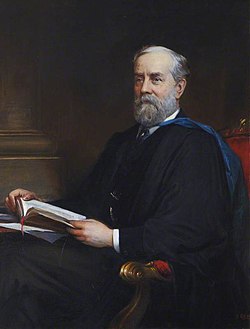
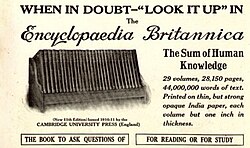
The 11th edition is often remembered as a landmark in scholarly publishing, while the 9th edition was managed by editor Thomas Spencer Baynes. As the 20th century progressed, the publication model shifted toward more frequent updates. Between 1929 and 1973, the 14th edition underwent almost annual revisions to keep pace with the rapid expansion of human knowledge.
Specialized Editions
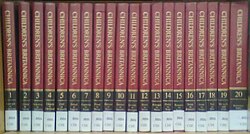
To reach younger audiences, the publisher introduced Britannica Junior in 1934. Originally a 12-volume set, it expanded to 15 volumes in 1947 and was renamed the Britannica Junior Encyclopædia in 1963 before being discontinued after 1984.
The Transition to Digital
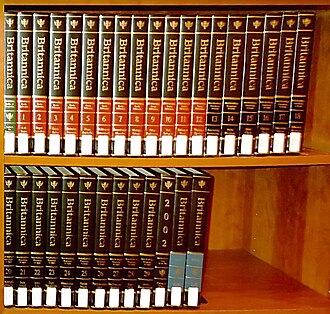
The 15th edition represented the pinnacle of the print era. This complex set included the Propædia (an outline of knowledge), the Micropædia (short articles), and the Macropædia (in-depth treatises), along with annual Books of the Year and comprehensive indices.
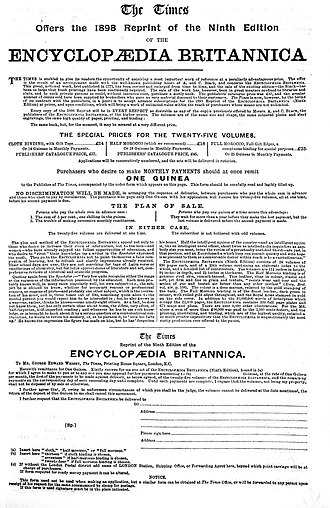
As the digital revolution took hold, the Britannica faced stiff competition from optical media (CD-ROMs) and eventually the rise of community-edited platforms like Wikipedia. The company adapted by launching Britannica.com in 1994, eventually deciding to stop the presses entirely in 2012 after 244 years of print publication.
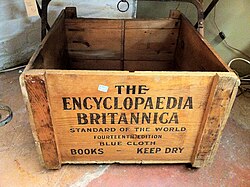
Summary of Publication Evolution
| Period | Primary Media | Primary Location |
|---|---|---|
| 1768–1901 | Multivolume Print | United Kingdom |
| 1901–2012 | Print, CD-ROM | United States |
| 1994–Present | Online Digital | United States |
| 2016–Present | Exclusively Online | United States |
Frequently Asked Questions
When did the Encyclopædia Britannica stop printing?
The last printed version was the 2010 version of the 15th edition. The company officially stopped printing its volumes in 2012.
How many volumes were in the final print edition?
The 15th edition spanned 32 volumes and contained a total of 32,640 pages.
What is the difference between the Micropædia and Macropædia?
In the 15th edition, the Micropædia contained shorter articles for quick reference, while the Macropædia featured longer, more detailed treatises on various subjects.
Who were the original founders of the Britannica?
The encyclopedia was founded and managed in its early years by Colin Macfarquhar and Andrew Bell.
Is the Encyclopædia Britannica still available today?
Yes, since 2016 it has been published exclusively as an online encyclopedia accessible via Britannica.com.