Merriam-Webster: The History and Evolution of America's Oldest Dictionary Publisher
Merriam-Webster, Incorporated stands as the oldest dictionary publisher in the United States, serving as a cornerstone of American English for nearly two centuries. From its origins as a small family venture in Massachusetts to its current status as a digital powerhouse under the ownership of Encyclopædia Britannica, Inc., the company has shaped how millions of people spell, define, and understand the English language.
Key Facts
- Founded: 1831 by George and Charles Merriam.
- Headquarters: Springfield, Massachusetts.
- Legacy: All current dictionaries trace back to Noah Webster's 1828 work.
- Industry Standard: Preferred source for spelling by The Chicago Manual of Style.
- Digital Presence: Operates a free online dictionary, thesaurus, and the Quordle word game.
The Foundations of American Lexicography
The story of Merriam-Webster begins not with the company, but with Noah Webster. In 1806, Webster published A Compendious Dictionary of the English Language, which served as the precursor to his life's work. Over the next two decades, Webster studied 26 languages to master etymology—the study of the origin of words—with the goal of standardizing American speech.
Webster sought to distinguish American English from British English. He was a spelling reformer, simplifying complex rules by changing "colour" to "color," "centre" to "center," and "waggon" to "wagon." He also integrated uniquely American terms like "skunk" and "squash." In 1828, he published An American Dictionary of the English Language, featuring 70,000 words. While the first edition was a commercial failure, a second edition released in 1840 became a significant success.
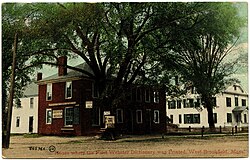
Following Noah Webster's death in 1843, George and Charles Merriam purchased the rights to the 1840 dictionary from his estate. They founded G & C Merriam Co. in Springfield, Massachusetts, and began a legacy of revising and expanding the text.
Growth and Expansion in the 19th and 20th Centuries
Throughout the late 1800s, the Merriam brothers aggressively expanded the dictionary's scope. By 1884, their edition contained 118,000 words, surpassing all other English dictionaries of the time. This evolution continued with the 1890 publication of Webster's International and the subsequent New International editions of 1909 and 1934, the latter of which contained over half a million words.
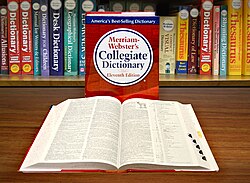
In 1898, the company introduced the Collegiate Dictionary, a more accessible abridgment of the Unabridged editions. This publication has since evolved through twelve editions, becoming one of the most widely used reference books in the world.
The Shift Toward Descriptivism
A pivotal moment occurred in 1961 with the publication of Webster's Third New International, edited by Philip B. Gove. This edition sparked controversy by moving away from linguistic prescriptivism (telling people how they should speak) toward a descriptive approach (documenting how people actually speak). Gove also streamlined formatting by removing unnecessary punctuation and complete sentences where phrases sufficed.
Corporate Evolution
In 1964, Merriam-Webster became a subsidiary of Encyclopædia Britannica, Inc. By 1983, the company officially changed its name to Merriam-Webster, Incorporated after losing the exclusive right to use the name "Webster." That same year, the Ninth New Collegiate Dictionary introduced the first known citation dates for words, providing a historical timeline for their entry into the English language.
Modern Services and Digital Innovation
In the 21st century, Merriam-Webster has transitioned from print dominance to digital accessibility. The company launched its first website in 1996 and introduced a mobile dictionary and thesaurus service via text message in 2007. Today, they offer an "Open Dictionary" wiki where subscribers can submit new words and definitions.
Beyond dictionaries, the company publishes a wide array of reference materials, including the Collegiate Thesaurus, Manual for Writers and Editors, and specialized dictionaries covering medical terms, slang, and geography.
The Art of Entry Writing
Creating a dictionary entry is a meticulous process. Editors spend roughly an hour a day reviewing print sources—ranging from formal books to product packaging—to find real-world usage of words. These are recorded in a massive citation file containing over 16 million entries. While the earliest records from the late 19th century are on 3-by-5 cards, all new entries have been recorded in an electronic database since 2009.
Company Overview
| Attribute | Detail |
|---|---|
| Parent Company | Encyclopædia Britannica, Inc. |
| Founded | 1831 |
| Founders | George and Charles Merriam |
| Headquarters | Springfield, Massachusetts |
| Key Products | Collegiate Dictionary, Online Thesaurus, Quordle |
Frequently Asked Questions
Why did Noah Webster change the spelling of words like "color"?
Noah Webster was a spelling reformer who believed English rules were unnecessarily complex. He introduced American English spellings to simplify the language and create a distinct identity for American speech, separate from British English.
What is the difference between prescriptivism and descriptivism in dictionaries?
Prescriptivism involves setting rules for "correct" language usage. Descriptivism, which Merriam-Webster adopted more fully in the 1961 Third New International edition, focuses on describing how the language is actually used by people in real-world contexts.
How does Merriam-Webster decide which new words to add?
Editors monitor a vast database of over 16 million citations from books, newspapers, and advertisements. When a word shows consistent, widespread use in these print and digital sources, it is considered for inclusion.
Is Merriam-Webster still used as a professional standard?
Yes. The Chicago Manual of Style, which is used by many U.S. magazines and book publishers, lists Merriam-Webster as the preferred source for general matters of spelling.
What is the "Open Dictionary"?
The Open Dictionary is a wiki-style service that allows subscribers to create and submit their own new words and definitions for consideration.