The Rise and Fall of the Korean Empire: A Brief History of the Daehan Jeguk
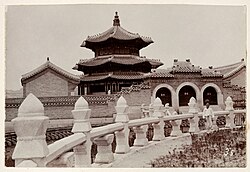
In October 1897, a profound transformation occurred on the Korean Peninsula. King Gojong of the Joseon dynasty ascended the throne as Emperor, proclaiming the birth of the Korean Empire (Daehan Jeguk). This new era was intended to signal Korea's status as a sovereign, modernized state capable of standing alongside the great powers of the world. However, this period of imperial ambition would ultimately be defined by a desperate struggle for independence against encroaching foreign influence.
Key Facts
- Official Name: Empire of Korea (Daehanguk)
- Duration: 1897–1910
- Capital: Hanseong (present-day Seoul)
- Motto: "Illuminate Heaven and Earth" (Gwangmyeong Cheonji)
- Key Reform: The Gwangmu Reform, aimed at modernizing the military, economy, and education.
- Final Status: Annexed by the Empire of Japan in August 1910.
The Birth of an Empire and the Gwangmu Reforms
The proclamation of the empire was marked by a grand coronation at Hwangudan, blending traditional Asian rituals with Western-style ceremonies. By establishing the empire, Gojong sought to assert sovereignty—the supreme power or authority of a state to govern itself—and move away from the tributary structures of the past.
To strengthen the nation, the Emperor initiated the Gwangmu Reform. This ambitious program focused on the partial modernization and westernization of several critical sectors, including:
- The military and naval defense systems.
- The national economy and land ownership structures.
- The education system and various industrial sectors.
One significant economic achievement was the modernization of the land system. Despite political opposition, Emperor Gojong ordered reforms to establish proper land ownership, which included not just the land or houses themselves, but the surrounding properties as well.
Military and Naval Modernization
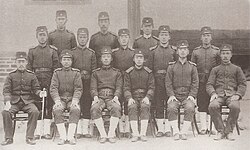
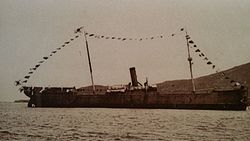
A cornerstone of the Gwangmu Reform was the expansion of the Imperial Korean Army. The empire sought international expertise, even receiving assistance from Russian officers to modernize military training. Beyond land forces, the empire prioritized the creation of a modern navy. A landmark moment in this effort was the purchase of the KIS Yangmu, the first ship of the Imperial Korean Navy, for 451,605 won.
Diplomatic Struggles and the Loss of Sovereignty
Despite efforts to maintain neutrality, the Korean Empire found itself caught in the geopolitical crossfire of the Russo-Japanese War. While several Western powers initially commended Korea's declaration of neutrality in 1904, the tide turned following the Treaty of Portsmouth, which solidified Japanese influence in the region.
The most devastating blow came with the Eulsa Treaty in November 1905. Negotiated without the Emperor's consent, this treaty established Korea as a protectorate of Japan. A protectorate is a state that is controlled and protected by another more powerful state. Consequently, Korea's foreign affairs were transferred to Tokyo, and the Ministry of Foreign Affairs (Waebu) was dissolved.
Resistance and the Path to Annexation
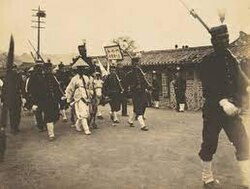
The loss of sovereignty sparked intense domestic and international resistance. Emperor Gojong attempted to appeal to European monarchs and sent emissaries to the Hague Convention in 1907 to repudiate the Eulsa Treaty. However, these efforts failed to gain international recognition. The political fallout led to the abdication of Emperor Gojong, who was succeeded by Sunjong in July 1907.
Under the subsequent Japan–Korea Treaty of 1907, Japanese influence deepened. Japanese advisors were incorporated into the central government, and by 1908, they held significant portions of high-ranking official positions. The military was also systematically dismantled, leading to the dissolution of the Imperial Korean Army in August 1907. This sparked various uprisings by "righteous armies" and local militias, many of whom eventually fled to Manchuria to join independence movements.
The era of the Korean Empire officially ended on August 29, 1910, when the Japanese Empire announced the formal annexation of Korea.
Economic Overview (1895–1905)
Despite the political instability, the Korean Empire experienced notable economic growth during its existence. In 1900, the GDP per capita was $850, ranking 26th highest in the world and 2nd highest in Asia at the time.
| Year | Tax Revenue (Won) | Annual Expenditure (Won) |
|---|---|---|
| 1895 | 4,557,587 | 3,244,910 |
| 1897 | 4,191,192 | 3,967,647 |
| 1900 | 6,162,796 | 5,558,972 |
| 1902 | 7,586,530 | 6,932,037 |
| 1905 | 14,960,574 | 12,947,624 |
Frequently Asked Questions
What was the main goal of the Gwangmu Reform?
The Gwangmu Reform was a series of modernization efforts intended to strengthen the Korean Empire through the westernization of its military, economy, education, and industrial systems.
How did the Eulsa Treaty change Korea's status?
The Eulsa Treaty of 1905 turned the Korean Empire into a protectorate of Japan, meaning Japan took control of Korea's foreign affairs and diplomatic relations.
Who were the emperors of the Korean Empire?
The empire was ruled by two emperors: Gojong (1897–1907) and Sunjong (1907–1910).
What happened to the Korean military?
The military was gradually weakened by Japanese intervention and was officially disbanded on August 1, 1907, following the Japan–Korea Treaty of 1907.
What was the KIS Yangmu?
The KIS Yangmu was the first naval ship purchased by the empire to establish a modern Imperial Korean Navy.