Election Results Analysis: A Multi-Decade Voting Trend Study
Analyzing electoral data over several decades provides critical insight into the shifting political landscape of a constituency. By examining the transition from the 1990s through to the 2020s, we can observe how voter loyalty, party dominance, and turnout fluctuate in response to national and local political climates.
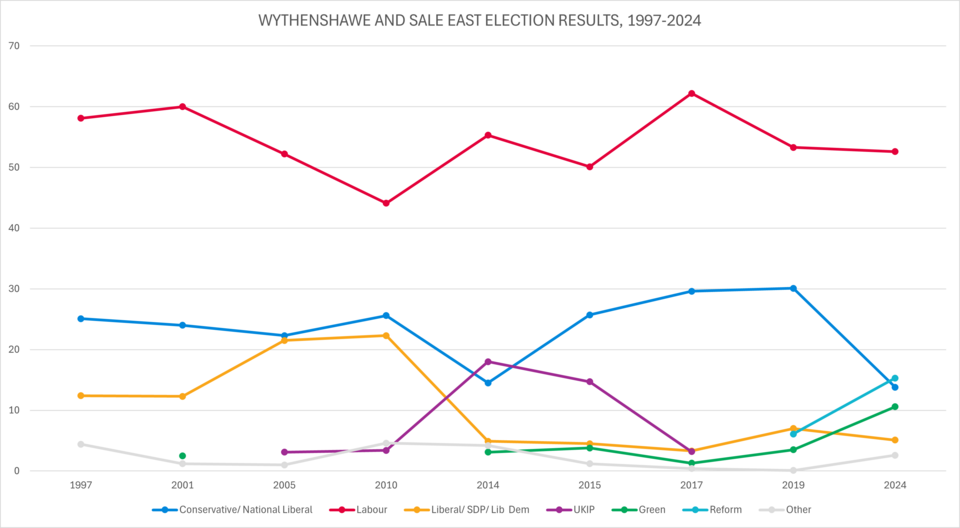
Throughout this period, the seat has remained a Labour hold, though the margin of victory and the composition of the opposition have evolved significantly. From the early dominance of Paul Goggins to the subsequent tenure of Mike Kane, the data reveals a consistent preference for Labour, albeit with varying degrees of intensity.
Key Facts
- Consistent Winner: The Labour Party has held the seat across all recorded elections from the 1990s to the 2020s.
- Peak Performance: Mike Kane achieved his highest percentage of the vote in the 2010s, reaching 62.2%.
- Turnout Volatility: Voter turnout has fluctuated wildly, from a low of 28.0% to a high of 63.2%.
- Emerging Parties: Recent elections have seen the rise of new contenders, including Reform and the Workers Party.
- Majority Shifts: The majority has ranged from a narrow 7,575 votes to a substantial 15,019 votes.
Detailed Electoral Breakdown
The 2020s: Recent Shifts
In the most recent data, Mike Kane maintained the seat for Labour with 20,596 votes (52.6%). A notable shift occurred in the opposition, with Reform, led by Julie Fousert, securing 15.3% of the vote—a significant increase of 9.2%. Conversely, the Conservative candidate, Sarah Beament, saw a decline of 16.2%, finishing with 13.8% of the total vote.
The 2010s: Stability and Change
The 2010s were characterized by Mike Kane's consolidation of power. His strongest showing occurred when he secured 62.2% of the vote (28,525 votes). However, this decade also saw the emergence of the Brexit Party and a fluctuating presence for UKIP, which at one point captured 18.0% of the vote. Turnout during this era varied significantly, hitting a historic low of 28.0% in one cycle before recovering to 60.0% in another.
The 2000s and 1990s: The Goggins Era
Earlier records show Paul Goggins as the dominant figure for Labour. In the 1990s, Goggins achieved a commanding 58.1% of the vote with a majority of 15,019. The 2000s saw a slight decline in his percentage share, though he remained comfortably in the lead, peaking at 60.0% in one election cycle. During this time, the Liberal Democrats served as a primary challenger, occasionally securing over 20% of the vote.
Comparative Election Summary
The following table summarizes the performance of the primary parties and the overall voter engagement across key election cycles.
| Period | Winning Candidate | Winning Party | Winning % | Turnout % |
|---|---|---|---|---|
| 2020s | Mike Kane | Labour | 52.6% | 50.3% |
| 2010s (Peak) | Mike Kane | Labour | 62.2% | 60.0% |
| 2000s (Peak) | Paul Goggins | Labour | 60.0% | 48.6% |
| 1990s | Paul Goggins | Labour | 58.1% | 63.2% |
Frequently Asked Questions
Which party has consistently won the seat?
The Labour Party has consistently held the seat throughout all the recorded elections from the 1990s through the 2020s.
Who are the two main Labour representatives mentioned?
The two primary Labour candidates who held the seat are Paul Goggins and Mike Kane.
What was the highest recorded voter turnout?
The highest recorded turnout was 63.2%, occurring during the 1990s election cycle.
How has the Conservative Party's performance changed recently?
In the 2020s, the Conservative candidate saw a significant decrease in support, dropping by 16.2% to finish with 13.8% of the vote.
Which new parties appeared in the 2020s elections?
The Workers Party and the SDP (Social Democratic Party) are listed as new entries in the 2020s election data.