Election History and Political Trends: A Century of Voting Results
The trajectory of political representation is often mirrored in the shifting numbers of electoral returns. By analyzing voting patterns over several decades, we can observe the rise and fall of party dominance, the impact of national swings, and the evolving nature of voter turnout. This record provides a detailed look at the electoral shifts from the late 19th century through to the 2020s.
Key Facts
- Labour Dominance: Alan Campbell has been a consistent figure in recent decades, holding the seat through multiple elections in the 2000s, 2010s, and 2020s.
- Conservative Strongholds: The mid-20th century saw significant Conservative strength, notably under Irene Ward and Neville Trotter.
- Historical Shifts: The seat transitioned from a Conservative stronghold in the 1950s and 60s to a Labour gain in 1997.
- Turnout Trends: Voter turnout has fluctuated significantly, peaking in the mid-20th century and seeing a decline in the most recent 2020s data (65.9%).
- Third Party Influence: The Liberal Democrats, Greens, and UKIP have periodically influenced the margins, with the Greens seeing a rise to 7.4% in the 2020s.
Modern Electoral Trends (2000–2024)
In the 21st century, the political landscape has been characterized by a strong Labour presence. Alan Campbell secured a significant victory in the 2020s with 50.6% of the vote and a majority of 15,455, despite a decrease in overall turnout to 65.9%.
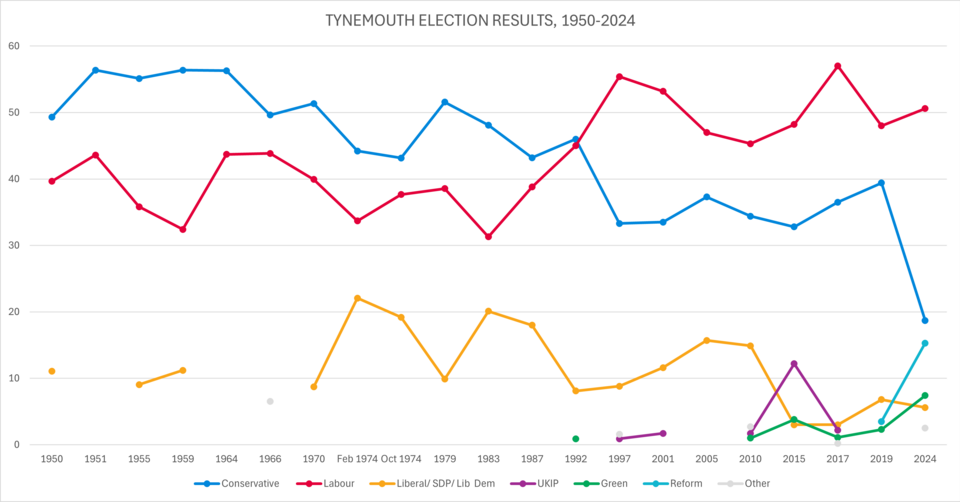
The 2010s saw varying degrees of competitiveness. In 2010, the seat was a primary target for the Conservatives in North East England following local council successes. However, Labour maintained control throughout the decade, with Campbell's majority peaking at 11,666 in one of the 2010s cycles.
The 2000s Transition
The early 2000s were marked by the second landslide victory of Tony Blair, during which Alan Campbell was returned in 2001. By 2005, the Conservatives attempted to reclaim the seat with candidate Michael McIntyre, who was a councillor for the Whitley Bay Ward, though they were only able to diminish the existing Labour majority.
The Late 20th Century: A Period of Volatility
The 1990s represented a pivotal turning point. In 1997, Labour won the seat for the first time since 1945. This election saw Alan Campbell defeat Conservative candidate Martin Callanan, who later became a North East MEP and a government minister.
Prior to this, the 1992 election was a narrow victory for the Conservatives. Neville Trotter won his final term by a slim majority of just 597 votes, defeating Patrick Cosgrove in a race where turnout reached a high of 80.4%.
Conservative Dominance in the 70s and 80s
The 1980s were characterized by the influence of Margaret Thatcher's landslide victories. Neville Trotter achieved his largest majority in 1983, securing 48.1% of the vote. The 1970s also saw a strong Conservative hold, with Trotter entering Parliament in February 1974 as a Chartered Accountant and Newcastle City Councillor.
Mid-Century and Early Political Foundations
From the 1950s through the 1960s, the seat was a bastion for the Conservatives, specifically under Irene Ward. Ward maintained commanding leads, often exceeding 50% of the total vote, with her highest majority of 13,994 recorded in the 1950s.
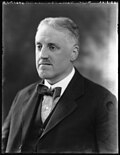
Moving further back to the 1920s and 30s, the Unionist party (the precursor to the modern Conservatives) held a firm grip. Alexander Russell was a dominant figure during this era, maintaining the seat through multiple elections in the 1920s and 1930s.
Early 20th Century and the Liberal Era
At the turn of the century, the Liberal Party played a more central role. Herbert Craig was a key figure, winning the seat in 1900 and maintaining a hold through several elections in the 1910s. Notably, the 1918 election featured Dixon Scott, the founder of the Tyneside Cinema (originally the 'News Cinema').
The earliest records from the 1880s and 1890s show the seat's inception, with Richard Donkin securing the first Conservative win for the new seat in the 1880s.
Summary of Electoral Shifts
The following table summarizes the primary party control and key figures across different eras of the seat's history.
| Era | Dominant Party | Key Representative(s) | Notable Trend |
|---|---|---|---|
| 2000s–2020s | Labour | Alan Campbell | Consistent hold with increasing majority in 2020s. |
| 1970s–1990s | Conservative / Labour | Neville Trotter / Alan Campbell | Shift from Conservative hold to Labour gain in 1997. |
| 1950s–1960s | Conservative | Irene Ward | Strong Conservative dominance. |
| 1900s–1920s | Liberal / Unionist | Herbert Craig / Alexander Russell | Transition from Liberal to Unionist control. |
| 1880s–1890s | Conservative | Richard Donkin | Establishment of the new seat. |
Frequently Asked Questions
Who has been the most consistent representative in recent years?
Alan Campbell has been the most consistent representative, holding the seat for the Labour Party across multiple elections spanning the 2000s, 2010s, and 2020s.
When did the seat last change party hands?
The seat saw a significant shift in 1997 when Labour gained the seat from the Conservatives, marking the first time Labour had won it since 1945.
What was the narrowest victory recorded in the modern era?
One of the narrowest victories occurred in 1992, where Neville Trotter won by a majority of only 597 votes.
How has voter turnout changed over time?
Turnout has generally declined from historical highs. For example, it reached 80.4% in 1992 but dropped to 65.9% in the 2020s election.
Which third parties have had a notable presence?
The Liberal Democrats have been a consistent third force, while the Green Party saw a notable increase in support to 7.4% in the 2020s. UKIP and the Brexit Party also recorded significant votes in the 2010s.