Edwin P. James: Pioneer Botanist, Geologist, and Abolitionist
Edwin P. James was a multifaceted 19th-century American intellectual whose contributions spanned the realms of botany, geology, linguistics, and medicine. A man of "untiring perseverance," James played a pivotal role in the early scientific exploration of the American West and dedicated his later life to humanitarian causes, including the fight against slavery.
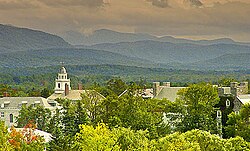
Born on August 27, 1797, in Weybridge, Vermont, James was raised in a studious environment that fostered a deep appreciation for nature. He attended Middlebury College, graduating in 1816, before pursuing advanced studies in medicine and the natural sciences in Albany, New York. Under the mentorship of John Torrey and Amos Eaton, he developed the expertise that would soon make him an indispensable asset to American frontier exploration.
The Long Expedition and the Ascent of Pikes Peak
James is most renowned for his participation in the second year of the 1820 expedition led by Major Stephen Harriman Long. This mission served as the first scientific survey of the vast territories acquired through the Louisiana Purchase, significantly expanding the United States' geographical knowledge of the West.
On July 14, 1820, James achieved a historic milestone by completing the first recorded ascent of Pikes Peak (4,302 meters/14,115 feet) by a white man in North America. During this climb, he encountered what he described as a "region of astonishing beauty," characterized by brilliantly flowering alpine plants. This journey was not merely a feat of endurance but a botanical goldmine; James collected approximately 700 plant species, 140 of which were entirely new to science.
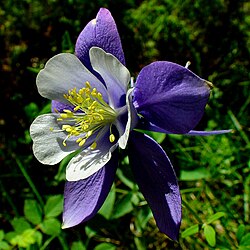
Among his most notable discoveries was the Colorado Blue Columbine (Aquilegia coerulea), which later became the state flower of Colorado. His meticulous documentation of the trip resulted in the influential publication Account of an Expedition from Pittsburgh to the Rocky Mountains, Performed in the Years 1819, 1820 (1823). This work was highly praised for its landscape descriptions and observations of Native American tribes, such as the Pawnee, influencing both scientific circles and Western literature.
Scientific Legacy and Botanical Contributions
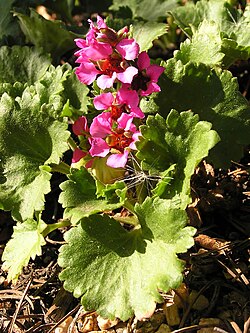
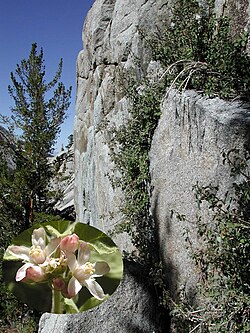
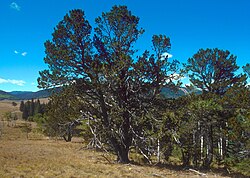
The botanical impact of Edwin James extends beyond a single expedition. His collections led to the naming of numerous species. While he named several himself, including the Limber Pine (Pinus flexilis), other scientists named species in his honor. John Torrey named the Cliffbush (Jamesia americana) after him, and others identified Telesonix jamesii. In total, 24 plant species bear his name.
Military Service and Linguistic Work
Following the expedition, James served as a US Army surgeon from 1823 to 1833, stationed at various frontier outposts in the Great Lakes region. During this tenure, he developed a deep interest in linguistics and formed strong relationships with Native Americans. He became particularly proficient in the Ojibwe language.
Collaborating with John Tanner—a Euro-American raised by the Ojibwe—James worked on a translation of the New Testament into the Ojibwe language. He also documented Tanner's life story and identified "Broken Oghibbeway," a pidgin (a simplified language that develops between two or more groups that do not have a language in common) used in the region. Later, as an Indian subagent to the Potawatomi in Nebraska, he created educational spellers for children.
Life in Iowa and the Underground Railroad
In 1836, James settled in Union Township, near Burlington, Iowa, where he established a medical practice and a productive farm. While respected as a physician, James led a daring double life as an operative for the Underground Railroad, a secret network used by enslaved African Americans to escape to free states and Canada.
James modified his stone house to include a secret room behind a fireplace and used baskets, barrels, and sacks to hide fugitives. Despite the Fugitive Slave Act of 1850, which mandated the return of escaped enslaved people, James remained a steadfast abolitionist. He famously assisted a man named Dick, protecting him from Missouri bounty hunters with the support of his neighbors.
Key Facts
- First Ascent: First recorded ascent of Pikes Peak (14,115 ft) in North America.
- Botanical Discovery: Collected 700 species, 140 of which were new to science, including the Colorado Blue Columbine.
- Major Publication: Authored the primary report of the Long Expedition (1823).
- Linguistic Contribution: Translated the New Testament into the Ojibwe language.
- Humanitarianism: Operated a station on the Underground Railroad in Burlington, Iowa.
- Honors: 24 plant species are named in his honor.
| Category | Details |
|---|---|
| Lifespan | August 27, 1797 – October 28, 1861 |
| Education | Middlebury College (A.B. 1816) |
| Primary Fields | Botany, Geology, Medicine, Linguistics |
| Key Expedition | Long Expedition (1820) |
| Notable Species | Colorado Blue Columbine, Limber Pine |
| Final Residence | Burlington, Iowa |
Frequently Asked Questions
What was Edwin James's most significant scientific achievement?
His most significant achievements include the first recorded ascent of Pikes Peak and the collection of 140 plant species new to science, which greatly expanded the botanical knowledge of the American West.
How did Edwin James contribute to the fight against slavery?
James operated a station on the Underground Railroad at his home in Iowa, where he hid escaped enslaved people in a secret room behind his fireplace and helped them travel north to freedom.
What was the "Long Expedition"?
The Long Expedition was a scientific survey led by Major Stephen Harriman Long into the Louisiana Purchase territory. It was the first of its kind in the region and provided critical geographical and biological data.
Which plant species are associated with Edwin James?
He is closely associated with the Colorado Blue Columbine (Aquilegia coerulea) and the Limber Pine (Pinus flexilis). Additionally, 24 species were named in his honor, including the Cliffbush (Jamesia americana).
What was James's role in linguistics?
James studied the Ojibwe language, collaborated on a translation of the New Testament into Ojibwe, and provided early descriptions of the "Broken Oghibbeway" pidgin.