Ecology: The Science of Organisms and Their Environment
Derived from the Ancient Greek words oîkos (meaning 'house') and -logía (meaning 'study of'), ecology is the natural science that examines the complex relationships between living organisms and their physical environment. As a primary branch of biology, it focuses on the abundance, biomass, and distribution of species, seeking to understand how life processes and adaptations allow organisms to survive and thrive.
Ecology is not a solitary field; it overlaps significantly with other scientific disciplines, including genetics, evolutionary biology, ethology (the study of animal behavior), biogeography, and natural history. By analyzing the movement of energy and materials through living communities, ecologists can better understand the successional development of ecosystems and the patterns of biodiversity that sustain life on Earth.
Key Facts
- Scope: Ecology analyzes life at multiple levels: individual, population, community, ecosystem, and the entire biosphere.
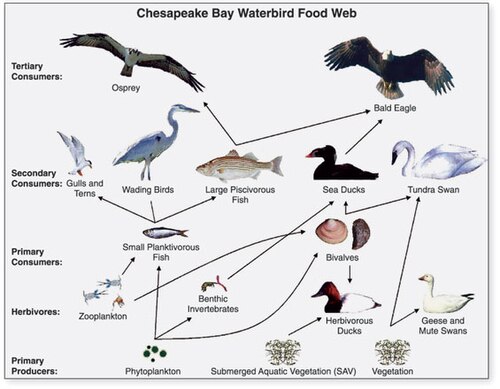
- Core Focus: It studies interactions such as cooperation, competition, and predation, as well as the flow of energy through food webs.
- Practical Use: The science is essential for conservation biology, natural resource management, and wetland management.
- Environmental Factors: Physical parameters like water, soil, wind, fire, and gravity directly influence biological distribution.
The Hierarchy of Ecological Organization
To manage the vast complexity of nature, ecology organizes the study of life into a hierarchical structure, moving from the smallest unit to the global scale.
Individuals and Populations
At the most basic level, ecology looks at the individual and its specific habitat—the physical place where it lives. Within this, the niche describes the specific functional role an organism plays. Some species engage in niche construction, where they actively modify their environment to improve their survival chances.
A group of individuals of the same species living in a specific area forms a population. Population ecology examines how these groups change over time, including the study of metapopulations (groups of spatially separated populations) and the patterns of migration.
Communities and Ecosystems
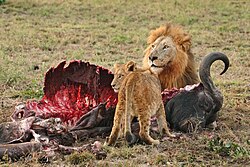
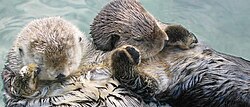
A community consists of various populations of different species interacting in one area. These interactions include predation, parasitism, and mutualism. An ecosystem expands this view to include the non-living (abiotic) environment, such as soil and climate, and how energy flows between them.
Biomes and the Biosphere
Large-scale regions characterized by similar climates and organisms are known as biomes. The sum of all biomes on Earth constitutes the biosphere, the global ecological system integrating all living beings and their relationships.
![Biodiversity of a coral reef. Corals adapt to and modify their environment by forming calcium carbonate skeletons. This provides growing conditions for future generations and forms a habitat for many other species.[9]](/images/e5/48/e5482201133f8e80e786321518c640e460b32d57ad1652959176560f0bac409b.jpg)
Energy Flow and Community Dynamics

Energy enters most ecosystems through photosynthesis, primarily occurring in plant leaves, and moves upward through various trophic levels.
Food Webs and Trophic Pyramids
While a food chain is a simple linear sequence, a food web is a complex network of interspecific interactions. These are often visualized as trophic pyramids, which represent the biomass or energy available at each level. Typically, plants (producers) possess the greatest biomass, though this varies in certain environments like wetlands.
![A trophic pyramid (a) and a food-web (b) illustrating ecological relationships among creatures that are typical of a northern boreal terrestrial ecosystem. The trophic pyramid roughly represents the biomass (usually measured as total dry-weight) at each level. Plants generally have the greatest biomass. Names of trophic categories are shown to the right of the pyramid. Some ecosystems, such as many wetlands, do not organize as a strict pyramid, because aquatic plants are not as productive as long-lived terrestrial plants such as trees. Ecological trophic pyramids are typically one of three kinds: 1) pyramid of numbers, 2) pyramid of biomass, or 3) pyramid of energy.[39]: 598](/images/f0/db/f0db6b6be9daf52f681fb5358f94da32934b4f1e2c33d3d5367ef27d5915b4d2.jpg)
Keystone Species and Coevolution
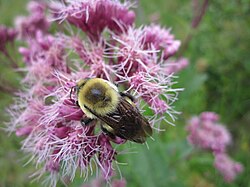
Certain organisms, known as keystone species, have a disproportionately large effect on their environment relative to their abundance. If a keystone species is removed, the entire ecosystem can collapse. Additionally, some species undergo coevolution, where two species evolve in response to each other, becoming mutually dependent for survival.
Environmental Influences and Adaptations
![The layout of the first ecological experiment, carried out in a grass garden at Woburn Abbey in 1816, was noted by Charles Darwin in The Origin of Species. The experiment studied the performance of different mixtures of species planted in different kinds of soils.[176][177]](/images/3f/dd/3fdd17daf16f072b85000fde5358484efb5c3bcd3a40a864da0f6e3e87f0c803.jpg)
Organisms must adapt to a variety of physical pressures to survive. These include radiation (heat and light), water availability, gravity, and atmospheric pressure. Wind and turbulence can shape the very architecture of plants, such as the inflorescences of grasses adapted for wind-pollination (anemophily).
![The architecture of the inflorescence in grasses is subject to the physical pressures of wind and shaped by the forces of natural selection facilitating wind-pollination (anemophily).[144][145]](/images/56/34/56342b4e1514c56a2ba970cf01ed52ed262aa01c84e7624ff7f2ddc973d0dade.jpg)
Biological adaptations can be behavioral or physical. For example, chameleons use color variation as a defense mechanism and a means of communication. Other species, like termites, build complex mounds to regulate gas exchange and temperature, maintaining the internal physiology of the colony.
![Social display and colour variation in differently adapted species of chameleons (Bradypodion spp.). Chameleons change their skin colour to match their background as a behavioural defence mechanism and also use colour to communicate with other members of their species, such as dominant (left) versus submissive (right) patterns shown in the three species (A-C) above.[87]](/images/7d/ac/7dac25829253b76b2643516ce8faccad87c2f29ec1cdad9565c3af7a670e7725.jpg)
![Termite mounds with varied heights of chimneys regulate gas exchange, temperature and other environmental parameters that are needed to sustain the internal physiology of the entire colony.[24][25]](/images/a8/f7/a8f7d1ddc1ad7063bfb7083067c70d1d1b33bae99c735bed9398360460e28c66.jpg)
Summary of Ecological Concepts
| Level/Concept | Focus of Study | Example/Key Element |
|---|---|---|
| Population | Single species in an area | Migration and abundance |
| Community | Interactions between species | Predation and competition |
| Ecosystem | Biotic and abiotic factors | Energy flow and nutrient cycling |
| Biosphere | Global sum of all ecosystems | Climate and global biodiversity |
| Trophic Level | Position in a food web | Producers, Consumers, Decomposers |
Frequently Asked Questions
What is the difference between a habitat and a niche?
A habitat is the physical location where an organism lives, whereas a niche is the specific functional role the organism plays within that environment, including its use of resources and interactions with other species.
What is a keystone species?
A keystone species is an organism that helps hold the system together. Without its presence, the ecosystem would be dramatically different or cease to exist altogether.
How does coevolution work?
Coevolution occurs when two or more species reciprocally affect each other's evolution. A classic example is the relationship between pollinators, like bumblebees, and the flowers they pollinate, where both become dependent on each other for survival.
What are trophic levels?
Trophic levels are the hierarchical levels in an ecosystem, comprising organisms that share the same function in the food chain. They typically start with primary producers (plants) and move up to primary, secondary, and tertiary consumers.
What is niche construction?
Niche construction is the process by which an organism alters its own (or another species') environment, thereby modifying the selection pressures acting upon it. An example is the building of termite mounds to regulate internal temperature.