Echinoderms: The Spiny-Skinned Wonders of the Ocean
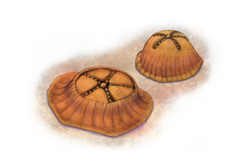
From the shallow intertidal zones to the crushing pressures of the abyssal depths, echinoderms are some of the most distinctive inhabitants of the world's oceans. These marine invertebrates are characterized by their unique body plans and a biological toolkit that allows them to thrive in diverse aquatic environments. With a fossil record stretching back to the Cambrian Stage 3, they have evolved into a variety of forms that challenge our typical understanding of animal symmetry.
The phylum Echinodermata comprises approximately 10,500 extant species and roughly 13,000 known extinct species. While they may appear vastly different—ranging from the rigid shell of a sea urchin to the soft body of a sea cucumber—they all share fundamental biological traits that unite them as a group.
Key Facts
- Habitat: Exclusively marine, found from shallow coasts to the deep ocean.
- Symmetry: Adults typically exhibit pentaradial symmetry (five-part radial symmetry).
- Water Vascular System: A unique hydraulic system used for locomotion, feeding, and respiration.
- Diversity: Divided into five main extant classes: Asteroidea, Ophiuroidea, Echinoidea, Holothuroidea, and Crinoidea.
- Regeneration: Many species possess the remarkable ability to regrow lost limbs or organs.
The Five Classes of Echinoderms
Modern echinoderms are categorized into five primary classes, each with specialized adaptations for their specific ecological niches.
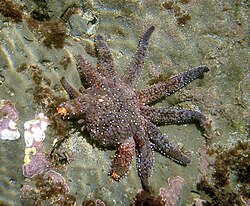
Asteroidea (Starfish)
With over 1,900 species, starfish are perhaps the most recognizable echinoderms. They are known for their central disc and radiating arms.
Ophiuroidea (Brittle Stars)
Comprising around 2,300 species, brittle stars have long, slender arms that move with a whip-like motion, distinct from the slower movement of starfish.
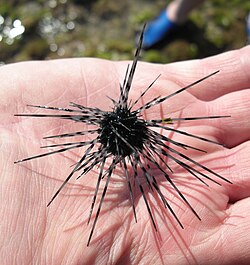
Echinoidea (Sea Urchins and Sand Dollars)
This class includes approximately 900 species. They are characterized by a globular or flattened shell (test) often covered in protective spines.
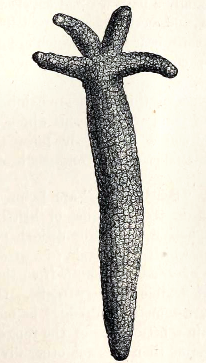
Holothuroidea (Sea Cucumbers)
With about 1,430 species, sea cucumbers have elongated bodies and lack the obvious radial symmetry seen in other classes, often burrowing into the sediment.
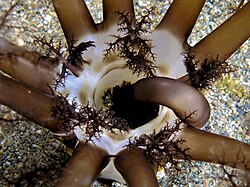
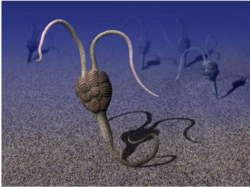
Crinoidea (Feather Stars and Sea Lilies)
The smallest of the extant groups with around 580 species, crinoids are filter feeders that use feathery arms to capture particles from the water.
Anatomy and Biological Systems
The Water Vascular System
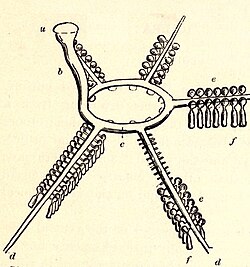
The most defining feature of the phylum is the water vascular system. This is a network of hydraulic canals used for locomotion, food and waste transport, and respiration. Water is drawn into the system and pushed through radial canals to operate the tube feet.
Locomotion and Tube Feet
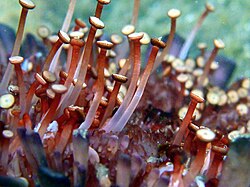
Echinoderms move using tube feet—small, suction-cup-like structures powered by the water vascular system. These allow them to adhere to surfaces and crawl across the ocean floor.
Regeneration and Reproduction
Many echinoderms are masters of regeneration. If a starfish loses an arm to a predator, it can often regrow the limb. Some species can even reproduce asexually through binary fission or fragmentation.
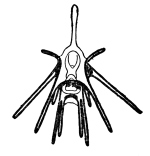
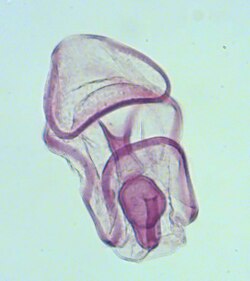
Sexual reproduction typically involves the release of eggs and sperm into the water. The resulting larvae, such as the echinopluteus (a bilaterally symmetric larval form), are often planktonic before metamorphosing into the radial symmetry of the adult.
Summary of Echinoderm Diversity
| Class | Common Name | Approx. Species | Key Characteristic |
|---|---|---|---|
| Asteroidea | Starfish | 1,900+ | Central disc with thick radiating arms |
| Ophiuroidea | Brittle Stars | 2,300 | Slender, flexible, whip-like arms |
| Echinoidea | Sea Urchins / Sand Dollars | 900 | Hard test often covered in spines |
| Holothuroidea | Sea Cucumbers | 1,430 | Elongated, soft-bodied form |
| Crinoidea | Feather Stars / Sea Lilies | 580 | Feathery arms for filter feeding |
Human Interaction and Use
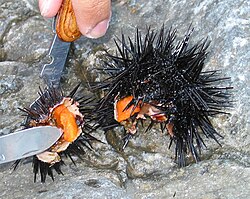
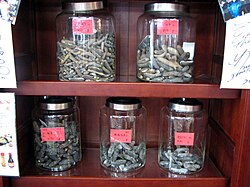
Humans have utilized echinoderms for various purposes throughout history. Sea urchins are prized as a food source, particularly for their eggs (gonads), while sea cucumbers are used in traditional Chinese medicine.
Frequently Asked Questions
Are starfish actually fish?
No, starfish are not fish. They are invertebrates belonging to the phylum Echinodermata and lack the gills, scales, and backbones characteristic of fish.
How do echinoderms move without a brain?
They rely on a decentralized nervous system and the hydraulic pressure of their water vascular system to operate their tube feet for movement.
Can all echinoderms regenerate their limbs?
While regeneration is common across the phylum, the extent varies by species. Some can regrow a single arm, while others can regenerate an entire body from a small fragment.
Where do echinoderms live?
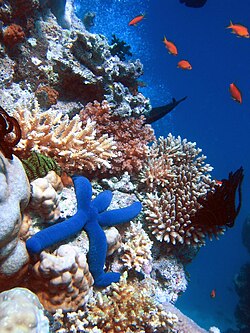
They are found exclusively in marine environments, ranging from shallow tide pools and coral reefs to the deepest parts of the ocean floor.
What is pentaradial symmetry?
Pentaradial symmetry is a body plan where the body is organized around a central axis and divided into five equal sections, similar to the points of a star.