Ebla: The Ancient Syrian Metropolis of Tell Mardikh
Located in the Idlib Governorate of modern-day Syria, Ebla (known archaeologically as Tell Mardikh) stands as one of the most significant urban centers of the ancient Near East. Established around 3500 BC, this settlement evolved into a powerful city-state that dominated trade and politics across the Bronze Age. Its rediscovery through excavations led by Paolo Matthiae between 1964 and 2011 revealed a sophisticated society with a complex administration and one of the world's oldest libraries.
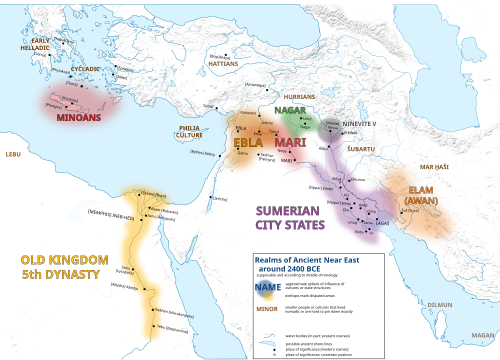
The city's strategic position allowed it to act as a bridge between the civilizations of Mesopotamia and the Mediterranean coast, fostering a unique culture that blended local Syrian traditions with influences from the Kish civilization and later the Amorites.
Key Facts
- Location: Tell Mardikh, Idlib Governorate, Syria.
- Timeline: Founded c. 3500 BC; abandoned by the 7th century AD.
- Primary Eras: Three distinct kingdoms spanning the Early, Middle, and Late Bronze Ages.
- Language: The primary administrative language was Palaeo-Syrian.
- Major Discovery: A massive archive of cuneiform tablets providing insight into early diplomacy and economy.
- Key Archaeologist: Paolo Matthiae.
The Three Kingdoms of Ebla
The history of Ebla is characterized by cycles of prosperity, destruction, and rebirth, divided into three primary royal periods.
The First Kingdom (c. 3000 BC – 2300 BC)
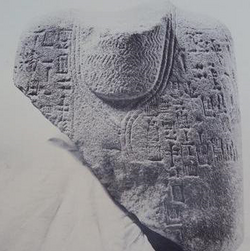
The first Eblaite Kingdom emerged during the Early Bronze Age. At its peak, it was a dominant monarchy that controlled a vast network of vassals. This era is most famous for its administrative sophistication and the use of the Palaeo-Syrian language. However, this period ended abruptly around 2300 BC, with records such as the Inscription of Naram-Sin suggesting a violent destruction.
The Second Kingdom (c. 2300 BC – 2000 BC)
Following its first collapse, Ebla was re-established. This second iteration of the kingdom continued the city's role as a regional power, maintaining its monarchical government and linguistic traditions throughout the middle of the Bronze Age.
The Third Kingdom (c. 2000 BC – 1600 BC)
The third kingdom flourished during the Middle Bronze Age. Notable rulers from this period include King Ibbit-Lim, son of Igrish-Kheb. This era saw the rise of the Amorite influence and a continued adherence to Ancient Levantine religion. The kingdom eventually fell around 1600 BC, succeeded by the Hittites.
Urban Layout and Architecture
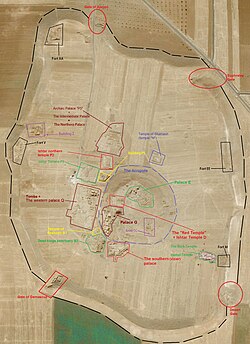
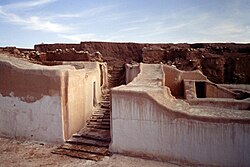
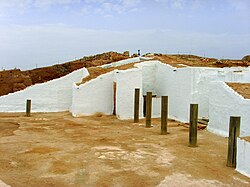
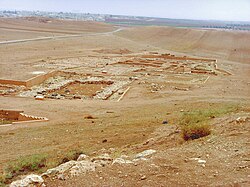
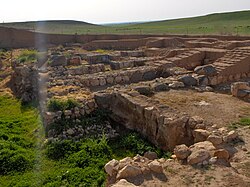
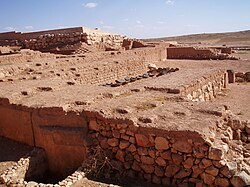
The ruins of Tell Mardikh reveal a highly organized urban plan, featuring massive fortifications and specialized districts. One of the most striking features is the "Damascus Gate," part of the city's outer wall system.
Palatial Complexes
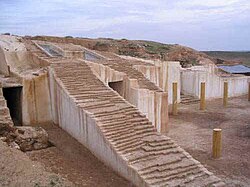
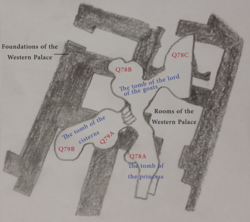
Ebla was characterized by its grand palaces, which served as both royal residences and administrative hubs. Palace G is perhaps the most famous, housing the city's legendary archives. Other significant structures include Palace P5, the Vizier's palace, and the Western Palace Q, which was situated above the royal necropolis.
Religious and Funerary Sites
The city's spiritual life is evidenced by the remains of a ziggurat (a massive stepped tower temple) and various shrines. The royal burials are equally impressive, with the Western Palace tombs and Hypogeum G4 providing a glimpse into the funerary customs of the Eblaite elite.
Administration, Economy, and Culture
Ebla's power was rooted in its Chora—the surrounding territory and rural hinterland that provided the resources necessary to sustain the city. The administration was highly centralized, managing a complex economy based on trade and agriculture.
The discovery of the royal archives transformed our understanding of the period. These tablets, written in cuneiform, detail diplomatic correspondence, trade agreements, and legal records, effectively creating one of the earliest known libraries in human history.
Genetics and ancestry studies of Bronze Age samples from Ebla, alongside other sites like Ashkelon and Nuwayrat, have helped researchers trace the movement of people and the blending of cultures in the region.
![Ancestry proportions of Ebla, Ashkelon, Baq'ah and Nuwayrat Bronze Age samples for the best-fit full model (qpAdm).[184]](/images/71/5f/715f1f1c818da76c8531df0e61307b00fed058e367e6012116ad7615d6ac95f4.png)
Military strength was also a key component of Ebla's survival. The influence of neighboring Mesopotamia is seen in the weaponry and armor of the time, as depicted in regional steles.
![Akkadian soldier of Naram-Sin, with helmet and long sword, on the Nasiriyah stele. He carries a metal vessel of Anatolian type. From Mesopotamia, Iraq, c. 2300 BC. Iraq Museum.[59]](/images/d7/8d/d78dd8b2236ba427d58472cb5cea5aa4334fdba06d41f777e40db2642c633f15.jpg)
Summary of Ebla's Historical Phases
The following table summarizes the evolution of Ebla through its primary historical stages.
| Period | Approximate Dates | Key Characteristics | Successor/End |
|---|---|---|---|
| First Kingdom | c. 3000 – 2300 BC | Early Bronze Age; Palaeo-Syrian language; vast vassal network. | Second Kingdom of Mari |
| Second Kingdom | c. 2300 – 2000 BC | Bronze Age recovery; continued monarchy. | Third Kingdom |
| Third Kingdom | c. 2000 – 1600 BC | Middle Bronze Age; Amorite influence; King Ibbit-Lim. | Hittites |
Frequently Asked Questions
What is the significance of the Ebla archives?
The archives are critical because they contain thousands of cuneiform tablets that document the political, economic, and social life of the Early Bronze Age, providing a rare written record of a non-Mesopotamian civilization.
Who was Paolo Matthiae?
Paolo Matthiae is the lead archaeologist who directed the excavations at Tell Mardikh (Ebla) from 1964 to 2011, bringing the city's history to light.
What language was spoken in Ebla?
The administrative records were written in Palaeo-Syrian, a language distinct from the Sumerian and Akkadian languages used in Mesopotamia.
How did Ebla fall?
Ebla suffered multiple destructions. The first kingdom was destroyed around 2300 BC (linked to Naram-Sin), and the third kingdom eventually fell to the Hittites around 1600 BC.
What was the "Chora" of Ebla?
The Chora refers to the agricultural territory and surrounding villages that were under the direct administrative and economic control of the city of Ebla.