Eastern Catholic Churches
The Eastern Catholic Churches (also known as Oriental Catholic Churches) are 23 autonomous, or sui iuris, particular churches that exist in full communion with the Pope in Rome. While they are distinct from the Latin Church in terms of theology, liturgy, and history, they are united in faith and authority with the Catholic Church.
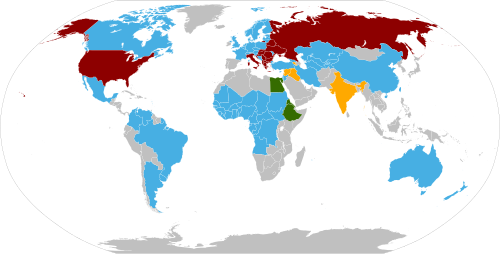
Although they represent a minority of the global Catholic population—approximately 18 million out of 1.3 billion—their influence is vast, spanning Eastern Europe, Eastern Africa, the Middle East, and India. As of 2022, the Syro-Malabar Church stands as the largest of these communities, followed by the Ukrainian Greek Catholic Church.
Key Facts
- Composition: 23 autonomous (sui iuris) particular churches.
- Population: Approximately 18 million members globally.
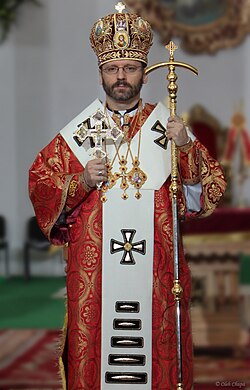
- Largest Churches: Syro-Malabar Church and Ukrainian Greek Catholic Church.
- Governance: In full communion with the Pope, though maintaining distinct liturgical and canonical traditions.
- Primary Regions: Eastern Europe, Middle East, India, and Eastern Africa.
Terminology: Church vs. Rite
In contemporary Catholic discourse, there is a significant distinction between a "rite" and a "church." While the term "Eastern Rite" is still commonly used to describe liturgical histories, the 1990 Code of Canons of the Eastern Churches (CCEO) and the 1983 Code of Canon Law emphasize the term autonomous Church (or sui iuris church).
The United States Conference of Catholic Bishops clarified in 1999 that these communities should be referred to as Churches rather than rites to properly acknowledge their autonomy and distinct ecclesiastical identity.
Historical Foundations and the Great Schism
The origins of the Eastern Catholic Churches are deeply tied to the complex history of early Christianity and the eventual fractures between the East and West. Major breaches of communion occurred during the Council of Ephesus (AD 431) and the Council of Chalcedon (AD 451), culminating in the East–West Schism of 1054.
This schism was driven by cultural differences between the Greek-speaking East and Latin-speaking West, as well as power struggles between the sees of Rome and Constantinople. Key theological disputes included the insertion of the Filioque into the Nicene Creed, the use of unleavened bread for the Eucharist, the concept of purgatory, and the extent of papal authority.
Hostilities peaked in 1204 when Catholic armies sacked Constantinople during the Fourth Crusade, further cementing the divide between what became known as the Orthodox Church in the East and the Catholic Church in the West.
The Path to Communion and Modern Governance
Efforts to restore communion led to the emergence of Eastern Catholic Churches. A pivotal moment occurred on November 30, 1894, when Pope Leo XIII issued the apostolic constitution Orientalium dignitas, which sought to protect and promote the dignity of Eastern traditions.
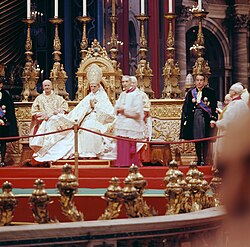
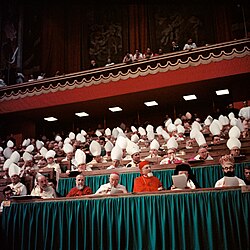
The Second Vatican Council further refined the relationship between the Latin and Eastern Churches through documents such as Orientalium Ecclesiarum and Unitatis redintegratio. These texts emphasized the equal dignity of Eastern and Western traditions within the universal Church.
To provide a legal framework, the Code of Canons of the Eastern Churches (CCEO) was promulgated in 1990. This code serves as a general framework, while each sui iuris church maintains its own particular laws layered on top of the general code.
Organizational Structure and Traditions
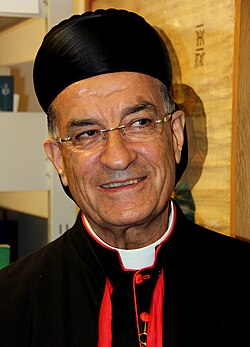
The Eastern Catholic Churches utilize an episcopal polity and are organized under various leadership structures, including Patriarchs and Major Archbishops.
Clerical Celibacy and Marriage
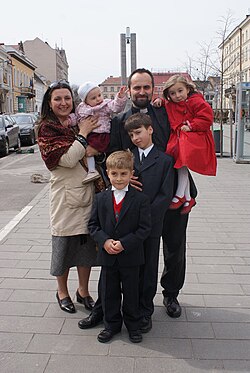
Unlike the Latin Church, many Eastern Catholic Churches have a tradition of married priests. While there were historical attempts to impose celibacy on Eastern priests in certain regions—such as the 1929 decree Cum data fuerit affecting Ruthenians in the United States—these mandates were largely removed by a 2014 decree.
Liturgical Diversity
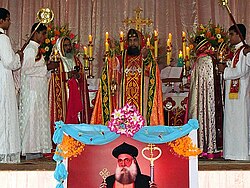
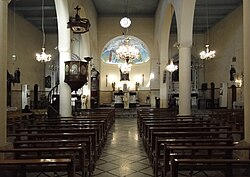
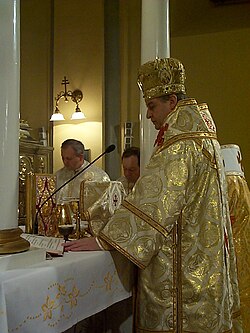
The Eastern Churches employ a wide array of liturgies, reflecting their diverse linguistic and cultural roots, including the use of the Septuagint and Peshitta versions of the Bible.
Persecution and Challenges
Eastern Catholic communities have frequently faced severe persecution. In Eastern Europe, particularly Georgia, the Byzantine Catholic Church was nearly eradicated during the Stalinist purges of the 1920s and 1930s. Notable figures, such as the Georgian Byzantine Catholic Exarch Fr. Shio Batmalashvili, were executed by Soviet authorities in 1937.
Summary of Eastern Catholic Characteristics
| Feature | Details |
|---|---|
| Number of Churches | 23 sui iuris (autonomous) churches |
| Total Membership | Approx. 18 million |
| Primary Legal Code | Code of Canons of the Eastern Churches (CCEO) |
| Key Leadership | Patriarchs, Major Archbishops, and the Pope |
| Major Traditions | Byzantine, West Syriac, East Syriac, Armenian |
Frequently Asked Questions
What does "sui iuris" mean in the context of Eastern Churches?
Sui iuris is a Latin term meaning "of its own right." In this context, it refers to an autonomous particular church that possesses its own canonical hierarchy and liturgical traditions while remaining in full communion with the Pope.
How do Eastern Catholic Churches differ from the Latin Church?
They differ primarily in their liturgy, canon law, and certain theological emphases. For example, many Eastern Catholic Churches allow for a married priesthood, whereas the Latin Church generally mandates clerical celibacy.
What is the relationship between Eastern Catholics and Orthodox Christians?
Eastern Catholic Churches share the same liturgical and spiritual heritage as the Eastern Orthodox Churches but are in full communion with the Bishop of Rome (the Pope), whereas Orthodox Churches are not.
Which is the largest Eastern Catholic Church?
As of 2022, the Syro-Malabar Catholic Church is the largest, followed by the Ukrainian Greek Catholic Church.
What was the purpose of the Code of Canons of the Eastern Churches?
Promulgated in 1990, the CCEO provides a common legal framework for all Eastern Catholic Churches, ensuring a baseline of governance while allowing each autonomous church to maintain its own specific particular laws.