Dual Carriageways and Divided Highways: Engineering, History, and Global Standards
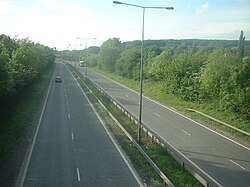
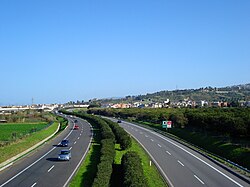
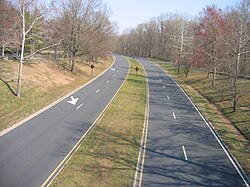
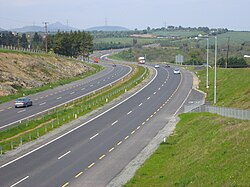
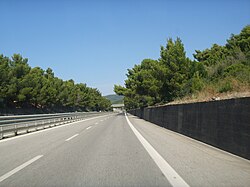
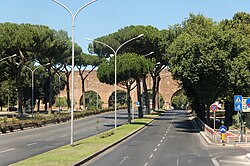
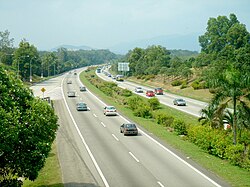
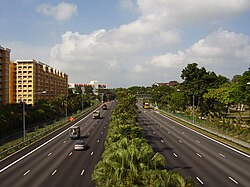
A dual carriageway (British English) or divided highway (American English) is a high-capacity road design where traffic traveling in opposite directions is separated by a physical barrier. This barrier is known as a central reservation in the UK or a median strip in the US. By eliminating head-on collisions, these roads significantly improve traffic safety and typically allow for higher speed limits than single carriageways.
While they share similarities with motorways and freeways, dual carriageways are generally distinguished by their access levels. Motorways are designed to higher standards with strictly controlled access, whereas dual carriageways may feature at-grade junctions, private entrances, or bus stops.
Key Facts
- Primary Purpose: To increase road safety and capacity by separating opposing traffic flows.
- Key Feature: The presence of a central reservation or median strip.
- Distinction: Unlike motorways, dual carriageways may have uncontrolled access points.
- Global Variations: Known as autovías in Spain, autopistas in Argentina and Chile, and divided roads in parts of Australia.
- Safety Impact: Higher safety ratings compared to single carriageways often lead to increased legal speed limits.
The Evolution of Divided Highways
Early Origins
The concept of dividing roadways dates back further than many realize. One of the earliest examples in the United States was Savery Avenue in Carver, Massachusetts, built in 1860, which utilized a narrow strip of trees as a divider.
![Savery Avenue in Carver, Massachusetts was the first divided highway in the U.S.[12]](/images/bd/54/bd543436b59bdcad5a3a3c8dc7e88592d6c1801061242c1212b2eecc1bf70d52.jpg)
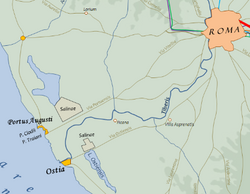
In Europe, early iterations appeared in Italy. The Rome bypass, opened in 1927, featured a dual-carriageway design for nearly its entire 92 km length. While the first Italian autostrada (1924) and the first German autobahn (1932) did not initially use dual-carriageway designs, they set the precedent for high-speed road networks.
Global Expansion
By the 1930s, Germany, Italy, and the Soviet Union were aggressively constructing expressway networks. Canada's Queen Elizabeth Way, beginning in 1936, is cited as one of the world's first long-distance intercity dual carriageways. In the US, the Pennsylvania Turnpike (1940) marked the first rural dual carriageway, eventually leading to the creation of the Interstate Highway System in 1957.
Regional Implementations and Standards
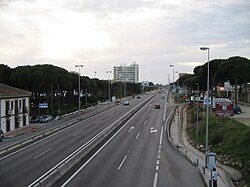
United Kingdom and Ireland
In the UK, high-quality dual carriageways with grade-separated junctions may be designated as "Expressways." If they meet even stricter criteria, they are upgraded to motorway status (denoted by an "M" prefix). Speed limits for cars on these roads typically peak at 70 mph (113 km/h).
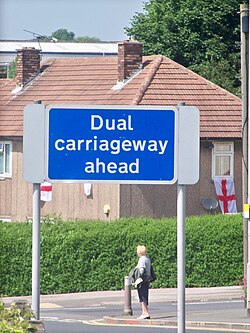
Ireland utilizes several distinct types of dual carriageways:
- Standard Dual Carriageway: Traditional designs often featuring a mix of junction types.
- 2+2 Roads: Two lanes in each direction with a cable barrier but no hard shoulder.
- 2+1 Roads: Alternating overtaking lanes every few kilometers.
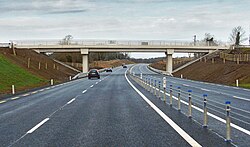
Continental Europe
Spain distinguishes between autovías and autopistas. First-generation autovías were often simple duplications of existing roads, while modern versions are built from scratch. Unlike autopistas (controlled-access motorways), autovías may allow direct access to private properties and include bus stops.
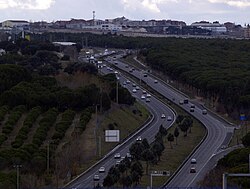
In Germany, the classification of roads can be fluid, with some Bundesstraßen (federal roads) functioning as high-speed dual carriageways with specific signage colors (yellow, blue, or black/white) to denote their status.
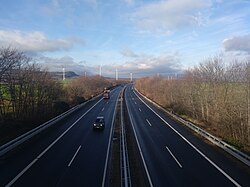
The Americas and Oceania
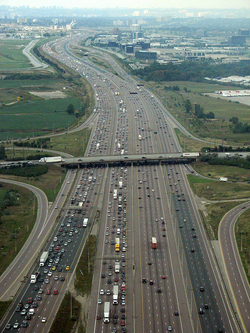
In the United States, divided highways are common for both state and national routes, with rural speed limits ranging from 65 to 80 mph. Texas's SH 130 holds the highest limit at 85 mph. Canada employs "RIRO" (Right-In, Right-Out) expressways, which use median barriers to prevent left turns, forcing drivers to use overpasses to change direction.
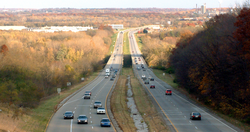
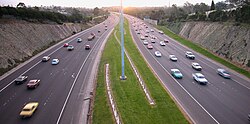
Australia refers to these as divided roads. Significant projects have created nearly 2,000 kilometers of continuous dual carriageway from Geelong, Victoria, to Curra, Queensland.
South America and Asia
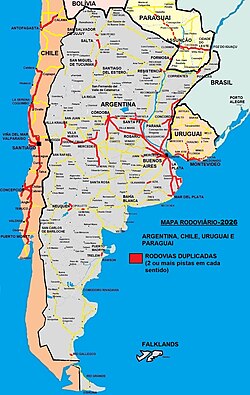
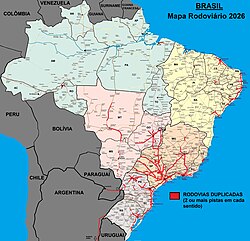
Brazil possesses one of the largest networks, with approximately 17,000 km of divided highways, heavily concentrated in the State of São Paulo. Chile's Route 5 (Pan-American Highway) provides a divided corridor for 1,900 km. In Turkey, the network is extensive, with nearly 29,000 km of dual carriageways as of 2023.
Comparative Summary of Road Types

| Feature | Single Carriageway | Dual Carriageway / Divided Highway | Motorway / Freeway |
|---|---|---|---|
| Traffic Separation | None (Opposing traffic shares road) | Physical Median/Reservation | Physical Median/Reservation |
| Access Control | Uncontrolled | Partial / Mixed | Fully Controlled |
| Typical Speed | Lower | Moderate to High | Highest |
| Junctions | At-grade | Mixed (At-grade and Grade-separated) | Grade-separated only |
Frequently Asked Questions
What is the difference between a dual carriageway and a motorway?
The primary difference is access control. Motorways have strictly controlled access with no private driveways or at-grade intersections, whereas dual carriageways may have these features.
What is a 2+1 road?
A 2+1 road is a type of divided highway where two lanes travel in one direction and one lane in the other, with the overtaking lane alternating every few kilometers to ensure fairness and safety for both directions.
Why are dual carriageways safer than single carriageways?
They eliminate the possibility of head-on collisions by using a physical barrier (median) to separate traffic moving in opposite directions.
What is a "RIRO" expressway?
RIRO stands for "Right-In, Right-Out." These are divided highways that prevent left turns across traffic, requiring motorists to use a turnabout or overpass to access exits on the opposite side of the road.
Do all divided highways have the same speed limits?
No, speed limits vary by country, road quality, and environment. For example, urban dual carriageways typically have much lower limits than rural divided highways.