The Science and History of Double Flowers
Have you ever encountered a flower so lush and dense that it appears to contain smaller flowers tucked within its petals? This striking appearance is known as a double-flowered variety. In botanical descriptions, you will often see these varieties noted with the abbreviation fl. pl., which stands for the Latin flore pleno, meaning "with full flower."
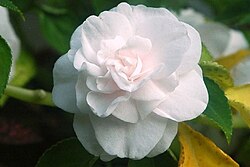
While these blooms are highly prized in gardens, they are technically a floral abnormality. In many double-flowered varieties, the plant's reproductive organs are converted into extra petals. This transformation often makes the plants sexually sterile, meaning they cannot produce seeds through traditional pollination. Because of this, they must be propagated through cuttings rather than seeds. Additionally, these mutations can offer little value to local wildlife, as the extra petals often block access to the plant's nectaries.
A Long History of Floral Abnormality
Double flowers represent the earliest documented form of floral abnormality, with a history stretching back over two millennia. The Greek philosopher Theophrastus mentioned double roses in his work Enquiry into Plants, written before 286 BC, and the Roman writer Pliny also described them in the 1st century BC.
In China, double-flowered peonies were recognized and selected by approximately 750 AD. By around 1000 AD, double varieties of roses were being cultivated to create the China rose, which serves as one of the ancestors of the modern hybrid tea rose. Today, the double-flower trait is a defining characteristic of most cultivated rose varieties.
During the Renaissance, herbalists began to actively cultivate these unique blooms in their gardens. Rembert Dodoens published descriptions of double flowers in 1568, and in 1597, John Gerard produced illustrations comparing double flowers to their wild-type counterparts. During the late 16th century, a double-flowered variety of Marsh Marigold was discovered and cultivated in Austria, eventually becoming a highly valued garden plant.
The Genetics of Double-Flower Mutations
The transition from one organ to another—such as a stamen turning into a petal—is known as a homeotic mutation. These mutations are typically recessive, though the double-flower mutation in carnations is an exception, exhibiting incomplete dominance.
To understand these mutations, scientists often look to Arabidopsis, a plant used as a model organism (a species studied extensively to understand biological processes) for genetics and plant development. The first documented double-flowered mutant of Arabidopsis was recorded in 1873. Later, in 1990, the AGAMOUS gene, which is likely responsible for this phenotype, was cloned and characterized in the laboratory of Elliot Meyerowitz.

The AGAMOUS gene encodes a protein that acts as a transcription factor—a protein that regulates the expression of other genes—responsible for specifying the tissue of stamen and carpel segments. When both copies of this gene are damaged or deleted, the flower lacks the necessary signals to form stamens and carpels. Instead, the regions that would have become stamens default to becoming petals, and the carpel region develops into a new flower, creating a recursive pattern of sepals, petals, and more petals.
Understanding the ABC Model of Flower Development
The morphology of flowers in Arabidopsis can be explained through the ABC model. This model categorizes the genes involved in flower formation into three distinct classes based on the organs they produce:
- A class genes: Responsible for the formation of sepals and petals.
- B class genes: Responsible for the formation of petals and stamens.
- C class genes: Responsible for the formation of stamens and carpels.
The AGAMOUS gene is a C class gene. Because it is responsible for activating the development of stamens and carpels, mutations in this gene disrupt the standard floral structure, leading to the "flower within a flower" appearance.

Key Facts
- Definition: Double flowers have extra petals, often appearing as "flowers within flowers."
- Botanical Term: The abbreviation fl. pl. (flore pleno) is used to denote these varieties.
- Reproduction: Many double flowers are sexually sterile and must be grown from cuttings.
- Genetic Cause: They often result from homeotic mutations where reproductive organs are replaced by petals.
- Historical Significance: Double roses and peonies have been cultivated for over a thousand years.
Summary of the ABC Model
| Gene Class | Primary Function | Organs Formed |
|---|---|---|
| A Class | Sepal and petal specification | Sepals and petals |
| B Class | Petal and stamen specification | Petals and stamens |
| C Class | Stamen and carpel specification | Stamens and carpels |
Frequently Asked Questions
What does the abbreviation "fl. pl." mean?
It is a botanical abbreviation for the Latin term flore pleno, which translates to "with full flower."
Why are many double-flowered plants sterile?
In many cases, the mutation that creates extra petals also converts the plant's reproductive organs (the stamens and carpels) into petals, leaving the plant without the ability to produce seeds.
How do gardeners grow double-flowered varieties?
Because many of these varieties are sexually sterile and cannot produce viable seeds, they are typically propagated through cuttings.
What is a homeotic mutation?
A homeotic mutation is a type of genetic mutation where one body part or organ is replaced by another during the development of an organism.
Do double flowers provide much benefit to pollinators?
Often, they provide little wildlife value because the mutation that creates the extra petals can block access to the nectaries where pollinators seek food.