Dolphins: Biology, Behavior, and Human Interaction
Dolphins are highly intelligent marine mammals belonging to the infraorder Cetacea. These aquatic animals are renowned for their complex social structures, sophisticated communication systems, and remarkable cognitive abilities. From the widely recognized common bottlenose dolphin to the massive orca, dolphins occupy diverse ecological niches across the world's oceans and some river systems.
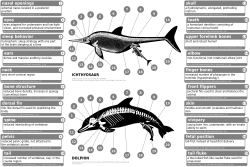
Biologically, dolphins are part of the parvorder Odontoceti, which distinguishes them as toothed whales. Their evolution is a prime example of convergent evolution, where they developed streamlined bodies and fins similar to fish and aquatic reptiles to optimize movement through water.
Key Facts

- Classification: Mammals in the order Artiodactyla and infraorder Cetacea.
- Diet: Primarily fish and squid, though orcas may hunt other marine mammals.
- Senses: Use biosonar (echolocation) for navigation and hunting.
- Sociality: Live in social groups known as pods.
- Anatomy: Possess a thick layer of blubber for insulation and streamlined bodies for speed.
Anatomy and Physical Characteristics

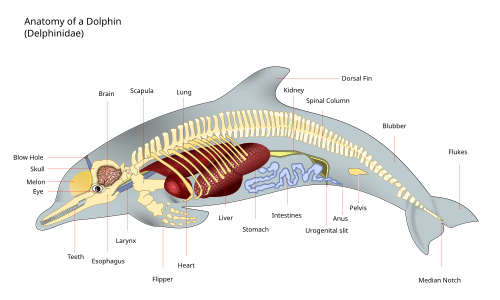
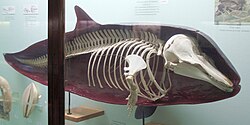
The dolphin's body is engineered for efficiency in an aquatic environment. Their skeletal structure and organ placement are adapted to withstand pressure and facilitate rapid swimming.
Integumentary System and Blubber
Dolphins possess a specialized skin and a thick layer of blubber (vascularized fat). Blubber serves as a critical insulator to maintain body temperature in cold waters and acts as an energy reserve.
Locomotion and Senses
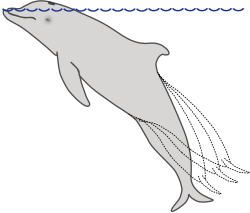
Dolphins move using powerful tail flukes and pectoral fins. One of their most advanced adaptations is biosonar, a biological sonar system that allows them to emit sound pulses and interpret the returning echoes to locate prey and navigate their surroundings.

Intelligence and Behavior
Dolphins are among the most intelligent animals on Earth. They exhibit self-awareness, complex problem-solving skills, and the ability to learn through social observation.
Social Dynamics and Play
Dolphins are highly social and often travel in pods. They engage in various playful behaviors, such as surfing and jumping. Some populations have developed unique skills, such as "tail-walking," a behavior where the dolphin balances on its tail. Observations indicate that in some groups, this skill is primarily learned by females.

Communication and Vocalization
Communication is central to dolphin society. They use a variety of sounds, including whistles, whines, and clicks. Spectrograms of these vocalizations reveal distinct patterns that help individuals identify one another and coordinate group activities.

Feeding and Diet

While most dolphins feed on fish and squid, dietary habits vary by species. The orca (killer whale) and false killer whale are apex predators that may hunt other marine mammals, including whale species larger than themselves.
Dental anatomy varies significantly across species. For example, the common bottlenose dolphin typically has between 72 and 116 conical teeth, whereas the common dolphin can have between 188 and 268 teeth. Orcas generally possess 40 to 56 teeth.
| Species | Typical Tooth Range |
|---|---|
| Orca | 40–56 |
| Common Bottlenose Dolphin | 72–116 |
| Common Dolphin | 188–268 |
Dolphins and Humans
The relationship between humans and dolphins is multifaceted, spanning history, culture, and science.
Historical and Cultural Significance
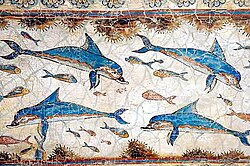
Dolphins have appeared in human art and heraldry for millennia. Ancient frescoes from Knossos, Crete (c. 1600 BC) and ancient coinage from Tarentum (c. 290 BC) depict these animals, reflecting their long-standing presence in human mythology and symbolism.
Captivity and Utility
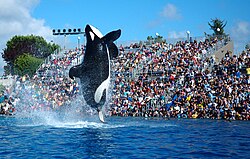
Dolphins have been used in various human contexts, including military applications and therapeutic settings. However, their presence in captivity, such as in marine parks, remains a subject of significant controversy regarding animal welfare and psychological health.

Threats and Conservation
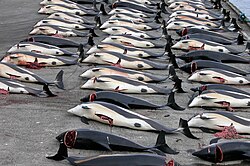
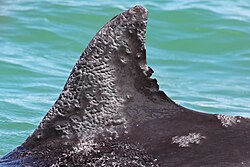
Dolphins face numerous threats, including climate change, fungal infections like lobomycosis, and human activities such as drive hunts and entanglement in gillnets. Pollution, specifically mercury contamination, also poses a risk to their health.
Frequently Asked Questions






How do dolphins sleep?
Dolphins utilize unihemispheric sleep, meaning they shut down one half of their brain at a time. This allows them to continue swimming and keep their blowhole above water for breathing, often using a tail kick reflex to maintain position.
What is the difference between a dolphin and a porpoise?
While both are odontocetes, they differ in anatomy. Dolphins generally have more elongated snouts and curved dorsal fins, whereas porpoises tend to have shorter snouts and more triangular dorsal fins.
Can dolphins hybridize?
Yes, hybridization can occur, particularly in captivity. For example, hybrids between common and bottlenose dolphins have been documented, often exhibiting physical traits, such as tooth counts, that are intermediate between the two parent species.
How do dolphins use tools?
Some dolphins exhibit tool-use behavior, such as using sponges to protect their snouts while foraging on the ocean floor. This behavior is often passed down from adults to their offspring.