Blue Whale: Biology, Behavior, and Conservation of the Ocean's Giant
The blue whale (Balaenoptera musculus) holds the title of the largest animal to have ever existed on Earth. A member of the baleen whale family, these massive marine mammals are found in every ocean, navigating the deep waters with a combination of grace and immense power. From their complex vocalizations to their specialized feeding habits, blue whales are marvels of evolutionary adaptation.
These giants first appeared in the fossil record during the Early Pleistocene, approximately 1.5 to 2 million years ago. Today, they remain some of the most mysterious inhabitants of the sea, often traveling thousands of miles during their migrations to find nutrient-rich waters.

Key Facts
- Scientific Name: Balaenoptera musculus
- Conservation Status: Endangered (IUCN 3.1)
- Diet: Primarily krill (small crustaceans)
- Classification: Order Artiodactyla, Infraorder Cetacea
- Range: Global distribution across all major oceans
- Distinguishing Feature: Largest known organism in history
Taxonomy and Evolution
The blue whale belongs to the family Balaenopteridae, known as the rorquals. These whales are characterized by pleated throat grooves that allow them to expand their mouths to take in massive volumes of water and prey.
Subspecies and Variations
Scientists recognize several subspecies of blue whales, which are often categorized by their geographic location and physical size. These include:
- Northern blue whale (B. m. musculus)
- Antarctic blue whale (B. m. intermedia)
- Pygmy blue whale (B. m. brevicauda)
- Northern Indian Ocean blue whale (B. m. indica)
Interestingly, research has documented hybridization, where blue whales have bred with fin whales (Balaenoptera physalus), resulting in hybrid offspring.

Physical Characteristics
The sheer scale of the blue whale is difficult to comprehend. Their bodies are streamlined for efficiency in the water, featuring a massive skull and a powerful tail fluke for propulsion.
Size and Anatomy
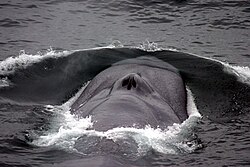
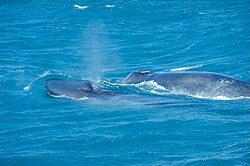
Adults can reach lengths that dwarf any other living creature. Their anatomy is specialized for a life in the open ocean, including two blowholes used for breathing at the surface.
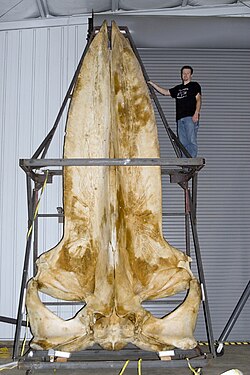
The skeletal structure is equally impressive; for example, a single blue whale skull can measure up to 5.79 meters (19.0 feet) in length.
Behavior and Ecology
Blue whales are solitary or small-group travelers, spending much of their lives migrating between high-latitude feeding grounds and low-latitude breeding grounds.
Diet and Lunge Feeding
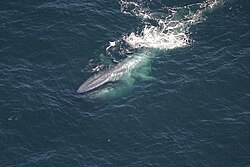
Despite their size, blue whales feed almost exclusively on krill. They employ a technique called lunge feeding, where they accelerate toward a swarm of prey and open their mouths wide, engulfing a massive volume of water and krill. They then use their baleen plates to filter out the water, trapping the krill inside.
Vocalizations
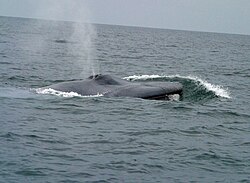
Blue whales are among the loudest animals on the planet. They use low-frequency sounds to communicate across vast distances. These songs vary by region and population, with researchers noting a worldwide decline in the tonal frequencies of these songs over time.
Reproduction
Female blue whales give birth to a single calf, which is already massive at birth but remains dependent on its mother's milk for a significant period.
Threats and Conservation
Once hunted to the brink of extinction by commercial whaling, the blue whale is now protected under international law, including CITES Appendix I. However, they still face significant modern challenges.
Environmental and Human Threats
- Ship Strikes: Collisions with large vessels are a major cause of mortality.
- Anthropogenic Noise: Human-made noise from shipping and sonar can interfere with their communication and navigation.
- Pollutants: Persistent organic contaminants have been found in their blubber and earplugs.
- Predation: While rare for adults, killer whales (Orcinus orca) are known to prey on blue whale calves.
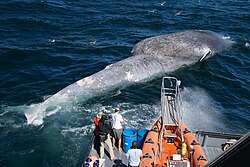
The impact of these threats is often visible in stranded animals, where researchers can examine the causes of death to better inform conservation strategies.

Summary of Blue Whale Characteristics
| Feature | Details |
|---|---|
| Scientific Name | Balaenoptera musculus |
| Conservation Status | Endangered / Vulnerable |
| Primary Diet | Krill |
| Key Subspecies | B. m. musculus, B. m. intermedia, B. m. brevicauda |
| Major Threats | Ship collisions, noise pollution, predation |
Frequently Asked Questions
What is the largest subspecies of blue whale?
The Antarctic blue whale (Balaenoptera musculus intermedia) is generally recognized as the largest subspecies.
How do blue whales eat such small prey?
They use lunge feeding, engulfing huge amounts of water and krill, then filtering the water through baleen plates to keep the food.
Can blue whales breed with other whale species?
Yes, there is documented evidence of hybridization between blue whales and fin whales.
What are the main threats to blue whales today?
The primary threats include collisions with ships, noise pollution from human activity, and predation by killer whales, particularly for calves.
How do blue whales communicate?
They use low-frequency vocalizations and songs that can travel across entire ocean basins to find mates or maintain contact with other whales.