Documentary Film: Evolution, Styles, and the Art of Capturing Reality
A documentary film is a nonfiction motion picture designed to document reality. Its primary purposes are typically instruction, education, or the maintenance of a historical record. While it may seem straightforward, media analyst Bill Nichols describes documentary filmmaking as a practice, a cinematic tradition, and a mode of audience reception that exists without clear, rigid boundaries.
Before the advent of cinema, the foundation for the documentary was laid by documentary photography. This practice used singular images to capture the complex attributes of historical events, such as the conflict photography produced by Mathew Brady during the American Civil War. Documentary movies evolved from this tradition, utilizing the medium of film to convey information with greater depth and duration.
Key Facts
- Origin: Early documentaries were known as "actuality films," typically lasting one minute or less.
- Purpose: They serve diverse roles, from educational resources in schools to political weapons against capitalism and neocolonialism.
- Evolution: The genre has shifted from simple observation to complex hybrid forms that blend fact with stylized re-enactments.
- Ethics: Filmmakers are generally expected to be truthful to their vision of the world without intentionally misrepresenting their subject.
The History of Nonfiction Cinema
Early Beginnings (Pre-1900 to 1920)
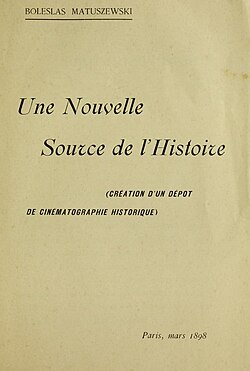
The earliest documentary efforts focused on capturing raw moments of life. Bolesław Matuszewski's 1898 book, Une nouvelle source de l'histoire, was the first publication to discuss the documentary function of cinematography.
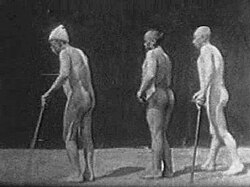
Early "actuality films" lacked narrative structure and were very brief. However, the potential for scientific recording was quickly realized, as seen in the science films produced by Gheorghe Marinescu in 1899.
The Expansion of the 1920s
During the 1920s, the medium diversified into several distinct styles. Romanticism and the City Symphony emerged, alongside the Kino-Pravda movement and the growing newsreel tradition. This era also saw the rise of poetic documentaries, which reacted against the grammar of fiction films. Instead of linear storytelling, poetic films used associations, patterns, and lyrical fragments to reconstitute the "historical world." Examples include Joris Ivens' Rain (1928) and László Moholy-Nagy's Play of Light: Black, White, Grey (1930).

Propaganda and Politics (1930s–1970s)
By the 1930s and 40s, the propagandist tradition became prominent, using film to persuade audiences of specific political viewpoints. Leni Riefenstahl's Triumph of the Will (1935), commissioned by Adolf Hitler, remains one of the most controversial examples. Conversely, leftist filmmakers like Joris Ivens and Henri Storck used the medium to highlight social issues, such as in Borinage (1931).

In the 1960s and 70s, documentary film became a political weapon, particularly in Latin America, to fight neocolonialism. Films like La Hora de los hornos (1968) influenced a generation of filmmakers to use cinema as a tool for social change.
Modern Documentary Styles and Forms
Cinéma Vérité and Intimacy
The introduction of cinéma vérité in the 1960s revolutionized the genre. The development of portable camera and sound equipment allowed filmmakers to establish a more intimate relationship with their subjects, moving away from staged setups.

The Rise of the Hybrid and Docufiction
In recent decades, the line between documentary and narrative has blurred. The hybrid documentary implements "truth games" to challenge traditional fact production, often using stylized re-enactments. Errol Morris's The Thin Blue Line (1988) is a landmark of this form, though its use of recreations led to its disqualification from the Academy Awards at the time.
Other modern variations include docufiction, which blends dramatic storytelling with factual elements, and highly personal works like Marlon Riggs's Tongues Untied (1989), which prioritize subjectivity over raw historical materials.
Diverse Narratives and Perspectives
Modern historical documentaries often express a specific perspective rather than claiming absolute neutrality. Works by Ken Burns, Spike Lee, and Henry Hampton demonstrate how a distinctive directorial voice can shape the audience's understanding of history.
![Lennart Meri (1929–2006), the second President of the Republic of Estonia, directed documentaries several years before his presidency. His film The Winds of the Milky Way won a silver medal at the New York Film Festival in 1977.[26][27][28]](/images/52/e6/52e64032a53caac9a882903d38d9a846a1c35090a5727937872fb3809c12a733.jpg)
| Style | Primary Characteristic | Example/Notable Work |
|---|---|---|
| Actuality | Brief, non-narrative recordings of real events | Early 1900s short films |
| Poetic | Lyrical, fragmentary, and associative images | Rain (Joris Ivens) |
| Propaganda | Explicitly designed to persuade the audience | Triumph of the Will |
| Cinéma Vérité | Intimate, portable equipment, observational | 1960s-70s social films |
| Hybrid | Blends facts with stylized re-enactments | The Thin Blue Line |

Frequently Asked Questions
What is the difference between a documentary and a docufiction?
While a traditional documentary aims to record reality for education or historical record, docufiction incorporates elements of dramatic, fictional storytelling to convey its message.
What are "actuality films"?
Actuality films were the earliest form of documentary, typically lasting one minute or less, and focused on faithfully depicting true events without a narrative structure.
What is a hybrid documentary?
A hybrid documentary is a form that challenges traditional fact production by blending factual content with experimental techniques or stylized recreations, creating an open dialogue between the subject and the audience.
How did cinéma vérité change filmmaking?
Cinéma vérité introduced the use of portable cameras and sound equipment, which allowed filmmakers to capture more intimate, candid interactions and reduced the distance between the filmmaker and the subject.
Can a documentary be considered propaganda?
Yes. The propagandist tradition consists of films made with the explicit purpose of persuading an audience to adopt a specific point of view, often commissioned by political entities.