Single-Camera Production: Techniques, History, and Evolution in Film and TV
In the world of filmmaking and video production, the method used to capture footage dictates the visual style, the budget, and the creative control available to a director. One of the most fundamental approaches is the single-camera setup, also known as single-cam or portable single crew mode. This method involves capturing all various shots and camera angles using a single camera—or multiple cameras that are moved and reset for each new angle.
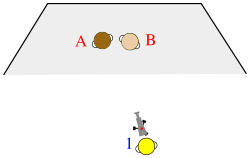
How Single-Camera Production Works
The core principle of a single-camera setup is sequential shooting. Instead of capturing every angle of a scene at once, the production team focuses on one specific perspective at a time. For example, if a scene involves a conversation between two actors, the director will first point the camera at Actor A and film the sequence. The crew then moves the camera to point at Actor B, potentially adjusting the lighting to suit the new angle, and films the scene again. This process allows for significant control during the post-production (the stage after filming where footage is edited) process, enabling editors to choose the best takes and decide exactly when to cut between angles.
While the setup is primarily designed for one camera, practitioners sometimes use two cameras simultaneously from the same angle—one to capture a medium shot (a shot showing a person from the waist up) and another for a close-up (a shot focusing tightly on a face or object) to streamline the process.
Single-Camera vs. Multi-Camera Setups
To understand the value of the single-camera method, it is helpful to compare it to the multiple-camera setup. In a multi-camera production, several cameras are arranged to capture all necessary angles of a scene simultaneously. This requires the entire set to be lit to accommodate all camera positions at once.
- Single-Camera: More time-consuming and requires more frequent resets, but offers greater versatility and precise directorial control over every shot.
- Multi-Camera: Generally faster and more cost-effective, but results in less versatile videography as the lighting and angles are fixed for the entire ensemble.
| Feature | Single-Camera Setup | Multi-Camera Setup |
|---|---|---|
| Primary Advantage | High creative control and versatility | Speed and efficiency |
| Typical Use Case | Feature films, dramas, commercials | Sitcoms, talk shows, live audiences |
| Production Speed | Slower (requires resets/relighting) | Faster (captures multiple angles at once) |
| Visual Style | Cinematic and highly varied | Standardized and stage-like |
Key Facts
- The single-camera setup was developed during the birth of Classical Hollywood cinema in the 1910s.
- It remains the standard mode of production for most feature films.
- Single-camera production is often preferred when heavy visual effects are required.
- Modern single-camera sitcoms are typically produced without a laugh track.
- The method allows for tighter editing in action or fight sequences.
Evolution in Television Production
While film producers almost exclusively use the single-camera method, television producers must choose between single-camera and multi-camera modes based on the genre. Single-camera production is the standard for prime-time dramas, music videos, commercials, and made-for-TV movies. Conversely, multi-camera setups are the norm for soap operas, talk shows, game shows, reality TV, and traditional sitcoms.
The History of the Television Sitcom
The multi-camera technique became the standard for American sitcoms in the 1950s, popularized by shows like I Love Lucy. This method is ideal for capturing an ensemble of actors performing live in front of a studio audience. However, the 1960s saw a shift toward higher technical standards. Shows like Leave It to Beaver, The Andy Griffith Show, and The Brady Bunch utilized single-camera techniques to achieve a feature-film aesthetic and to facilitate visual effects like magical appearances.
By the mid-1970s, the multi-camera style dominated again due to the massive success of domestic situation comedies like All in the Family. This trend continued through the 1980s and 1990s. However, the early 21st century—often called the Golden Age of Television—saw a massive resurgence of the single-camera format in comedy. Modern hits such as The Office, Modern Family, Parks and Recreation, and Arrested Development moved away from the traditional multi-camera, laugh-track format in favor of a more cinematic, naturalistic style.
Modern Blending of Styles
Recent productions have begun to experiment by blending both methods. The Disney+ series WandaVision uses multi-camera techniques (complete with laugh tracks) to replicate 1950s–1990s sitcoms, before transitioning into single-camera styles reminiscent of the 2000s. Similarly, the series Kevin Can F**k Himself uses the multi-camera format to depict a traditional family sitcom and switches to a single-camera format to reflect the protagonist's isolated reality.
Frequently Asked Questions
Why is single-camera production used for feature films?
It is the standard because it provides directors with maximum control over every individual shot, angle, and lighting setup, allowing for a more cinematic and polished visual result.
Can a single-camera setup be used for comedies?
Yes. While many traditional sitcoms use multi-camera setups, many modern comedies (such as Malcolm in the Middle or Abbott Elementary) use single-camera production to achieve a specific visual style or faster pacing.
What is the main difference regarding lighting between the two methods?
In a multi-camera setup, the set must be lit to accommodate all cameras simultaneously. In a single-camera setup, the lighting can be reset and adjusted specifically for each new angle or shot.
Why do multi-camera shows often have live audiences?
The multi-camera setup is uniquely suited to recording an ensemble of actors performing a single continuous performance, making it the ideal method for capturing shows staged like a play in front of a live audience.
Does single-camera production require a laugh track?
Not necessarily. In fact, most contemporary single-camera comedies are produced without a laugh track, contributing to a more naturalistic tone compared to traditional multi-camera sitcoms.