Doctrine of the Mean: The Ethical Core of Confucian Philosophy
The Doctrine of the Mean, known in Chinese as Zhongyong, stands as one of the most influential pillars of classical Chinese thought. As one of the Four Books of Confucianism, it provides a profound framework for understanding the relationship between individual virtue, social harmony, and the cosmic order. While the concept of the "mean" is briefly mentioned in the Analects of Confucius, it is the Zhongyong text that expands this idea into a comprehensive guide for living a balanced and purposeful life.
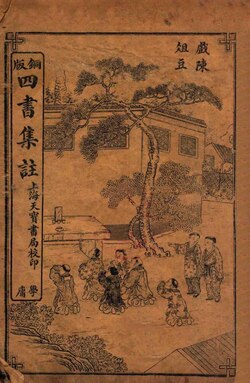
The term Zhongyong carries deep philosophical weight. In its literal sense, Zhong refers to being neither bent toward one extreme nor the other, while Yong signifies something unchanging or constant. Together, they describe an "unswerving pivot"—a state of constant equilibrium that allows a person to navigate the complexities of existence without losing their moral center.
Key Facts
- Classification: One of the Four Books of classical Chinese philosophy.
- Traditional Authorship: Attributed to Zisi, the grandson of Confucius.
- Core Concept: Achieving balance, moderation, and sincerity to align with the natural order.
- Structure: Divided into three parts: Metaphysics (The Axis), Politics (The Process), and Ethics (Sincerity).
- Historical Role: A mandatory subject for the Chinese imperial civil service examinations.
Origins and Authorship
The origins of the Zhongyong are a subject of scholarly debate. Traditionally, the text is attributed to Zisi, a disciple of Zeng Shen and the grandson of Confucius. However, historical scrutiny began during the Qing dynasty, with scholars like Cui Shu questioning this single-author attribution. Modern research suggests the text may have been compiled or edited by various Confucians during the transition between the Qin and Han dynasties.
Regardless of its exact origin, the text's importance is undisputed. It was originally a chapter within the Classic of Rites (Liji) and was later formally adopted into the Confucian canon by the Neo-Confucian scholar Zhu Xi.
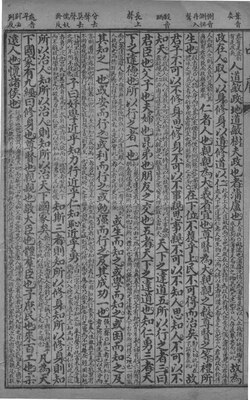
The Three Pillars of the Mean
To pursue the path of the Mean, the text proposes three essential guidelines for becoming a respectable person: Self-watchfulness, Leniency, and Sincerity.
Self-watchfulness
This principle focuses on the internal work of self-cultivation. It requires continuous self-education, rigorous self-questioning, and disciplined self-regulation. By monitoring one's own thoughts and actions, an individual can ensure they remain on the path of virtue.
Leniency
Leniency involves practicing empathy, tolerance, and the principle of reciprocity. A central tenet of this guideline is: "What you do not like when done to yourself, do not do to others." The text illustrates this through four social roles: serving a father, a prince, an elder brother, or a friend, always acting with the same respect one would wish to receive.
Sincerity
Sincerity is the highest virtue, acting as the bridge between the human realm and the heavens. The text suggests that a person possessed of complete sincerity can fully develop their own nature, which in turn allows them to help develop the nature of others, animals, and eventually assist the transforming powers of Heaven and Earth.
Historical and Modern Perspectives
For centuries, the Zhongyong was central to Chinese society. It was a prerequisite for anyone seeking employment in the imperial government, as the state used these teachings to reinforce the "three bonds" of social stability: the relationships between parent and child, husband and wife, and ruler and subject.
In the modern era, views on the doctrine have been diverse:
- Chiang Kai-shek praised the text as the essence of ancient Chinese learning.
- Mao Zedong offered a complex view, at times seeing it as a way to find an "optimal status" between extremes, while at other times critiquing it for being too compromising and preventing radical progress.
- Lu Xun criticized the doctrine, arguing that the cultural emphasis on compromise and reconciliation hindered necessary social reforms.
Summary of the Doctrine of the Mean
| Component | Focus Area | Key Objective |
|---|---|---|
| The Axis | Confucian Metaphysics | Understanding the cosmic order |
| The Process | Politics | Applying balance to governance |
| The Perfect Word | Ethics | Achieving sincerity and self-realization |
Frequently Asked Questions
How does the Doctrine of the Mean differ from the Aristotelian Golden Mean?
While both emphasize moderation and avoiding extremes, the Zhongyong is deeply rooted in metaphysics, linking individual moral balance to the harmony of Heaven and Earth, whereas the Aristotelian version focuses more on character virtues within human ethics.
What does "unswerving pivot" mean in this context?
It refers to the concept of zhongyong, where a person remains centered and constant. Like a pivot, the individual stays fixed in their moral integrity even as the circumstances of the world change around them.
Who is the traditional author of the text?
The text is traditionally attributed to Zisi, the grandson of Confucius, though modern scholars suggest it may be a composite work edited over time.
Is the Doctrine of the Mean still relevant today?
Yes. It remains a foundational text for New Confucians and continues to be studied for its insights into education, social harmony, and the development of personal character.
What are the three guidelines for a respectable person?
The three guidelines are self-watchfulness (discipline), leniency (reciprocity and tolerance), and sincerity (aligning one's nature with the cosmic order).