Chinese Philosophy: A Journey Through Millennia of Thought
Chinese philosophy represents one of the world's most profound and enduring intellectual traditions. Spanning thousands of years, it has shaped the social structures, ethical frameworks, and political landscapes of East Asia. From the ancient debates of the "Hundred Schools of Thought" to the complex ideological shifts of the modern era, Chinese thought offers a unique perspective on the relationship between humanity, nature, and the state.
Unlike Western philosophical traditions that often emphasize linear progression, early Chinese thought was deeply rooted in the observation of natural cycles. During the Shang dynasty, thinkers focused on the rhythms of day and night, the changing seasons, and the waxing and waning of the moon. This cyclical view of time remains a fundamental distinction in the history of global philosophy.
Key Facts
- Foundational Era: The "Hundred Schools of Thought" emerged during the Spring and Autumn and Warring States periods (c. 770–221 BCE).
- Core Schools: Major traditions include Confucianism, Daoism, Mohism, and Legalism.
- State Ideology: Confucianism was officially adopted as the state ideology during the Han dynasty under Emperor Wu.
- Metaphysical Concepts: Key terms include Dao (the Way), De (virtue), Li (principle), and Qi (vital energy).
- Modern Influence: Mao Zedong Thought integrated Marxist-Leninist principles with Chinese intellectual traditions.
The Hundred Schools of Thought
The intellectual ferment of the Spring and Autumn and Warring States periods gave rise to a diverse array of competing philosophies. These thinkers sought to address urgent questions regarding ethics, governance, and the ideal social order in a politically fragmented age.
Confucianism and its Followers
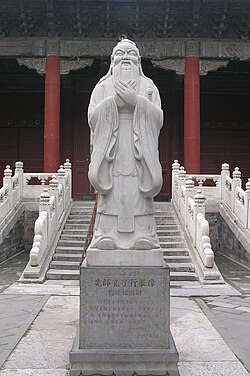
Founded on the teachings of Confucius, Confucianism emphasizes social harmony and ethical conduct. Its followers, such as the idealist Mencius and the realist Xunzi, provided different interpretations of human nature and moral development. While Legalism—a philosophy focused on strict laws and state power—largely disappeared after the Qin dynasty, its institutional influence persisted.
Daoism and the Natural Way
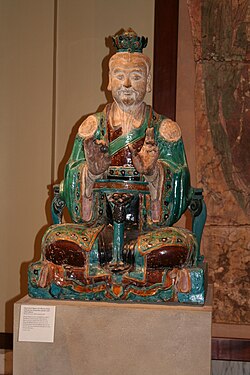
In contrast to the structured social ethics of Confucianism, Daoism focuses on living in harmony with the Dao (the Way). This tradition emphasizes spontaneity and the natural order, eventually evolving into an organized religion that deeply influenced Chinese culture.
Legalism and Mohism
Legalism, championed by theorists like Han Fei and practitioners like Li Si, argued that a ruler should govern through a trinity of Fa (law or principle), alongside other methods of control. Meanwhile, Mohism offered a different approach to social organization during this era of intense competition.
The Imperial Era and the Rise of Neo-Confucianism
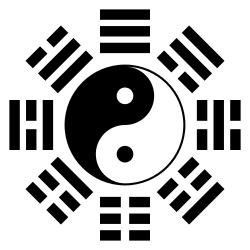
As the Chinese empire stabilized, these competing traditions began to merge. During the Han dynasty, Confucianism was institutionalized through the work of Dong Zhongshu, becoming infused with cosmological elements like Yin-Yang and the Five Elements theories.
By the Song and Ming dynasties, a resurgent movement known as Neo-Confucianism emerged. Led by pioneers like Zhou Dunyi and prominent figures like Zhu Xi, this school integrated Daoist metaphysics into a Confucian ethical framework. It introduced complex concepts such as li (principle), qi (vital force), and taiji (the Great Ultimate).
| School/Concept | Primary Focus | Key Figures/Terms |
|---|---|---|
| Confucianism | Ethics, social order, and governance | Confucius, Mencius, Xunzi |
| Daoism | Harmony with nature and the Dao | Laozi, Zhuangzi |
| Legalism | Strict laws and state authority | Han Fei, Li Si, Shang Yang |
| Neo-Confucianism | Metaphysical integration of ethics | Zhu Xi, Wang Yangming |
| Buddhism | Spiritual enlightenment (introduced from India) | Zen/Chan traditions |
Modern Transformations
The 20th century brought radical shifts to Chinese thought. The Xinhai Revolution of 1911 and the May Fourth Movement called for the abolition of imperial institutions, leading to the incorporation of democracy and republicanism by thinkers like Sun Yat-Sen.
Following the 1949 revolution, Mao Zedong Thought became the dominant state ideology. This system reinterpreted Marxist-Leninist doctrine through a Chinese lens, focusing on concepts such as practice, contradiction, and dialectical materialism. While the Cultural Revolution saw a period of ritualized discourse, the contemporary era has seen a revival of interest in traditional philosophies, exemplified by the establishment of the Chinese Zhuzi Research Institute in 2024.
Frequently Asked Questions
What is the difference between Confucianism and Daoism?
Confucianism generally focuses on social hierarchy, ethics, and the duties of individuals within a structured society. Daoism, conversely, emphasizes alignment with the natural flow of the universe and often advocates for a more spontaneous, less structured way of living.
What are the core elements of Neo-Confucianism?
Neo-Confucianism combines ethical philosophy with metaphysical concepts. It utilizes terms like li (principle), qi (vital or material force), taiji (the Great Ultimate), and xin (mind) to explain the nature of reality and morality.
How did Buddhism influence Chinese philosophy?
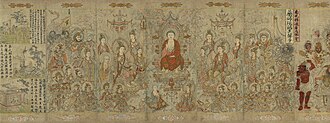
Buddhism entered China from India and gained significant prominence, particularly during the Tang dynasty. While it faced periods of persecution, such as the Great Anti-Buddhist Persecution in 845 CE, it deeply influenced the cultural and philosophical landscape, eventually interacting with and being absorbed into various Chinese thought systems.
What is the significance of the "Hundred Schools of Thought"?
This period (c. 770–221 BCE) was a golden age of Chinese intellectual history. It was a time when various thinkers—including Confucius, Laozi, and Mozi—developed the foundational philosophies that would define Chinese civilization for millennia.
What is "Mao Zedong Thought"?
Mao Zedong Thought is a theoretical system that draws from Soviet Marxism-Leninism and late Qing intellectual traditions. It centers on concepts like practice and dialectical materialism and became the dominant state ideology following the Communist victory in 1949.