Dizzy Gillespie: The Virtuoso Who Defined Bebop and Afro-Cuban Jazz
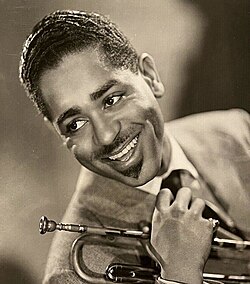
John Birks "Dizzy" Gillespie was more than just a jazz musician; he was a sonic architect who reshaped the landscape of American music. A trumpet virtuoso, composer, and educator, Gillespie took the foundations of jazz and infused them with unprecedented harmonic and rhythmic complexity. Known for his wit, showmanship, and unmistakable visual style, he became one of the most enduring icons of the 20th century.
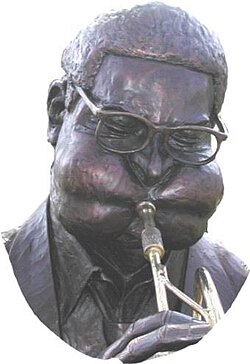
From his signature bent horn to his pouched cheeks and penchant for scat singing—a vocal style using nonsense syllables to improvise like an instrument—Gillespie brought a sense of joy and surprise to the avant-garde movements of his time.
Key Facts
- Full Name: John Birks Gillespie
- Primary Instrument: Trumpet
- Major Contributions: Co-founder of bebop and pioneer of Afro-Cuban jazz.
- Signature Look: Bent trumpet, horn-rimmed spectacles, and a beret.
- Active Years: 1935–1993
- Notable Works: "A Night in Tunisia," "Groovin' High," and "Salt Peanuts."
Early Career and Professional Ascent
Gillespie began his professional journey in 1935 with the Frank Fairfax Orchestra. He later moved through the orchestras of Edgar Hayes and Teddy Hill, the latter providing the platform for his first recording, "King Porter Stomp." During this period, he met dancer Lorraine Willis in 1937; the two married in 1940, and she would go on to manage his business and personal affairs throughout his life.
By 1939, Gillespie joined the prestigious Cab Calloway orchestra, where he recorded one of his earliest compositions, "Pickin' the Cabbage." However, a personal altercation led to his dismissal in late 1941. This transition paved the way for his tenure with the Earl Hines band in 1943, a pivotal era that coincided with the birth of a new musical language.
The Rise of Bebop
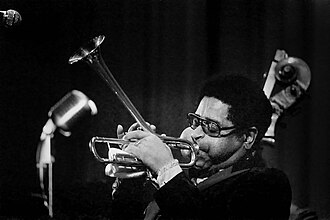
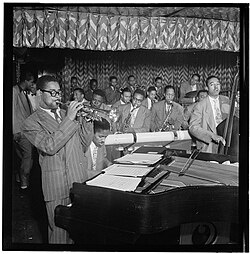
While the swing era dominated the airwaves, Gillespie was developing bebop—a style of jazz characterized by fast tempos, virtuosic technique, and complex chord progressions. His compositions, such as "Groovin' High" and "Woody 'n' You," sounded radically different from the popular music of the day.
In 1942, he wrote "A Night in Tunisia," which introduced a syncopated bass line that remains a staple in modern music. Gillespie was determined to move bebop beyond small, niche clubs. On June 22, 1945, he presented the style to a wider audience at New York's Town Hall and began organizing big bands to amplify the reach of the genre.
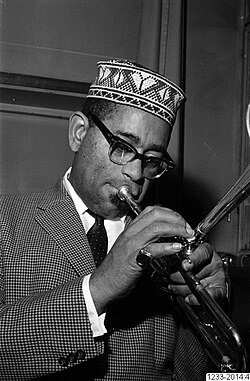
Pioneering Afro-Cuban Jazz
In the late 1940s, Gillespie expanded his horizons by integrating Afro-Latin American rhythms into jazz, creating what is now known as Afro-Cuban jazz. This movement brought elements of salsa and traditional Cuban rhythms to the forefront of American music.
A key catalyst for this evolution was Gillespie's 1947 introduction to conga drummer Chano Pozo, facilitated by Latin jazz trumpeter Mario Bauzá. Together, they developed a modern, danceable style that maintained high popularity and bridged the gap between jazz and Latin music.
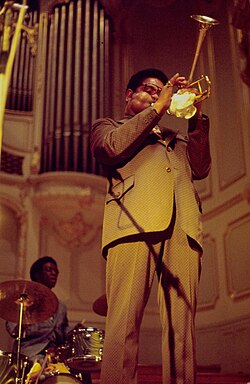
The Iconography of the Bent Trumpet
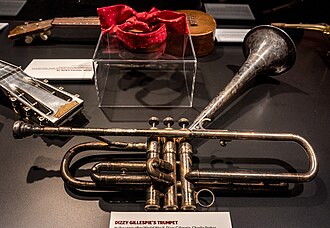
One of the most recognizable aspects of Gillespie's persona was his bent trumpet. By June 1954, he began using professionally manufactured horns with a modified bell. These instruments were crafted for him by renowned makers including Martin, King Musical Instruments, and Renold Schilke.
This unique instrument became a trademark of his career. In 1986, he donated his 1972 King "Silver Flair" trumpet to the National Museum of American History.
Final Years and Legacy
Gillespie remained active until the very end of his life. In his later years, he appeared in the 1992 film The Winter in Lisbon. However, his touring career came to an abrupt end in December 1991 after he was diagnosed with pancreatic cancer during an engagement in California.
Despite his illness, his influence remained potent. On November 26, 1992, Carnegie Hall hosted a 75th birthday concert in his honor. Though he was too unwell to attend, a lineup of jazz greats performed in tribute to the man who had revolutionized the trumpet.
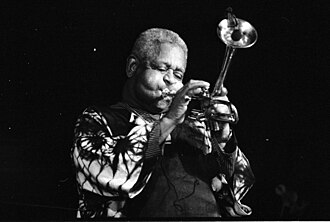
Gillespie passed away on January 6, 1993, in Englewood, New Jersey. His legacy is preserved not only in his recordings but also through honors such as the Polar Music Prize and induction into the International Latin Music Hall of Fame and the New Jersey Hall of Fame.
| Category | Details |
|---|---|
| Genres | Jazz, Bebop, Afro-Cuban Jazz |
| Key Collaborators | Charlie Parker, Chano Pozo, Mario Bauzá |
| Notable Labels | RCA Victor, Verve, Savoy, Impulse, Pablo |
| Major Awards | Polar Music Prize, International Latin Music Hall of Fame |
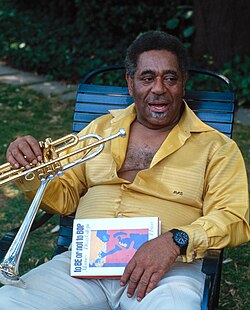
| Memoir | To Be or Not to Bop (1979) |
Frequently Asked Questions
Why was Dizzy Gillespie's trumpet bent?
While it became a trademark of his visual identity, Gillespie used professionally manufactured bent horns from companies like Martin and King Musical Instruments to achieve his specific sound and style.
What is the difference between swing and bebop?
Swing was primarily dance music with a steady beat and simpler harmonies. Bebop, which Gillespie co-founded, featured faster tempos, more complex rhythmic structures, and advanced harmonic improvisations intended for listening rather than dancing.
How did Gillespie contribute to Afro-Cuban jazz?
Gillespie integrated traditional Afro-Cuban rhythms and instruments, such as the congas played by Chano Pozo, into the bebop framework, creating a fusion that influenced both jazz and salsa.
Who was Jeanie Bryson?
Jeanie Bryson is a jazz singer and the daughter of Dizzy Gillespie, born from his relationship with songwriter Connie Bryson.
What was Gillespie's role as an educator?
Beyond performing, Gillespie was a dedicated educator who taught the complexities of bebop and Afro-Cuban rhythms to subsequent generations of musicians, helping to formalize the language of modern jazz.