Dirty War: Argentina's Era of State Terrorism and the Struggle for Justice
The Dirty War refers to a period of brutal state-sponsored repression in Argentina that lasted from January 19, 1974, to December 10, 1983. This era was characterized by a systematic campaign of violence carried out by the military and security forces against perceived political dissidents, including left-wing activists, students, and trade unionists. Part of the broader Cold War tensions and the regional Operation Condor—a campaign of political repression and state terror involving several South American governments—the conflict left a permanent scar on Argentine society.
The violence escalated significantly following the 1976 coup d'état, which installed a military junta known as the National Reorganization Process. Under this regime, the state utilized clandestine detention centers, torture, and forced disappearances to eliminate opposition.
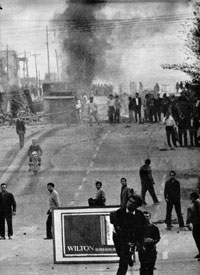
Key Facts
![Memorial at the former detention center of Quinta de Mendez [es]](/images/78/51/78518cbc958c7ae39da14d10afd65398f77c67e3d9b4d791f02d1b90174e769f.jpg)
- Duration: January 19, 1974 – December 10, 1983.
- Estimated Victims: Between 22,000 and 30,000 people were killed or disappeared.
- Primary Perpetrators: The Argentine Army, Navy, Air Force, and various security agencies.
- Key Figures: General Jorge Rafael Videla, Admiral Emilio Eduardo Massera, and General Orlando Agosti.
- International Support: The junta received $50 million in military aid from the United States.
- Legacy: The establishment of the Mothers of the Plaza de Mayo and the landmark Trial of the Juntas.
The Rise of the Military Junta
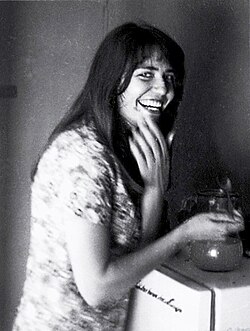
The path to the dictatorship began during the government of Isabel Perón. Under pressure from the military, she appointed Jorge Rafael Videla as commander-in-chief of the Argentine Army in 1975. Videla openly supported the use of death squads, stating that "as many people as necessary must die in Argentina so that the country will again be secure."
On March 24, 1976, a military coup overthrew Isabel Perón, replacing her with a junta led by Videla, Massera, and Agosti. This regime institutionalized the repression, utilizing the state's full security apparatus—including the Federal Police and the National Gendarmerie—to hunt down dissidents.
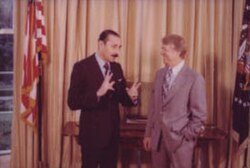
Systemic Human Rights Violations
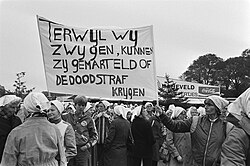
The junta's strategy relied on forced disappearances, where individuals were kidnapped and taken to secret detention centers. This method allowed the state to deny knowledge of the prisoners' whereabouts, creating a climate of terror for both the victims and their families.
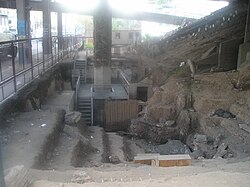
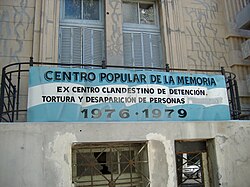
Clandestine Detention and Torture
Thousands of detainees were held in illegal centers where they were subjected to systematic torture. These sites were often hidden within police headquarters or military installations.
The "Death Flights"
One of the most horrific methods of execution was the death flights (vuelos de la muerte). Former navy captain Adolfo Scilingo later testified that prisoners were drugged and thrown alive from aircraft into the Rio de la Plata or the Atlantic Ocean to ensure their bodies would never be found. To facilitate these operations, the military purchased five PA-51 Skyvan aircraft from Britain.
International Influence and Complicity
The Dirty War did not happen in isolation. The United States provided significant financial and military aid to the junta, with declassified documents suggesting that high-level officials gave a "green light" to the repression. Additionally, French military influence played a role; a 1959 agreement established a permanent French military mission in Argentina, consisting of veterans from the Algerian War who shared counter-insurgency and torture techniques.
![7 August 1979 United States embassy in Argentina memorandum of the conversation with Jorge Contreras, director of Task Force 7 of the Reunion Central section of the 601 Army Intelligence Unit, which gathered members from all parts of the Argentine Armed Forces (subject: "Nuts and Bolts of the Government's Repression of Terrorism-Subversion")[164][full citation needed]](/images/b6/9d/b69df159c3f9af90763ed5bdc0718dae87a3284d96581792a7ad4c18c6fd5871.jpg)
Resistance and the Search for Truth
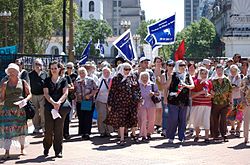
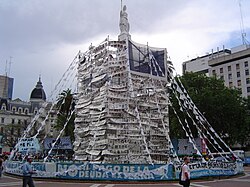
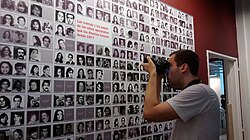
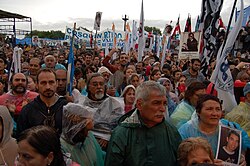
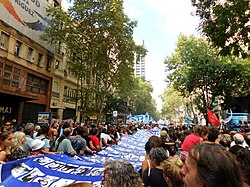
Despite the terror, civil society resisted. The Mothers of the Plaza de Mayo became a global symbol of courage, gathering weekly in front of the presidential palace to demand information about their "disappeared" children.
The movement grew to include the Grandmothers of the Plaza de Mayo, who sought to locate grandchildren who had been stolen from their disappeared parents and illegally adopted by military families.
Restoration of Democracy and Accountability
The military regime collapsed following the Falklands War. In the 1983 elections, Raúl Alfonsín was elected president, and his inauguration on December 10, 1983, marked the official end of the Dirty War.
Alfonsín established the National Commission on the Disappearance of Persons (CONADEP) to investigate the crimes of the dictatorship. This effort led to the 1985 Trial of the Juntas, where nearly 300 people were prosecuted. Leading officers, including Jorge Rafael Videla, were convicted and sentenced for their roles in the state terrorism.
Justice continued in later years as pardon laws were repealed, allowing for the prosecution of lower-ranking officers. For example, Luis Kyburg, a former naval officer accused of killing at least 150 people, remained a target of prosecution until his death in Berlin in 2023.
Summary of the Dirty War
| Category | Details |
|---|---|
| Timeframe | January 19, 1974 – December 10, 1983 |
| Governing Body | National Reorganization Process (Military Junta) |
| Estimated Deaths | 22,000 to 30,000 disappeared/killed |
| Key Tactics | Clandestine detention, torture, death flights |
| Major Resistance | Mothers of the Plaza de Mayo |
| Justice Mechanism | CONADEP and the Trial of the Juntas (1985) |
Frequently Asked Questions
What does the term "disappeared" mean in the context of the Dirty War?
The "disappeared" (desaparecidos) were individuals kidnapped by state security forces and taken to secret detention centers. By refusing to acknowledge their arrest, the government avoided legal accountability and left families in a state of permanent uncertainty.
What were the "death flights"?
Death flights were a method of mass execution where political prisoners were drugged and thrown from planes into the ocean, ensuring that no bodies remained as evidence of the killings.
Who were the Mothers of the Plaza de Mayo?
They were a group of mothers whose children had been disappeared by the military junta. They protested publicly in Buenos Aires, drawing international attention to the human rights abuses occurring in Argentina.
How did the United States participate in the Dirty War?
The U.S. provided approximately $50 million in military aid to the junta and, according to declassified documents, provided diplomatic support and a "green light" for the repression of left-wing dissidents.
What was the significance of the Trial of the Juntas?
The 1985 Trial of the Juntas was a landmark event in international law, as it was one of the first times a domestic court prosecuted the top leaders of a military dictatorship for systemic human rights violations.