Diban: A Syrian Town of Ancient Heritage and Modern Conflict
Located along the eastern banks of the Euphrates River in eastern Syria, Diban (also spelled Thiban or Zeiban) is a town that bridges the gap between ancient Mesopotamian history and the complexities of modern geopolitics. Situated within the Deir ez-Zor Governorate, it serves as a vital administrative hub for its surrounding region.
Geographically, Diban is positioned south of Deir ez-Zor, sitting 17 kilometers south of al-Busayrah and 13 kilometers north of Al-Asharah. It is surrounded by several key localities, including Al Mayadin to the north and west, al-Hawayij to the northeast, Mahkan to the southwest, and al-Tayanah to the southeast.
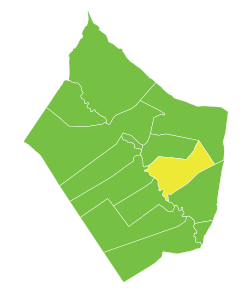
Key Facts
- Administrative Status: Administrative center of the Diban nahiyah (subdistrict).
- Population: 9,000 residents (2004 census).
- Location: Eastern bank of the Euphrates River, Deir ez-Zor Governorate.
- Ancient Identity: Identified as the Aramean city of Rummunina.
- Archaeological Site: Tell Diban, an Iron Age settlement.
Ancient History and Archaeology
A significant portion of the town is built upon Tell Diban, an archaeological mound that reveals the area's deep historical roots. This site is identified as the ancient Aramean city of Rummunina, a name likely derived from the Aramaic word rumman, meaning "pomegranate."
The strategic importance of the area dates back millennia. In 885 BCE, the fields surrounding the town served as a pre-war camp for the army of the Assyrian king Tukulti-Ninurta II during his final military campaign. Historical records from the king indicate that Rummunina was located along a canal of the Khabur River, a major tributary of the Euphrates. Belgian orientalist Edward Lipinsky has confirmed that Tell Diban was certainly occupied during the Iron Age, the period characterized by the widespread use of iron for tools and weapons.
Modern Governance and Demographics
Administratively, Diban is the seat of a nahiyah (a Syrian subdistrict). According to the 2004 census conducted by the Syria Central Bureau of Statistics, the town itself had a population of 9,000. However, the broader subdistrict, which encompasses ten different localities, had a total population of 65,079 at that time.
| Category | Detail |
|---|---|
| Governorate | Deir ez-Zor |
| District | Mayadin |
| Town Population | 9,000 |
| Subdistrict Total Population | 65,079 |
| Time Zone | UTC+2 (EET) / UTC+3 (EEST) |
Recent Conflict and Security
In recent years, Diban has been a flashpoint during the Syrian Revolution. The town was initially captured from the Syrian government by the Free Syrian Army, but it subsequently fell under the occupation of ISIL. On November 18, 2017, the Syrian Democratic Forces (SDF) recaptured the town with significant support from the US-led coalition.
Stability has remained elusive in the following years. On September 25, 2023, tribal fighters seized the town during clashes that left 18 local gunmen, three SDF members, and one civilian dead. Tensions continued into 2024 and 2025, with reported clashes between local tribes and the YPG on August 7, 2024, and further fighting between local gunmen and SDF members on January 20, 2025.
Frequently Asked Questions
What is the historical significance of Tell Diban?
Tell Diban is an archaeological site identified as the ancient Aramean city of Rummunina. It was occupied during the Iron Age and served as a military camp for the Assyrian king Tukulti-Ninurta II in 885 BCE.
Where is Diban located?
Diban is located in eastern Syria within the Deir ez-Zor Governorate, situated on the eastern bank of the Euphrates River in the Mayadin District.
What was the population of Diban in 2004?
According to the 2004 census, the town of Diban had a population of 9,000, while the entire subdistrict it governs had a population of 65,079.
Who currently or recently controlled Diban?
The town has seen various controllers, including the Syrian government, the Free Syrian Army, and ISIL. It was captured by the Syrian Democratic Forces (SDF) in 2017, though it has since experienced periods of seizure by tribal fighters and ongoing clashes.
What does the name Rummunina likely mean?
The name is believed to be a derivation of the Aramaic word "rumman," which translates to "pomegranate."