Deuteronomy 1-3: Rabbinic Interpretations and Midrashic Insights
The first three chapters of Deuteronomy serve as a reflective bridge between the Israelites' wanderings in the wilderness and their entry into the Promised Land. In classical rabbinic literature—including the Mishnah, the Talmud, and various Midrashim (homiletic interpretations)—these texts are analyzed not just as historical records, but as sources of moral guidance, legal precedent, and spiritual lessons.
These interpretations often seek to uncover hidden meanings within the biblical phrasing, linking disparate verses to create a cohesive narrative of divine justice and human failure.
Key Facts

- The Ten Trials: Rabbinic tradition links the geographical listings in Deuteronomy 1:1 to ten specific failures of the Israelites in the wilderness.
- Timing of Admonition: The Sifre teaches that Moses rebuked the people only as he neared death, following a pattern established by Jacob.
- Judicial Standards: Judges are ideally expected to possess seven specific qualities, though the Torah allows for selection based on available candidates.
- The Significance of Tu B'Av: This day is interpreted as the moment the generation of the wilderness stopped dying, restoring communication between God and Moses.
- Divine Patience: God is noted to have supported Moses' preference for peace over war when dealing with Sihon, king of the Amorites.
The Trials of the Wilderness and the Art of Rebuke
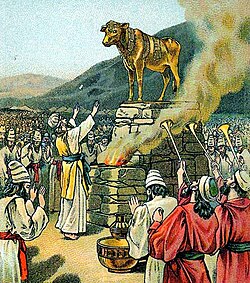
The Avot of Rabbi Natan suggests that the list of locations in Deuteronomy 1:1 is an allusion to ten trials God set for the Israelites, all of which they failed. For example, "In the wilderness" refers to the sin of the Golden Calf, while "On the plain" refers to the complaints regarding a lack of water. Even the term "Di-zahav" is interpreted as a reference to the "golden sin" of the Calf.
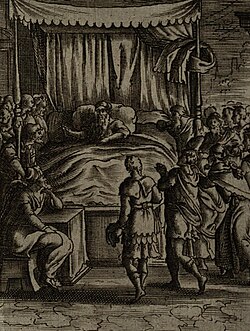
Regarding the nature of leadership, the Sifre notes that Moses waited until the end of his life to rebuke the Israelites. This approach was modeled after Jacob, who admonished his sons only upon his deathbed. The Sifre identifies four reasons for this timing: to avoid repeating the rebuke, to spare the recipient from public shame, to prevent long-term ill will, and to ensure a peaceful departure.
Judicial Integrity and Governance
Deuteronomy 1:13-16 outlines the appointment of judges. Rabbi Berekiah and Rabbi Hanina teach that a perfect judge should possess seven qualities: wisdom, understanding, knowledge, the fear of God, truthfulness, a hatred of unjust gain, and the ability to be "able." However, the Torah lists these in separate sections to indicate a hierarchy of selection; if a person with all seven cannot be found, those with fewer qualities are appointed.
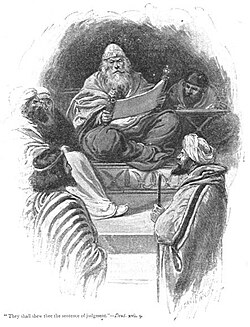
The Rabbis further emphasize the ethical requirements of the court. Rabbi Joḥanan warns that judges must use corporal punishment with extreme caution, while Rabbi Haninah stresses that judges must never hear one party's claim without the opponent present. Furthermore, the Gemara warns that when hedonism and partiality enter the legal system, the Shechinah (Divine Presence) departs, as God only abides with honest judges.
The Identity of Og and the Great River
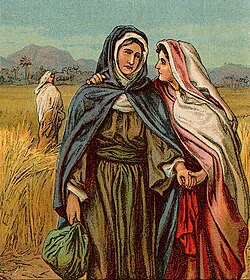
The Pirke De-Rabbi Eliezer provides a unique identification for Og, king of Bashan. It claims Og was actually Eliezer, the servant of Abraham. According to this tradition, Nimrod gave Eliezer to Abraham as a slave. After Eliezer successfully secured Rebekah as a wife for Isaac, he was freed, and God rewarded him by making him the king of Bashan.
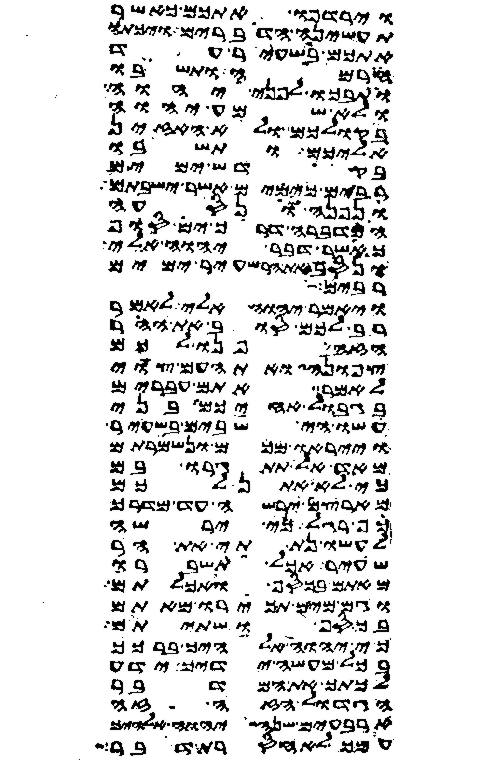
Additionally, a midrash explains why the Euphrates is called the "Great River." It argues that the river is not inherently great, but is called so because it encompasses the Land of Israel, which is described as a "great nation."
The Conquest of the Amorites and Divine Providence
The encounter with Sihon, king of the Amorites, is viewed as a lesson in diplomacy and divine orchestration. Although God commanded war, Moses first sent messengers to offer peace. The Rabbis teach that God approved of this, establishing the permanent rule that Israel must offer peace before engaging in battle.
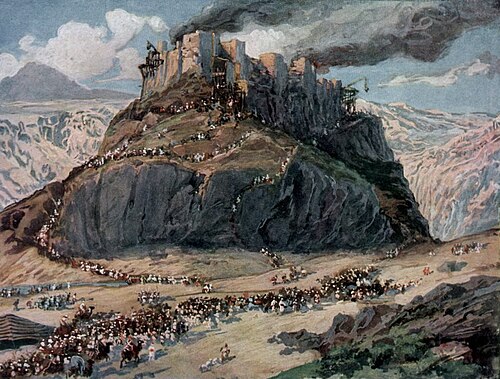
The midrash suggests that God intentionally gathered Sihon's forces in one place (Heshbon) to make the victory easier for the Israelites. Had the armies been scattered across different towns, the Israelites would have been exhausted by the effort of conquering them individually.
The Fate of Moses
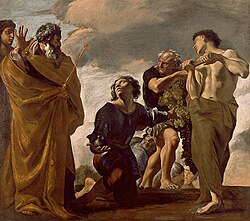
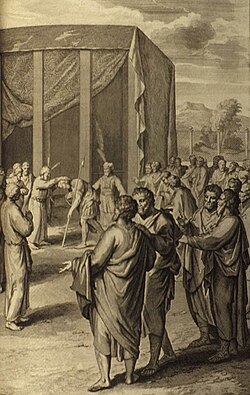
A poignant discussion exists regarding why Moses was forbidden from entering the Promised Land. Rabbi Samuel bar Naḥman suggests the root cause was Moses' initial reluctance at the Burning Bush, where he spent seven days arguing that he was not a "man of words." Other traditions suggest it was a result of his temporary assumption of the High Priest's role during the consecration of the priesthood.
| Topic | Source/Authority | Core Interpretation |
|---|---|---|
| Wilderness Locations | Avot of Rabbi Natan | Allusions to ten failed trials of the Israelites. |
| Timing of Rebuke | Sifre | Admonition should occur near death to preserve peace and dignity. |
| Identity of Og | Pirke De-Rabbi Eliezer | Og was Abraham's servant Eliezer, rewarded with kingship. |
| Tu B'Av | Rabbi Joḥanan / Rav Dimi | The day the wilderness generation ceased dying and God spoke again to Moses. |
| Judicial Qualities | Rabbi Berekiah / Rabbi Hanina | Seven ideal traits for judges, used as a tiered selection process. |
Frequently Asked Questions
Why did Moses wait until the end of his life to rebuke the Israelites?
According to the Sifre, this was done to avoid the need for repetition, prevent the rebuked from feeling ongoing shame, avoid the development of ill will, and ensure that the parties could part in peace.
What is the significance of Tu B'Av in this context?
Rabbinic tradition suggests that Tu B'Av was the day the generation of the wilderness finally stopped dying out. This event marked the resumption of direct communication between God and Moses after a period of 38 years.
How many officers were there in the Israelite camp?
Based on a baraita interpreting Deuteronomy 1:15, with a population of 600,000 men, there were 600 chiefs of thousands, 6,000 of hundreds, 12,000 of fifties, and 60,000 of tens, totaling 78,600 officers.
What are the seven qualities required of a judge?
The qualities are: wisdom, understanding, knowledge, fearing God, truthfulness, hating unjust gain, and being an "able" man. These are derived from Deuteronomy 1:13 and Exodus 18:21.
Why was the Euphrates called the "Great River"?
The midrash teaches that the river is called "great" because it borders the Land of Israel, which is itself described as a "great nation," reflecting the principle that a servant of a king is also considered a king.