Delaware Lenape: History, Culture, and the Journey of the Lënapeyok
The Lënapeyok, commonly known as the Delaware or Lenape, are an Algonquian-speaking people whose ancestral roots stretch across the Mid-Atlantic region of North America. Known as the "original people," their history is one of profound resilience, marked by a vast ancestral homeland, complex social structures, and a long series of forced migrations that eventually scattered their communities across the United States and Canada.
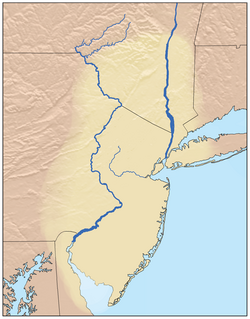
Their ancestral territory, known as Lenapehoking, originally encompassed present-day New Jersey, southern New York, eastern Pennsylvania, and portions of western Connecticut. Within this region, the people were divided by linguistic dialects, primarily Munsee in the north and Unami in the south, with Unalachtigo spoken in the central areas.
![The Lenape territory, known as Lenapehoking, as of the 16th and 17th centuries, with speakers of Munsee (north), Unalachtigo (center), and Unami (south). Inset: The location of the region in the present-day United States.[15][17][18]](/images/18/7a/187a911182fcce1b95b0814dc2576c1659aba74a8c1ef99fb5307592469bf161.png)
Key Facts
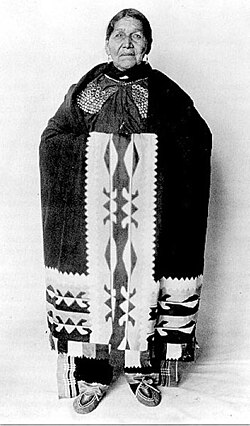
![Two Delaware Nation citizens, Jennie Bobb and her daughter Nellie Longhat, in Oklahoma, in 1915[3]](/images/75/48/75488a7b485712163dc6c5cc308c0ba4f9b0499b1423d09c0b358f08e19b574e.jpg)
- Ancestral Homeland: Lenapehoking (NJ, NY, PA, and CT).
- Languages: English is primary today, with Munsee and Unami as traditional languages.
- Population: Approximately 16,000 people across various recognized tribes.
- Federally Recognized Tribes: Delaware Nation and Delaware Tribe of Indians (Oklahoma), and the Stockbridge-Munsee Community (Wisconsin).
- Cultural Affiliation: Part of the broader Algonquian ethnic group.
Ancestral Lands and Early Society
In the 16th and 17th centuries, the Lenape lived in confederations across the fertile landscapes of the East Coast. Their society was deeply connected to the environment, relying on a balanced economy of hunting, fishing, and farming.
The Lënapeyok developed sophisticated kinship systems and clan structures that governed their social interactions and leadership. Their material culture was equally rich, featuring intricate clothing and adornments, such as the ribbonwork shawls and medallion dresses seen in historical records.
The Era of European Contact and Displacement
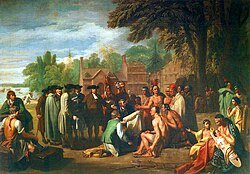
The arrival of European colonists in the 17th century initiated a period of volatile diplomacy and systemic land loss. One of the most famous early interactions was the 1682 treaty between the Lenape and William Penn, which sought to establish a peaceful coexistence.
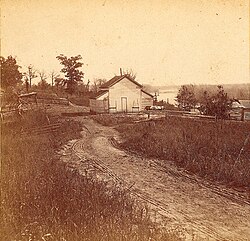
However, peace was often short-lived. By 1757, the New Jersey Association for Helping the Indians worked to expel Munsee Lenape from the Washington Valley in Morris County. This led to the creation of Brotherton, the first Native American reservation in New Jersey, where 200 people were forcefully relocated under the leadership of Reverend John Brainerd.
The Long Migration West
The 19th century was defined by a series of forced displacements. By 1802, groups including the Brotherton Indians and the Stockbridge-Munsee had migrated to Oneida County, New York. In 1822, the Munsee Lenape were again displaced, traveling over 900 miles to Green Bay, Wisconsin.
Other bands moved through Indiana and Missouri, eventually reaching Kansas and Oklahoma. In Oklahoma, the Delaware Tribe of Indians were forced to purchase land from the Cherokee Nation for $438,000. This period of instability culminated in the Curtis Act of 1898, which dissolved tribal governments and allotted communal lands to individual households in 160-acre lots, allowing the government to sell "surplus" land to non-Indians.
Contemporary Lenape Nations
Today, the descendants of the Lënapeyok maintain their identity through several federally, state, and internationally recognized organizations. While many now speak English, there are ongoing efforts to preserve the Munsee and Unami languages.
| Recognition Level | Tribal/Group Name | Primary Location |
|---|---|---|
| U.S. Federally Recognized | Delaware Nation | Anadarko, Oklahoma |
| U.S. Federally Recognized | Delaware Tribe of Indians | Bartlesville, Oklahoma |
| U.S. Federally Recognized | Stockbridge-Munsee Community | Wisconsin |
| Canadian First Nations | Munsee-Delaware Nation | Ontario, Canada |
| Canadian First Nations | Moravian of the Thames | Ontario, Canada |
| Canadian First Nations | Delaware of Six Nations | Ontario, Canada |
| State-Recognized | Lenape Nation of Pennsylvania | Pennsylvania |
Notable Historical Figures
The history of the Lenape is marked by influential leaders and individuals who navigated the complexities of colonialism:
- Black Beaver: A renowned trapper and scout, and the first inductee into the American Indian Hall of Fame.
- White Eyes: A Turtle clan peace chief who negotiated the Treaty of Fort Pitt.
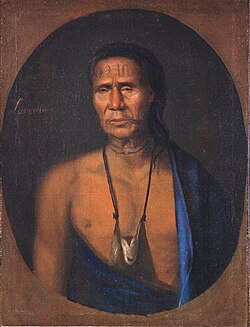
- Captain Pipe (Hopocan): An 18th-century chief and member of the Wolf Clan.
- Nora Thompson Dean: A vital 20th-century linguist for the Delaware Tribe of Indians.
Frequently Asked Questions
What does the term "Lenapehoking" mean?
Lenapehoking refers to the ancestral homeland of the Lenape people, which encompasses present-day New Jersey, southern New York, eastern Pennsylvania, and parts of western Connecticut.
Which languages are traditionally associated with the Delaware people?
The traditional languages are Munsee (spoken in the north) and Unami (spoken in the south), both of which are part of the Algonquian language family.
Where are the Lenape people located today?
They are primarily located in Oklahoma (Delaware Nation and Delaware Tribe of Indians), Wisconsin (Stockbridge-Munsee Community), and Ontario, Canada (including the Munsee-Delaware and Moravian of the Thames First Nations).
What was the significance of the Curtis Act of 1898?
The Curtis Act dissolved tribal governments and mandated the allotment of communal tribal lands to individual members, which ultimately led to the sale of surplus lands to non-Indigenous people.
Who were the primary clans of the Lenape?
Historical records mention several clans, including the Wolf, Turtle, and Turkey clans, which played significant roles in leadership and social organization.