Decorative Moldings: A Comprehensive Guide to Architectural Profiles
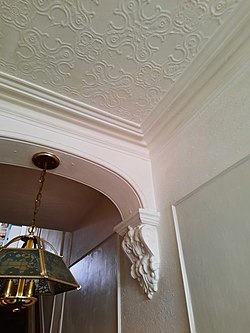
Decorative moldings are architectural elements that serve both functional and aesthetic purposes. Historically, these profiles were crafted from wood, stone, and cement. In modern construction, cost-effective synthetic alternatives have emerged, such as extruded polyvinyl chloride (PVC) and expanded polystyrene (EPS) cores finished with cement-based protective coatings. These materials provide a visual and functional quality that rivals traditional craftsmanship.
From the grand cornices of classical temples to the simple baseboards of a modern home, moldings define the transition between different surfaces, hide structural gaps, and add a layer of sophistication to any space.
Key Facts
- Materials: Traditional options include wood, stone, and cement; modern options include PVC and EPS.
- Primary Functions: Concealing joints, protecting walls from impact, and providing ornamental detail.
- Classical Influence: Many modern profiles are derived from Greek and Roman orders, such as the Doric and Ionic styles.
- Versatility: Moldings can be applied to walls, ceilings, doors, windows, and columns.
Common Interior and Exterior Moldings
Wall and Ceiling Transitions
The junction between walls and ceilings, or walls and floors, is where some of the most recognizable moldings are used:
- Crown Molding: A wide, sprung molding used at the top of a wall to "crown" the architectural element.
- Cove Molding (Coving): A concave-profile molding used specifically at the wall-ceiling junction.
- Bed-mold: A narrow molding found under the cornice at the wall-ceiling junction; it can be plain, sprung, or flush.
- Baseboard (Skirting Board): Used to protect the lower wall from impacts and conceal the gap where the wall meets the floor. A "speed base" consists of a cap molding atop a plain 1-inch board.
- Shoe Molding (Toe Molding): A small, flexible quarter-round used to cover gaps between the baseboard and the floor.
Door and Window Trim
Trim around openings ensures a clean finish and protects the structural frame:
- Casing: The finish trim that covers the gap between the finished wall and the door or window jam.
- Astragal: A semi-circular molding attached to one of a pair of doors to cover the meeting gap.
- Muntin: Narrow strips of wood or metal that hold and separate individual panes of glass in a window.
- Drip Cap: An exterior molding placed over openings to prevent water from flowing under siding or across glass.
![Moldings from 1728 Table of architecture in the Cyclopedia[1]](/images/c9/7c/c97c1ac9d73f0d6712618c4c41d3a5fca65d511b25e866e3baee6c14a45afbf6.jpg)
Classical and Ornamental Profiles
Curved and Complex Shapes
Architectural history is rich with specific geometric profiles used to create visual rhythm:
- Cyma (Ogee): A double-curvature molding. A cyma recta has the concave part on top, while a cyma reversa has the convex part on top. When used on an entablature, it is called a cymatium.
- Torus: A large, convex semi-circular molding often found at the base of columns.
- Scotia: A concave molding with asymmetric profiles, often used as a transition between two torus moldings.
- Cavetto: A concave, quarter-round molding common in Egyptian and Etruscan temples.
- Ovolo: A simple convex quarter-round molding.
Decorative Accents and Details
Beyond structural transitions, many moldings are purely ornamental:
- Dentils: Small, evenly spaced blocks along the bottom of a cornice.
- Egg-and-dart: A classical pattern of alternating egg shapes and V-shapes.
- Fluting: Vertical, half-round grooves cut into columns, separated by flat astragals.
- Cartouche: A framed scroll-like panel with an inscribed center or floral motifs.
- Guilloché: Interlocking curved bands forming a repeating pattern of circles and rosettes.
- Strapwork: Designs imitating leather straps, popular in 16th and 17th-century English plaster and stone work.
Summary of Molding Types
| Molding Name | Profile Shape | Primary Use/Location |
|---|---|---|
| Crown | Wide, Sprung | Wall-to-ceiling junction |
| Baseboard | Various | Wall-to-floor junction |
| Ogee (Cyma) | S-Curve | Decorative transitions |
| Dentils | Rectangular Blocks | Bottom of cornices |
| Astragal | Semi-circular | Door gaps / Column fluting |
| Cavetto | Concave Quarter-round | Temple cornices |
Frequently Asked Questions
What is the difference between crown molding and cove molding?
Crown molding is typically a wide, sprung profile used to crown an architectural element at the ceiling. Cove molding specifically features a concave profile used to soften the transition between the wall and ceiling.
What is a bolection molding used for?
A bolection is a raised molding that projects beyond the face frame at the intersection of different levels on a door or wood panel. It allows inset panels to expand and contract with changes in temperature and humidity.
What are the modern materials used for moldings?
While wood, stone, and cement are traditional, modern moldings are often made from extruded polyvinyl chloride (PVC) or expanded polystyrene (EPS) with a cement-based protective coating for cost-effectiveness and durability.
What is the purpose of a chair rail?
A chair rail, also known as a dado rail, is a horizontal molding placed partway up a wall. Its primary purpose is to protect the wall surface from being damaged by the backs of chairs, though it is also used for decoration.
What is the difference between a torus and an astragal?
Both are convex semi-circular moldings, but a torus is larger and often found at the base of columns, whereas an astragal is smaller and often used to cover gaps in doors or separate fluting on columns.