December 1989 Cold Wave: The Freeze That Reshaped the American South
In mid-December 1989, a massive meteorological event swept across the central and eastern United States, bringing record-breaking cold and unexpected snow to regions typically known for warmth. This series of cold waves, which persisted through Christmas, was driven by a massive high-pressure area that pushed frigid air deep into the south, causing widespread devastation to infrastructure and agriculture.
Key Facts
- Timeline: Mid-December through December 25, 1989.
- Extreme Lows: Scottsbluff, Nebraska reached −42 °F (−41 °C); Houston, Texas hit 7 °F (−14 °C).
- Historic Snow: The Christmas Coastal Snowstorm broke all-time records in North Carolina, South Carolina, and Georgia.
- Agricultural Impact: 30% of Florida's $1.4 billion citrus crop was damaged.
- Human Toll: At least 26 deaths were reported in Florida.
The Christmas Coastal Snowstorm
Between December 22 and 24, a low-pressure system moving northeast from Florida interacted with the advancing cold front. This interaction triggered the Christmas Coastal Snowstorm, the largest snowstorm ever recorded in the southeast United States. The event brought unprecedented snowfall to coastal cities, shattering all-time records.
- Wilmington, North Carolina: 15.3 inches (39 cm)
- Cape Hatteras: 13.3 inches (34 cm)
- Charleston, South Carolina: 8.0 inches (20 cm)
- Savannah, Georgia: 3.6 inches (9.1 cm)
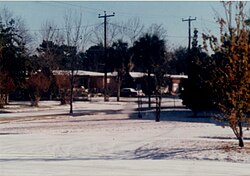
The reach of the storm extended even further south, with 0.8 inches (2.0 cm) of snow in Jacksonville and a trace in Tallahassee. Snow flurries were even observed in Tampa and Sarasota.
Impact on Texas and the Gulf Coast
Texas faced severe temperature drops that set monthly records in Houston, Galveston, and College Station. In Brownsville, temperatures plummeted to 16 °F (−9 °C), while the upper coast saw single-digit temperatures. Dallas-Fort Worth suffered through 295 consecutive hours of freezing temperatures, with a record low of 5 °F (−15 °C) on December 22.
The freeze caused significant economic and environmental damage. Broken water pipes in Dallas resulted in $25 million in losses and disrupted local manufacturing. In the bays, an estimated six million fish perished. This followed a previous cold wave in February of the same year that had already killed 11.3 million fish.
Houston Intercontinental Airport recorded a record low of 7 °F (−14 °C) and 1.7 inches (4.3 cm) of snow.
Devastation in Florida
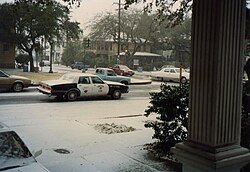
Florida experienced a state-wide crisis, leading Governor Bob Martinez to declare a disaster area in all 67 counties. The state faced rolling power outages, ruptured pipes, and hazardous road conditions. The Florida Highway Patrol closed sections of I-10 following multiple vehicle pileups on icy bridges. A record low of 8.0 °F (−13.3 °C) was recorded in High Springs.
The Collapse of the Citrus Industry
The most lasting impact was felt in the agricultural sector. Approximately 30% of the $1.4 billion citrus industry was damaged. Other affected crops included sugarcane, strawberries, vegetables, and ornamental plants. This event was the fourth major freeze in a decade, following waves in 1981, 1983, and 1985.
In Lake County, then the state's second-largest producer, most of the 117,000 acres of citrus groves froze, effectively ending the local industry. Many family farms went bankrupt and sold their land to developers, contributing to the urban sprawl of Orlando. By 2014, only 10,000 acres of groves remained in Lake County.
In Miami, temperatures dropped to 31 °F (−1 °C) on Christmas Eve and 30 °F (−1 °C) on Christmas Day—the last freeze observed in the city as of 2026.
Summary of Regional Impacts
| Region | Key Temperature/Snow Record | Primary Impact |
|---|---|---|
| Nebraska | −42 °F (−41 °C) | Extreme record low |
| Texas | 7 °F (−14 °C) in Houston | $25M pipe damage; millions of fish dead |
| Florida | 8.0 °F (−13.3 °C) in High Springs | 30% citrus crop loss; 26 deaths |
| SE Coast | 15.3" snow in Wilmington, NC | Largest snowstorm in SE US history |
| Mexico | N/A | Millions in agricultural damage (Lower Rio Grande Valley) |
Frequently Asked Questions
How severe was the snowfall during the Christmas Coastal Snowstorm?
It was the largest snowstorm ever recorded in the southeast United States, with record-breaking totals including 15.3 inches in Wilmington, NC, and 13.3 inches in Cape Hatteras.
What happened to the citrus industry in Lake County, Florida?
The freeze destroyed most of the 117,000 acres of citrus groves in the area. This led to the collapse of the local industry, with many farmers selling land to developers, which fueled the urban expansion of Orlando.
How did the freeze affect Texas infrastructure?
In Dallas, broken water pipes caused $25 million in damages and created significant disruptions for the local manufacturing industry.
Was this the only cold wave in 1989?
No, this was the second major cold wave of the year; a previous one had occurred in February and extended into Texas.
When was the last time Miami experienced a freeze?
Miami's last observed freeze occurred during this event, with lows of 31 °F on December 24 and 30 °F on December 25, 1989.