Natural Disasters: Understanding Hazards, Vulnerability, and Global Impact
A natural disaster occurs when a natural phenomenon or hazard causes harmful impacts on a society or community. While the term is widely used, many scholars argue it is imprecise. They suggest that a disaster is not merely a natural event, but rather the result of a hazard—such as an earthquake or a cyclone—impacting a vulnerable community. In this view, the severity of a disaster is determined by the combination of the hazard itself and the level of exposure and vulnerability of the people and structures in its path.
The extent of damage caused by these events depends heavily on human preparedness and the structural integrity of essential infrastructure like buildings and roads.

Economic loss risk for six natural disasters: tropical cyclones, droughts, earthquakes, floods, landslides, and volcanoes.
Key Facts
- Economic Trend: Global economic losses from extreme weather and climate events have increased sevenfold from the 1970s to the 2010s.
- Annual Costs: Between 2015 and 2021, direct losses from disasters averaged over US$330 billion annually.
- Primary Drivers: Increased exposure due to population growth and rising wealth is a major driver of economic loss, alongside human-induced climate change.
- DRR Funding: Many countries allocate less than 1% of their national budget to Disaster Risk Reduction (DRR).
- Global Support: The GFDRR has provided $890 million in technical assistance to over 157 countries between 2007 and 2022.
Classification of Natural Hazards
Natural hazards are generally categorized by their origin, ranging from geological shifts to atmospheric disturbances.
Geological Hazards
These hazards originate from the earth's physical processes. Common examples include:
- Earthquakes: Sudden shifts in the earth's crust.
- Volcanic Activity: Eruptions of magma and gas.
- Landslides: The movement of rock, debris, or earth down a slope, including submarine landslides occurring underwater.
- Sinkholes: Collapses in the ground surface.
- Tsunamis: Large sea waves often triggered by underwater geological activity.

San Francisco was devastated by an earthquake in 1906.

1755 copper engraving depicting Lisbon in ruins and in flames after the 1755 Lisbon earthquake. A tsunami overwhelms the ships in the harbor.

Haiti earthquake damage.

Global number of deaths from earthquake (1960–2017).
Extreme Weather and Atmospheric Hazards
Weather-related events can be categorized by their onset and the specific conditions they create:
Hot and Dry ConditionsProlonged periods of heat or lack of moisture can lead to heat waves and droughts, which significantly impact agriculture and water security.
Storms and Heavy RainAtmospheric instability can lead to various intense weather events:
- Tropical Cyclones: Large-scale storm systems.
- Floods: Overflow of water onto land that is normally dry.
- Tornadoes: Violently rotating columns of air.
- Thunderstorms and Hail: Intense localized storms that can produce large ice pellets.

A satellite image of Hurricane Melissa making landfall in Jamaica as a Category 5 hurricane in October 2025.

A killer tornado in Alabama photographed during the 2011 Super Outbreak, the most intense tornado outbreak on record.

A classic anvil-shaped, and clearly-developed Cumulonimbus incus.
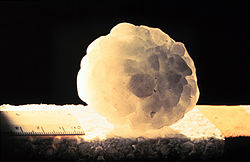
A large hailstone, about 6 cm (2+1⁄2 in) in diameter.

The Limpopo River during the 2000 Mozambique flood.

A car driving on a flooded road in Melbourne, Australia. Cold-Weather Events
Low temperatures can trigger blizzards (severe snowstorms with high winds) and avalanches (rapid flows of snow down a slope).

A blizzard in Maryland in 2009.

A powder snow avalanche in the Himalayas near Mount Everest.
Wildfires and Other Hazards
Wildfires are uncontrolled fires in natural vegetation. Additionally, hazards like dust storms, firestorms, and ice storms contribute to the global disaster landscape.

A wildfire in California.

A landslide in San Clemente, California in 1966.
Disaster Risk Reduction (DRR) and Response
Disaster Risk Reduction (DRR) involves strategies and activities designed to minimize the vulnerabilities of communities to hazards. While many nations include DRR in their national budgets, it often receives lower priority compared to other development goals.
International frameworks and organizations play a vital role in managing these risks. For example, the Global Facility for Disaster Reduction and Recovery (GFDRR) provides technical assistance and capacity building to help developing nations manage interconnected climate and natural hazards.
![Disaster risk reduction progress score for some countries in 2011. The score of 5 is best. Assessments include four indicators that reflect the degree to which countries have prioritised disaster risk reduction and the strengthening of relevant institutions.[90]](/images/21/51/21515a2042c95195a9db3b7e0191af66a9b165e93bb5b5324cfc17c16312bb18.png)
Disaster risk reduction progress score for some countries in 2011. The score of 5 is best. Assessments include four indicators that reflect the degree to which countries have prioritised disaster risk reduction and the strengthening of relevant institutions.
Summary of Disaster Trends and Impacts
| Metric Category | Observed Trend / Data Point |
|---|---|
| Economic Loss (1970s vs 2010s) | Sevenfold increase |
| Average Annual Direct Loss (2015–2021) | Above US$330 billion |
| Primary Economic Driver | Increased exposure (population/wealth) |
| GFDRR Support (2007–2022) | $890 million to 157+ countries |

Number of recorded natural disaster events (1900–2022).

Global death rate from natural disasters (1900–2022).

Global damage cost from natural disasters (1980–2022).
Frequently Asked Questions
What is the difference between a hazard and a disaster?
A hazard is a potentially harmful physical event, such as an earthquake or a storm. A disaster occurs only when that hazard impacts a vulnerable community, resulting in significant loss of life, property damage, or economic disruption.
Why are economic losses from disasters increasing?
The increase is largely driven by increased exposure, meaning more people and more wealth are located in areas at risk. Human-induced climate change also contributes to the rising costs of extreme weather and water-related events.
How can countries reduce the impact of disasters?
Through Disaster Risk Reduction (DRR), which includes strengthening infrastructure, improving preparedness, and prioritizing risk management in national budgets and planning.
What international laws protect people displaced by disasters?
The 1998 UN Guiding Principles on Internal Displacement and the 2009 Kampala Convention are key documents that help protect individuals displaced due to natural disasters.
Are all natural disasters "natural"?
While the physical phenomena (like weather or tectonic shifts) are natural, the resulting disasters are often influenced by human factors, such as how we build our cities, where we place populations, and how we impact the climate.