Data Deficient Species: IUCN Classification and Challenges
In the effort to protect global biodiversity, scientists categorize species based on their risk of extinction. However, not every organism fits neatly into a known risk category. This is where the Data Deficient (DD) classification comes into play—a designation used by the International Union for Conservation of Nature (IUCN) when there is insufficient information to make an accurate assessment of a species' extinction risk.
What Does Data Deficient Mean?
A species is labeled as Data Deficient when there is a lack of adequate information regarding its abundance (the total number of individuals in a population) and distribution (the geographic area where the species is found). Interestingly, a species can be extensively studied in some aspects of its biology but still be classified as DD if these specific population metrics remain unknown.
Beyond simple population counts, the DD label is often applied when there is taxonomic uncertainty. This occurs when scientists are unsure how to classify an organism within the biological hierarchy, such as whether a group of animals belongs to one species or several distinct ones.
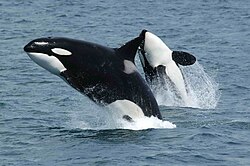
A prime example is the orca. The IUCN classifies the orca as data deficient because evidence suggests that what we currently call a single species may actually be two or more separate species.
The Risks of the DD Label
While the DD category is a scientific necessity, it carries inherent risks. The primary concern is that a lack of records might be mistaken for a lack of urgency, when in reality, the absence of sightings could indicate that a species is dangerously rare.
To combat this, the IUCN advises caution. If a taxon (a taxonomic group of any rank) is believed to have a limited range and has not been recorded for a significant amount of time, the IUCN suggests that a threatened status may be more appropriate than a DD label. This approach aligns with the precautionary principle, which suggests taking protective action even when full scientific certainty is lacking to prevent irreversible harm.
Key Facts
- DD Definition: Used when there is insufficient data to assess extinction risk.
- Primary Gaps: Usually relates to unknown abundance and distribution.
- Taxonomy: Taxonomic uncertainty (e.g., the orca) can trigger a DD classification.
- Precautionary Approach: Absence of records may actually signal dangerously low populations.
- IUCN Guidance: Threatened status may be justified if a taxon has a circumscribed range and long-term absence of records.
| Factor | Impact on Classification |
|---|---|
| Population Data | Lack of abundance and distribution data leads to DD status. |
| Taxonomy | Uncertainty about species boundaries (e.g., orcas) leads to DD status. |
| Conservation Risk | DD may mask a species that is actually threatened due to rarity. |
Frequently Asked Questions
Does a Data Deficient label mean the species is not at risk?
No. A DD label simply means there is not enough data to determine the risk level. It does not guarantee the species is safe; in some cases, the lack of data may actually be a sign of dangerously low abundance.
Why is the orca considered Data Deficient?
The orca is classified as DD because of taxonomic uncertainty. There is a strong likelihood that the animals currently grouped as orcas are actually two or more separate species.
What is the difference between abundance and distribution?
Abundance refers to the number of individuals of a species, while distribution refers to the specific geographic locations and ranges where those individuals are found.
How does the precautionary principle apply to DD species?
The precautionary principle suggests that if a species has a limited range and hasn't been seen in a long time, it should be treated as threatened rather than just data deficient to ensure it receives necessary protection.
Can a species move from DD to another category?
Yes. As more research is conducted and data on abundance, distribution, and taxonomy are gathered, the IUCN can reclassify a species into a specific risk category, such as Vulnerable, Endangered, or Least Concern.