CITES: Protecting Global Biodiversity Through Trade Regulation
The Convention on International Trade in Endangered Species of Wild Fauna and Flora, commonly known as CITES or the Washington Convention, is a critical multilateral treaty designed to ensure that international trade in wild animals and plants does not threaten their survival. Drafted following a 1963 resolution by the International Union for Conservation of Nature (IUCN), the treaty was opened for signature in 1973 and officially entered into force on July 1, 1975.
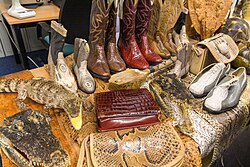
By utilizing a rigorous system of permits and certificates, CITES provides varying levels of protection to more than 40,900 species. While it initially focused on luxury goods like furs in Western markets, the treaty has evolved to address shifting demands in Asia—such as elephant ivory and rhinoceros horn—and now includes species previously considered low-risk, such as manta rays.
![Parties to the treaty. Greenland is covered by CITES regulations through Denmark.[5]](/images/dc/6c/dc6c7c046512d8bb41f2e3ddbd04dc95bde5db4a6b13b4eae261c19743e8eb2a.webp)
Key Facts
- Effective Date: July 1, 1975.
- Membership: 185 Parties (184 states and the European Union) as of June 2025.
- Scope: Protects over 40,900 species of flora and fauna.
- Mechanism: Regulates import and export via a three-tier Appendix system.
- Current Leadership: Secretary-General Ivonne Higuero (since 2018).
The Framework of CITES
Ratification and Governance
The convention's text was finalized in Washington, D.C., on March 3, 1973. It required 10 ratifications to become active, a milestone reached in 1975. The treaty is managed by a Secretariat administered by the United Nations Environment Programme (UNEP) and is headquartered in Geneva, Switzerland. The Government of the Swiss Confederation serves as the depositary.
A significant update, the Gaborone Amendment, entered into force on November 29, 2013, allowing regional economic blocs to accede to the treaty.
The Appendix System
CITES categorizes protected species into three Appendices based on the level of threat posed by international trade:
- Appendix I: Includes species threatened with extinction. Trade in these specimens is permitted only in exceptional circumstances.
- Appendix II: Includes species not necessarily threatened with extinction, but in which trade must be controlled to avoid utilization incompatible with their survival.
- Appendix III: Contains species protected in at least one country that has requested assistance from other CITES Parties to control trade. Trade typically requires an export permit or a certificate of origin.
Implementation and Challenges
Compliance and Enforcement
Implementing CITES requires member states to designate Management and Scientific Authorities, enact laws prohibiting illegal trade, and establish penalties for violations. However, enforcement remains a challenge; as of 2002, half of the Parties lacked one or more of these core requirements.
When infractions occur, the Secretariat may issue formal warnings, mandate permit confirmation, or recommend that other Parties suspend trade with the offending nation. For example, the United States has previously used national legislation to pressure other nations into revoking reservations on protected species.
Conservation Limitations
Critics note that CITES focuses primarily on trade at the species level and does not directly address habitat loss, ecosystem-wide conservation, or the root causes of poverty. Furthermore, some evidence suggests that CITES listings can inadvertently increase financial speculation in markets for high-value species.
Zoonotic Risks
Beyond conservation, CITES plays a role in public health. Secretary-General Ivonne Higuero has highlighted that illegal wildlife trade destroys natural habitats that act as safety barriers, preventing animal pathogens from jumping to human populations.
CITES Summary Table
| Feature | Details |
|---|---|
| Signed Date | March 3, 1973 |
| Effective Date | July 1, 1975 |
| Number of Parties | 185 (as of June 2025) |
| Species Protected | 40,900+ |
| Depositary | Government of the Swiss Confederation |
| Administrative Body | UNEP |
Frequently Asked Questions
What is the main goal of CITES?
The primary aim of CITES is to ensure that the international trade of specimens of wild animals and plants does not threaten the survival of the species in the wild.
How does CITES regulate trade?
It uses a system of permits and certificates based on three Appendices. Depending on which Appendix a species is listed in, trade may be banned, strictly controlled, or monitored with the help of other member nations.
Can a country opt out of protecting a specific species?
Yes, Parties may make "reservations" upon acceding to the convention or within 90 days of a species listing amendment. In such cases, the party is treated as a non-Party regarding trade in that specific species.
What happens if a country fails to comply with CITES?
The Secretariat can notify all other parties of the infraction, provide technical assistance, issue formal warnings, or recommend that all other Parties suspend CITES-related trade with the offending country.
Does CITES protect habitats?
No, by design, CITES focuses on the regulation of trade at the species level. It does not explicitly address habitat loss or ecosystem-based conservation approaches.