Crypto-Judaism: The History of Hidden Faith and the Anusim
Crypto-Judaism is the practice of secretly adhering to the Jewish faith while publicly professing another religion. The term is derived from the Greek word kryptos, meaning "hidden." This phenomenon typically arises under conditions of extreme persecution, where individuals are forced to convert to a dominant faith to avoid death, exile, or imprisonment.
Historically, this term most often refers to the Jews of Spain and Portugal who outwardly embraced Catholicism. These individuals are known by several names: Conversos (converts), Marranos, or Anusim (Hebrew for "forced ones").
The rise of Crypto-Judaism is closely tied to the events of medieval Iberia, specifically the Massacre of 1391 and the Edict of Expulsion in 1492 in Spain, followed by similar decrees in Portugal in 1497. Officially, Judaism ceased to exist in these regions, but in reality, many families continued their ancestral traditions in the shadows.

Key Facts
- Definition: Secretly practicing Judaism while publicly professing another faith.
- Primary Groups: Historically associated with Sephardic Jews in Spain and Portugal (Conversos/Anusim).
- Enforcement: The Spanish and Portuguese Inquisitions were established to root out those secretly practicing Judaism.
- Detection: Inquisitors often monitored households, focusing on dietary habits as a primary indicator of secret observance.
- Global Reach: Crypto-Jewish communities spread to the Americas, India (Goa), and parts of Europe.
The Inquisition and the Struggle for Survival
To ensure the sincerity of conversions, the Spanish and Portuguese Inquisitions monitored New Christians. Because Judaism is deeply integrated into daily life, the Inquisition paid close attention to domestic habits. Food preparation and dietary restrictions became the most common evidence used to convict individuals of "relapsing" into their original faith.
The penalties for being discovered were severe. Convicted heretics faced public trials and punishments, often culminating in an auto-da-fé (act of faith), a public ritual of penance and punishment.
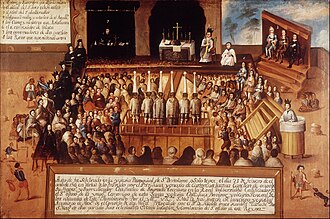
Global Dispersion of Crypto-Jewish Communities
The Americas and New Spain
Many Conversos fled to the New World to escape the Inquisition, settling in territories such as Mexico (New Spain), Colombia, and Bolivia. In the 16th and 17th centuries, Crypto-Jewish presence was noted in Northeastern Mexico, specifically in Nuevo León. Despite the distance from Iberia, the Inquisition followed them to the Americas to suppress secret Jewish practices.

India and the Goan Inquisition
In Goa, the presence of Crypto-Jews caused significant friction with European officials, including Francis Xavier and Archbishop Dom Gaspar Jorge de Leão Pereira. The Portuguese viewed Crypto-Jews as a security threat, fearing they might align with Moors to overthrow Christian rule. The Goan Inquisition (1560–1812) targeted Crypto-Jews, Crypto-Muslims, and Crypto-Hindus. Between 1560 and 1623, 45.2% of the 1,582 convicted persons were charged with offenses related to Judaism or Islam.
Europe and the Susiti
In the Holy Roman Empire, some Crypto-Jewish lines, such as the Süß, Süßkind, and Lindauer families, lived as Catholic or Protestant Crypto-Jews. These are referred to as Susiti. Some descendants of this tradition still exist in the United States, specifically in Mid-Coast Maine and Mariah Hill, Indiana.
The Susiti tradition in Maine involves unique rituals, including readings from the Psalms and Hebrew Scriptures. Their prayers often involve a specific physical movement—stepping three steps backward and then forward—while reciting Psalm 84:5, followed by other specific Psalms and the Shema. They conclude prayers with "Selah," treating it as an equivalent to "Amen."
Summary of Crypto-Jewish Historical Context
| Region | Key Terms/Groups | Primary Drivers | Outcome/Legacy |
|---|---|---|---|
| Spain & Portugal | Conversos, Anusim, Marranos | Expulsions of 1492/1497 | Establishment of the Inquisition |
| Goa (India) | Sephardic Crypto-Jews | Portuguese Colonialism | Goan Inquisition (1560–1812) |
| Americas | New Christians | Flight from Iberia | Secret communities in Mexico, Colombia, Bolivia |
| Holy Roman Empire | Susiti | Migration to Central Europe | Unique ritual traditions in US (Maine/Indiana) |
Frequently Asked Questions
What is the difference between a Converso and a Crypto-Jew?
A Converso is anyone who converted from Judaism to Catholicism. A Crypto-Jew is a specific type of Converso who publicly professes Catholicism but secretly continues to practice Judaism.
How did the Inquisition detect Crypto-Jews?
Inquisitors focused heavily on the home and kitchen. Because Jewish dietary laws are distinct, the way food was prepared, the avoidance of certain meats, or the cleaning of the house on Saturdays were often used as evidence of secret Jewish practice.
What are the Susiti?
The Susiti are a specific Crypto-Jewish ancestral line (including names like Lindauer and Süßkind) that settled in the Holy Roman Empire. Some of their descendants in the United States maintain unique prayer rituals involving the Psalms.
What happened during the Goan Inquisition?
The Goan Inquisition (1560–1812) targeted those secretly practicing non-Christian faiths. Statistics show that nearly half of the convictions between 1560 and 1623 were related to Judaism and Islam, with some individuals being burnt at the stake as relapsed heretics.