Crusade of 1197: The German Campaign of Emperor Henry VI
The Crusade of 1197, frequently referred to as the German Crusade or the Crusade of Henry VI, was a military expedition launched by the Hohenstaufen Emperor Henry VI. This campaign was conceived as a response to the aborted efforts of his father, Emperor Frederick I, during the Third Crusade. Because it was led by the emperor, it is sometimes called the "Emperor's Crusade," mirroring the "Kings' Crusade" of the previous generation.
While the campaign achieved specific territorial gains on the coast of the Levant, it was fundamentally shaped by political instability in Europe and the untimely death of its primary architect.
Key Facts
- Timeline: 22 September 1197 to 1 July 1198.
- Primary Leader: Emperor Henry VI (died before departure).
- Key Victories: Capture of Sidon and Beirut.
- Estimated Strength: Approximately 16,000 men (though historical estimates vary).
- Outcome: Indecisive; Jerusalem remained under Muslim control, but Beirut was restored to the Kingdom of Jerusalem.
The Ambitions of Henry VI
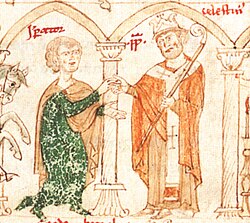
Henry VI, who was crowned Holy Roman Emperor in 1191 by Pope Celestine III, sought to consolidate his power and legacy. After securing the Kingdom of Sicily in 1194 and leveraging the capture of King Richard I of England to enforce his succession, Henry turned his attention to the Holy Land. By declaring a new Crusade to reconquer Jerusalem, Henry hoped to secure the Pope's formal acknowledgment of his rule over Sicily.
The geopolitical landscape was favorable. Sultan Saladin had died in 1193, leaving the Ayyubid lands in a state of succession conflict. Additionally, Henry exploited the instability of the Byzantine Empire. He pressured Emperor Alexios III Angelos, who submitted to tributary demands and paid 5,000 pounds of gold to finance the expedition. Henry also forged strategic alliances with Prince Leo of Cilicia and King Aimery of Cyprus.
Mobilization and the Journey
The call for the Crusade was publicly announced during the Easter celebrations in Bari in 1195. While Henry initially planned for a force of 1,500 knights and 3,000 sergeants, the response from the German nobility was far greater. High-ranking participants included Archbishop Conrad of Mainz, various bishops, and several dukes, such as Henry of Brabant and Frederick of Austria.
Historical accounts of the army's size vary wildly. While some chroniclers claimed a host of 60,000, modern historians like Claudia Naumann suggest a more realistic figure of 16,000 men, including 3,000 knights.
The journey to the Levant was complex. A contingent of 3,000 Saxon and Rhenish troops sailed from northern Germany, stopping in England and Normandy before capturing and razing the city of Silves in the Almohad province of al-Gharb. These forces eventually merged with the emperor's troops in Messina, Sicily.
The Death of the Emperor and the Campaign
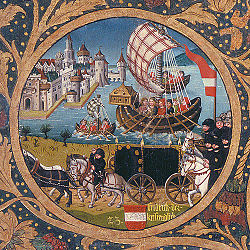
Tragedy struck in August 1197. While hunting near Fiumedinisi in Sicily, Emperor Henry fell ill—possibly with malaria—and died on September 28, 1197, before he could set sail for the Holy Land.
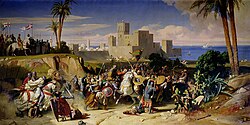
Despite the loss of their leader, the combined force departed Messina on September 1 and landed at Acre on September 22. Leadership shifted as the German Princes elected Duke Henry of Brabant as their commander. The army focused its efforts on the Levant coast, successfully capturing the wealthy city of Sidon and entering Beirut on October 24.
These victories allowed the Crusaders to restore the land link to the County of Tripoli by reconquering estates around Byblos Castle. During this period, King Aimery of Cyprus married Isabella I and was crowned King of Jerusalem in 1198.
Conclusion and Aftermath
The campaign ended abruptly in July 1198. News of Henry VI's death had triggered a throne conflict in Germany between Philip of Swabia and Otto of Brunswick, prompting most high-ranking nobles to return home to protect their political interests. The remaining forces signed an armistice in June 1198 with the Ayyubid emir al-Adil I, who recognized King Aimery's rule over the newly captured lands.
While the Crusade failed to recapture Jerusalem, it had lasting impacts. The weakening of the Byzantine Empire during this period laid the groundwork for the Fourth Crusade. Furthermore, the Teutonic Order, which had been established during the Siege of Acre in 1190, was elevated to a chivalric order in March 1198, later playing a pivotal role in the German eastward expansion into Prussia and the Baltic region.
| Category | Details |
|---|---|
| Belligerents | Holy Roman Empire, Kingdom of Cyprus, various German Duchies and Bishoprics vs. Ayyubids |
| Key Leaders | Henry VI, Henry I (Duke of Brabant), Aimery of Cyprus, al-Adil I |
| Major Cities Captured | Sidon, Beirut |
| Territorial Result | Beirut restored to Kingdom of Jerusalem; Jaffa lost to Ayyubids |
| Casualties/Losses | Death of Emperor Henry VI |
Frequently Asked Questions
Why is this campaign called the German Crusade?
It is called the German Crusade because it was launched and primarily funded by the Holy Roman Emperor Henry VI, with the vast majority of the military force consisting of German knights, nobles, and bishops.
Did the Crusade of 1197 succeed in its main goal?
No. The primary ambition of reconquering Jerusalem was not achieved, and the city remained under Muslim control. However, it was successful in capturing the coastal cities of Sidon and Beirut.
How did the death of Henry VI affect the campaign?
His death caused a leadership vacuum and triggered a succession crisis in Germany. This led many of the most powerful nobles to abandon the campaign and return home to secure their interests in the imperial election.
What was the role of the Teutonic Order in this Crusade?
While the order was founded earlier, it was officially elevated to a chivalric order in March 1198 during the course of the German Crusade, which facilitated its later expansion into Eastern Europe.
Who was the Ayyubid leader during this conflict?
The primary Ayyubid leader during the conclusion of the campaign was al-Adil I, who signed the armistice with the Crusaders in June 1198.